Are there any movies you’re absolutely obsessed with that you feel like no one else has heard of or appreciates? Have you tried to convince people to watch these weirdo flicks, or gotten unfathomably excited when someone loves one as much as you?
Then you’ve likely experienced the appeal of the cult classic movie, a type of film that invites a select few to experience its peculiar charms. But what makes a film a cult classic? And can a creative set out from the jump to make one?
JUMP TO
A film becomes a cult classic when it acquires a following outside of mainstream or mass culture. This so-called cult can be defined by a devoted set of fans who proselytize about the movie’s qualities, memorize chunks of dialogue, and even organize and attend specialty screenings full of costumes and crowd participation.
Typically, though not always, these projects contain genre signifiers and thematic explorations you might call transgressive or experimental. In other words, a down-the-middle prestige drama is less likely to become a cult classic than a gratuitously violent slasher, mind-bending sci-fi story, nudity-infused psychedelic comedy, or any other mélange of elements you might find in an exploitation or B movie.
The cult classic also tends to feature a wider variety of experimentation in its aesthetic and storytelling choices. The film might be shot using techniques that surprise or pummel the viewer; be edited in a confusing, nonlinear timeline; or feature performances played outside of traditionally realistic screen-acting registers.
These elements are a large reason why a cult classic doesn’t have broad appeal, but is very enjoyable for the fans that get on its wavelength. It’s not a film that 100% of people love at a 5% level; it’s a film that 5% of people love at a 100% level.
Here’s the tricky part: A cult classic needs to be, in some way, rejected by the general public so that it can be saved and reclaimed by a passionate fanbase later in its life. Marvel’s 2019 blockbuster “Avengers: Endgame” is not a cult classic because almost every human alive saw it. But the Russo brothers’ 2002 ensemble picture “Welcome to Collinwood” is ripe for the cult reappraisal because almost no human alive saw it. You can be the first! You can start the Collinwood cult!
Part of the cult appeal is a film’s positioning of the audience member as an intelligent, countercultural reactionary. The common plebeian doesn’t understand a cult connoisseur’s movie tastes, and they’re not supposed to. The audience member’s participation is much more invested and elevated in the cult classic, as there is a sense of ownership, defense, and even protection—all bolstered by the fellow enthusiasts in the audience.
In the purest version of the definition, which involves a sort of “mass marketplace rejection” that is later rescued by a “smaller, fervent fandom,” I do not think one can purposely make a cult classic. It inherently involves forces outside of the filmmaker’s control, putting into play the transaction between a film and its audience—a transaction the creatives behind the project have no part of.
However, language evolves, and so do filmmaking modes. We see the elements of cult classics melt into all kinds of mass culture, from the trippy freakout comedies on Adult Swim to viral horror from Neon or A24 to, well, something like “Avengers: Endgame,” which is full of nontraditional storytelling, comic book nerd references, and the pulpy material traditionally found in hardcore genre efforts.
The appetite for movies featuring cult-like elements is there, and these features are available for any filmmaker to try and “stack the deck” and craft a cult classic from preproduction onward. Whether the audience responds as such is out of the creator’s hands.
“El Topo” (1970)
Alejandro Jodorowsky’s fever dream of a Western rocked arthouse and grindhouse theaters when it was originally released. It’s stuffed with surrealism, elliptical storytelling, and sexual transgressions. Its fans adore it; its detractors don’t know what to make of it.
“The Rocky Horror Picture Show” (1975)
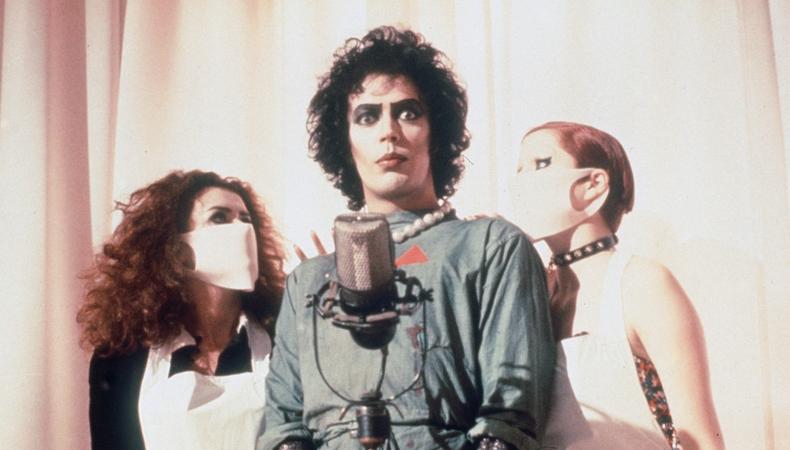
Probably the textbook cult classic movie, Jim Sharman’s “The Rocky Horror Picture Show” continues to inspire midnight screenings where raucous crowds dress up and call back to the screen. Its thesis is made for cult reappraisal, explicitly rejecting mainstream values in favor of sexual liberation and the love of trash.
“Eraserhead” (1977)
David Lynch is undoubtedly a first ballot name for the cult classic director hall of fame, and his feature debut, “Eraserhead,” kicked things off with a terrifying, unexplainable bang. Another art/grindhouse crossover feature, Lynch’s work has horrifying creature effects, truly bizarre performance choices, and an overall vibe begging to be rejected, leaving only the true believers.
“Near Dark” (1987)
Released amid the vampire frenzy of the 1980s—along with other, more successful titles like “Fright Night” (1985) and “The Lost Boys” (1987)—Kathryn Bigelow’s story of a nomadic crew of bloodsucking drifters was lifeless at the box office, despite strong reviews. But thanks to its hardcore defenders, the horror-Western mashup has since been established as an essential part of the vampire canon, with Bill Paxton’s bloody, leather-clad Severen in particular becoming an iconic piece of horror iconography.
“Clerks” (1994)
The ’80s and ’90s burgeoning of the home video market kicked the cult classic into high gear, bringing underseen films into living rooms across the world to discover and love. Kevin Smith’s “Clerks” is a primary example, its success on VHS inspiring a legion of disciples who know all of its vulgar quotes.
“Fight Club” (1999)
Two ginormous movie stars—Brad Pitt and Edward Norton—teamed up with an A-list director—David Fincher—to make a big box office bomb. But “Fight Club” found new life in later DVD viewings, where its fans could thoroughly dissect its anti-establishment themes and complicated storytelling choices.
“The Room” (2003)
A subgenre of the cult classic is outsider art that’s seen as so bad it’s good. Tommy Wiseau’s “The Room” is a key text in this niche, a truly remarkable misfire that feels birthed into existence from a pure, unfettered, and wholly alien mind. This is probably the biggest “audience participation midnight movie” sensation since “Rocky Horror.”
“Scott Pilgrim vs. The World” (2010)
Edgar Wright is one of our only contemporary filmmakers who can purposefully make a “cult classic” and succeed—and much of that is because his films are explicitly about characters who love cult classics. “Scott Pilgrim vs. The World,” adapted from Bryan Lee O’Malley’s comic book series, is one of the most hyperkinetic, postmodern flicks you’ll see. It uses every trick from every medium its characters love (video games, anime, martial arts movies, etc.) to blow up traditional filmmaking. It was destined to be a cult classic, and it succeeded—for better and, arguably financially, for worse.