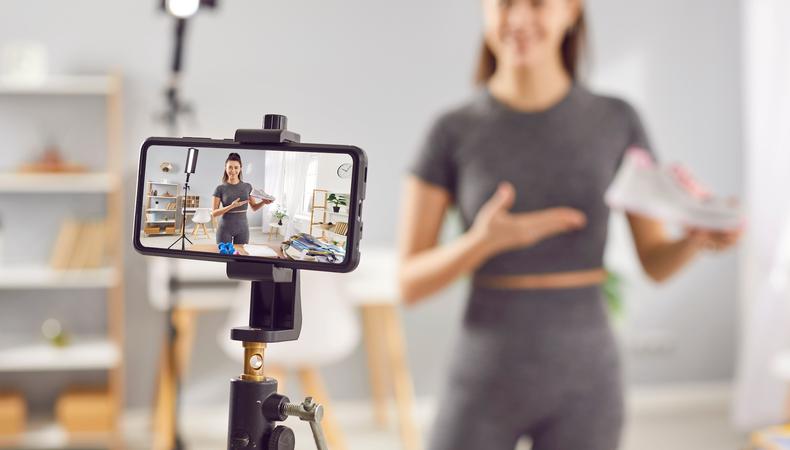
Why does every YouTube channel—cooking, camping, car repair, and beyond—seem to be sponsored by HelloFresh, Ridge, or NordVPN? Consumers often trust the creators they watch, and many brands build partnerships around that trust through sponsorships. If you’re a creator hoping to land a sponsorship, you need to know how to find, pitch, and wow brands—here’s how to do it.
There are three primary types of YouTube sponsorships: product, affiliate, and paid.
- Product sponsorships are when brands send free products to a YouTube channel to review or feature, with the product itself serving as payment.
- Affiliate sponsorships are pretty much commission-based promotions. Brands provide creators with a discount or referral code to share with an audience; the creator then receives a small percentage of sales made using that code.
- Paid sponsorships are when a brand pays a creator to promote its brand or product within a segment of their video.
Many creators pursue all three types of partnerships, with the paid sponsorship being the most lucrative. Brands often sign creators to ongoing sponsorships, which is why you might notice patterns among your favorite YouTubers: A cooking channel might promote Ninja appliances for months, while a gaming channel might use only NordVPN. Long-term sponsorships can give creators enough financial stability to turn YouTube into their full-time job and reinvest their earnings into the quality of their channels.
But sponsorships cut both ways. Too many of these relationships, or the wrong ones, can erode the trust a creator has built with an audience. The YouTubers who make brand deals work long-term choose sponsorships carefully and understand what their viewers will tolerate.
One non-negotiable, no matter the sponsorship type, is full disclosure. The FTC requires creators to clearly disclose paid promotions. YouTube builds this requirement into the upload process with its “includes paid promotion” checkbox, which displays a notice to viewers at the start of the video. Best practice is to also verbally mention the deal or write a note in the video description to reinforce the disclosure. It signals transparency to the audience whose trust makes sponsorships work in the first place.
1. Build a niche and brand that attracts sponsors.
Landing a YouTube sponsorship doesn’t require hundreds of thousands of subscribers. Brands care less about raw reach and subscriber count than audience fit: Brands want a channel whose audience overlaps with their target customers.
For this reason, smaller channels with curated communities close brand deals all the time. Just look to travel and language creator Jack Mullinkosson, who shares stories as an American living, biking, and traveling through rural China. Though he has just 80,000 followers, the YouTuber has landed sponsors like travel insurance company SafetyWing and eSIM company Saily due to his loyal audience.
Specificity and consistency are essential. Your identity is your calling card to brands; a personal finance channel aimed at first-generation college grads is more appealing to sponsors than a general lifestyle vlog. Beyond picking a narrow lane, choose one grounded in genuine interest or authority. It will show up in the quality of your content, which will in turn strengthen your subscriber base.
2. Assemble a media kit.
A strong media kit answers the questions a brand will have before an initial conversation. It’s also a sign of professionalism and organization that goes a long way when companies are weighing potential partners. Media kits should tell brands who you are as a creator, channel metrics (subscribers, engagement, audience demographics, growth), a concise portfolio of your best work, your contact info, and pricing for partnerships.
3. Pitch brands directly with a tailored email.
Once you’ve crafted your media kit, pitch a few brands directly. Choose ones that would be a great fit for your channel and audience. If they are smaller and growing, a direct message on social media may be the best line of communication. But for any brand large enough to have a dedicated marketing team, find a solid partnership contact and send a cold email.
An effective email pitch should include a hook, introduction, personalization, pitch, social proof, and call to action. That structure is a framework, not a script. A formulaic message that reads as copy-and-paste, slightly adjusted for mass sending, can actually ruin your first impression. These brands see plenty of those daily. What they are more likely to respond to is a personalized email with a distinct voice and clear ask.
If you want to go above and beyond, close with a concrete idea tailored to the brand you are messaging. That might mean a proposal for a sponsored segment within a future video that you tease in your message. It could be a concept that slots into a campaign the brand is actively running. The more precise you are, the more likely you are to get a response.
4. Tap into YouTube’s brand marketplace.
According to YouTube’s official blog, 78% of viewers believe the platform has the most trusted creators for product recommendations—and luckily, YouTube hosts a formal matchmaking tool built directly into Studio. YouTube Creator Partnerships, formerly BrandConnect, relaunched at YouTube’s 2026 NewFronts as a Gemini-powered marketplace. Advertisers can search a database of more than 3 million Partner Program creators and contact them directly. Creators who opt in and share their channel insights with brands appear in brand searches 60% more often.
To be eligible, a creator must be in the YouTube Partner Program (which has its own requirements), be at least 18 years old, and have no active Community Guidelines strikes. For eligible creators, opting in means signing into YouTube Studio, navigating to the Earn tab on the left-hand side, and selecting Partnerships.
5. Explore creator marketplaces and casting platforms.
In addition to YouTube Creator Partnerships, you can use third-party marketplaces and casting sites. Creating a profile on our UGC creator marketplace is a great way to gain visibility with brands. Our comprehensive UGC jobs list offers paid opportunities for creator content, which can be a foot in the door for ongoing YouTube sponsorships.