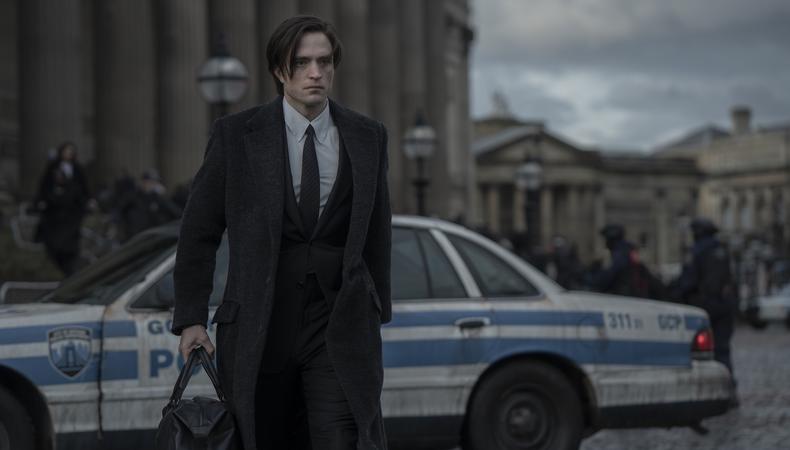
Bruce Wayne, Don Draper, and Lisbeth Salander: Gloomy, rebellious, and oh-so-enigmatic, these characters hook us by the heartstrings despite—or perhaps because of—their darker nature. In the world of the Byronic hero, the brooding is intense, the past is always troubled, and danger lurks behind every shadow. Let’s dive into the murky waters of this character type and how to portray one in a way that’s intense and effective but not overdone.
The Byronic hero is a charismatic yet chaotic character archetype. The term stems from the name of Romantic English poet Lord Byron. His lover Lady Caroline Lamb is said to have coined the term “Byronic hero” to describe his persona, famously describing Byron as “mad, bad and dangerous to know.”
Byronic hero characteristics
Over time, the Byronic hero has evolved, adapting to modern narratives while maintaining these core characteristics that have made them a staple in storytelling:
- Alluring: Magnetic figures who are able to draw others toward them, despite their flaws and troubled pasts.
- Smart: Highly intelligent and educated, adding to their unusual appeal.
- Isolated: Rebellious, pushing back against social norms and authority figures, with a sense of isolation or alienation from society—think of Heathcliff from Emily Brontë’s “Wuthering Heights” raging across the moors, or Lestat from Anne Rice’s “Interview With the Vampire” (played to creepy perfection by Tom Cruise in Neil Jordan’s film adaptation).
- Moody: Cynical, with a darkness that sets them apart from traditional heroes.
What narrative role do Byronic heroes play?
Byronic heroes are usually antiheroes, driving plots forward with an exciting balance of melodrama, inner turmoil, and moral ambiguity. They challenge traditional notions of heroism by embodying the duality of human nature and walking the line between good and evil.
 What is an Antihero? How to Create a Memorable One
1. Understand the archetype.
Research the origins and characteristics of the Byronic hero. Brush up on the writings of Lord Byron, particularly “Childe Harold’s Pilgrimage,” and familiarize yourself with Lady Caroline Lamb’s novel “Glenarvon,” where the archetype is said to have originated. Study the nuances of iconic Byronic hero characters from film, TV, and theater, and consider how they embody the archetype’s traits. What decisions can you make to incorporate these in a way that’s true to your character?
2. Develop your character’s backstory.
Byronic heroes often have a troubled past that shapes their current worldview, so spend time creating a detailed backstory for your character. Start with what the script gives you about your character’s history and motivations and fill in the blanks with details that give your performance more foundation.
3. Master the art of brooding.
Use body language such as a thoughtful gaze or withdrawn posture to convey depth and mystery. Strive to convey the emotional state that would bring out this type of physicality.
4. Take on your character’s traits.
Internalize your character’s characteristics and struggles, and allow your performance to reflect the tension between their ideals and actions, desires and reality.
- Charisma and darkness: Cultivate a strong presence that is both alluring and intimidating.
- Rebellious: Infuse your performance with a sense of rebellion through dialogue delivery, body language, facial expressions, and visceral reactions to other characters.
- Morally ambiguous: Allow your character’s intentions to remain ambiguous, keeping the audience intrigued and guessing.
5. Strive for nuance.
The modern Byronic hero is intense and intriguingly complex—but it’s a fine line between that and being a walking, talking advertisement for Hot Topic. Take an understated approach to your character to make them brooding yet believable; you’ll likely want to aim for “self-destructive yet desirable charmer” and not “ultra-emo ‘Degrassi’ character.”

“No Time to Die” Credit: Nicola Dove
Literature is full of Byronic heroes, with famous examples including Heathcliff, Edward Rochester from Charlotte Brontë’s “Jane Eyre,” and Edmond Dantès from Alexandre Dumas’ “The Count of Monte Cristo.” This character type has also permeated the world of film, television, and theater.
- James Bond, James Bond franchise: The suave spy with a license to kill and a penchant for shaken (not stirred) martinis is a rebel with a cause. Particularly in the Daniel Craig era, he balances devastating charm with moral ambiguity, a troubled past, and unconventional views.
- Batman/Bruce Wayne, DC Comics franchise: Often depicted as a brooding vigilante, Batman has a tragic backstory and enough emotional baggage that his butler, Alfred Pennyworth, can hardly keep up. Most recently, Robert Pattinson really drove home the character’s latex-clad Byronic angst in “The Batman” (2022, dir. Matt Reeves).
- Marcello Rubini, “La Dolce Vita” (1960, dir. Federico Fellini): An unfulfilled journalist who struggles with morality and meeting societal expectations, Marcello (Marcello Mastroianni) is tortured, charismatic, and always ready with a witty quip and a perfectly timed cigarette drag.
- Don Draper, “Mad Men” (2007–2015): A lover of ladies, booze, and power, Don’s (Jon Hamm) enigmatic personality and troubled history make him a modern Byronic hero (along with being a narcissist). Just when you think you’ve put a finger on what drives the advertising creative director, he surprises you with a new facet of his character.
- Lisbeth Salander, “The Girl With the Dragon Tattoo” (2011, dir. David Fincher): The Byronic hero can also be the Byronic heroine, as seen in Fincher’s adaptation of Stieg Larsson’s novel. Punk-rock hacker extraordinaire Lisbeth (Rooney Mara) exudes intelligence, passion, and a hefty dose of antisocial behavior—basically what you’d get if you mixed equal parts genius, trauma, and righteous anger.