From Walter White to Cersei Lannister, the most unforgettable characters in television history aren’t the paragons of virtue—they’re the flawed, messy, complicated ones. If you want to learn how to tap into those negative traits (while still being able to consider yourself a good person), read on: negative Nancies allowed.
Negative personality traits are any less-than-desirable facets of a person’s personality, ranging from irritating or obnoxious to downright immoral. And these aren’t just for villainous characters! Just as very few real people have only good personality traits, the same goes for characters. Negative personality traits can be the flaws in otherwise positive characters that keep them interesting. (Spoilers ahead.)
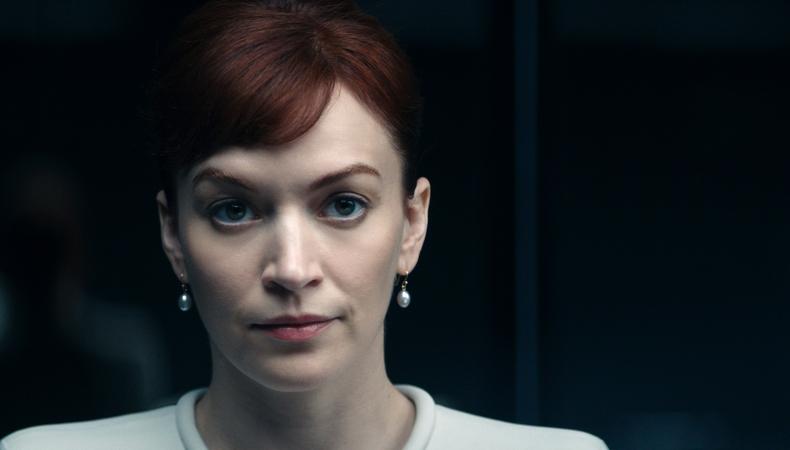
- Cold: Helena Eagan, “Severance” (2022–present)
The daughter of the CEO of Lumon, Helena Eagan is a true antagonist in the “Severance” universe. She believes so wholeheartedly in the morally dubious practice of severance that she goes through the procedure herself—and doesn’t waver in her support even when her innie asks to leave, threatens to cut off her fingers, and eventually attempts to take her own life. Though we grow to further understand Helena as the series unfolds (she’s desperate for her father’s approval, despite his increasing disinterest in her), she never becomes anything even remotely akin to likable. Britt Lower plays her with a cold, even-tempered affect that further accentuates just how cruel she can be. Lower’s performance feels especially impressive when you compare the way she approaches Helena to the way she portrays her bold, passionate, and outspoken innie counterpart, Helly R.
- Corrupt: Greg, “The White Lotus” (2021–present)
By the end of Season 3 of “The White Lotus,” we’re still not quite sure what to make of Greg (Jon Gries), the only character to appear on all three seasons of the show. Did he ever have a terminal illness? Does he really work for the Bureau of Land Management? Why is he pretending to be named Gary? One thing’s for sure, though: the guy is shady. He lies, makes threats, and even had his wife murdered in order to inherit her money. What makes Gries’ portrayal of the morally corrupt Greg so captivating is the way he exudes an overly calm, level-headed demeanor. There’s nothing technically wrong with it, but when you combine it with the knowledge of what Greg is capable of, it’s so off-putting that it puts the audience (and other characters) on edge.
- Insecure: Arthur Tobin, “The Fall and Rise of Reggie Dinkins” (2026–present)
On “The Fall and Rise of Reggie Dinkins,” Arthur Tobin (Daniel Radcliffe) has been hired to film a documentary about disgraced former football star Reggie Dinkins (Tracy Morgan). Though he’s initially introduced as an award-winning filmmaker, we soon learn that Arthur has an ulterior motive—a viral crash-out on a film set means that he’s struggling to get work, and the chip on his shoulder is every bit as big as Reggie’s. Though Arthur is clearly capable, he’s deeply insecure. The way that Radcliffe plays with the neuroticism that comes with knowing this documentary may be Arthur’s only shot at redemption is as effective as it is funny.
- Narcissistic: Jenna Maroney, “30 Rock” (2006–2013)
Tina Fey’s workplace comedy “30 Rock” has its fair share of characters who tend toward narcissism—Tracy Jordan (Tracy Morgan) and Jack Donaghy (Alec Baldwin) also have their narcissistic moments—but Jenna Maroney (Jane Krakowski) takes first prize. Jenna is a textbook narcissist dialed up to the highest degree: She’s needy and self-centered to the point of delusion, and she craves attention so deeply she’ll do just about anything to get it. What makes Krakowski’s take on Jenna particularly effective is that she’s not afraid to be brash. While the assumption might be that a narcissist like Jenna would be image-conscious enough to behave herself, Krakowski’s tendency to lean toward hysteria is what makes her so watchable. While narcissists are rarely fun to deal with in real life, there’s no doubt they can make for hilarious television.
- Oblivious: Ted Wheeler, “Stranger Things” (2016–2025)
Written to be a stereotypical bumbling 1980s father on steroids, “Stranger Things” dad Ted Wheeler (Joe Chrest) is as oblivious as they come. He has no idea what’s going on with his kids or whom his wife is flirting with—and most importantly, he doesn’t seem to care. Even when Ted finally comes face to face with a Demogorgon in the show’s final season, he only happens to notice after it’s been in the house long enough to fully terrorize his wife and daughter. Despite his limited screen time, Ted became a fan favorite, due in large part to the way that Chrest approaches the character: He has no idea what’s going on, and he likes it that way.
- Self-centered: Midge Maisel, “The Marvelous Mrs. Maisel” (2017–2023)
On “The Marvelous Mrs. Maisel,” former picture-perfect housewife Miriam “Midge” Maisel’s (Rachel Brosnahan) world is turned upside down when her husband leaves her, and she falls into the seedy world of stand-up comedy. While Brosnahan’s Midge is extremely charismatic and likable, there’s no doubt that she puts herself first. She’s uninterested in her children, fairly dismissive of her parents, and is so single-minded in the pursuit of a good joke that she outs a man as gay during a stand-up set. While it can feel satisfying to the viewer to watch a woman prioritize herself (especially in the late 1950s setting of the show), the series isn’t afraid to show the consequences of Midge’s actions: Several flash-forwards in the final season show her strained relationship with her adult children.
- Snobby: Dr. Frasier Crane, “Frasier” (1993–2004)
Everything about psychiatrist Frasier Crane (Kelsey Grammer) reads snobby, from his outfits and aesthetic taste to his soothing-yet-stuffy mid-Atlantic accent. In fact, for the titular character in a sitcom, he has several traits that would be considered unilaterally negative in real life. He’s out of touch, egotistical, and can at times be downright arrogant. But again, in the world of the sitcom, sometimes negative traits make for the best comedy, and Frasier escapes being a completely insufferable character because of his self-awareness. He knows just how snobby he is, he just happens to like that about himself. And if one snobby character wasn’t enough for you, check out his brother, Niles (David Hyde Pierce), who is every bit as snobby as Frasier (and is so that other one).
Even more negative character traits
- Arrogant: Tom Ripley, “Ripley” (2024–present)
- Boring: The economics teacher Mr. Lorensax, “Ferris Bueller’s Day Off” (1986)
- Conniving: Francis Underwood, “House of Cards” (2013–2018)
- Controlling: Marie Barone, “Everybody Loves Raymond” (1996–2005)
- Cranky: Basil Fawlty, “Fawlty Towers” (1975, 1979)
- Dishonest: Amy Dunne, “Gone Girl” (2014)
- Ignorant: Michael Scott, “The Office” (U.S., 2005–2013)
- Immature: Uncle Frank McCallister, “Home Alone” (1990)
- Impulsive: Fleabag, “Fleabag” (2016–2019)
- Jealous: Iago, “Othello” (1604)
- Manipulative: Frank Gallagher, “Shameless” (U.S., 2011–2021)
- Materialistic: Alexis Carrington Colby, “Dynasty” (1981–1989)
- Paranoid: Howard Hughes, “The Aviator” (2004)
- Pessimistic: Eeyore, “Winnie the Pooh” series (1966–present)
- Rude: Dr. Gregory House, “House” (2004–2012)
- Ruthless: Logan Roy, “Succession” (2018–2023)
- Self-pitying: Carrie Bradshaw, “Sex and the City” (1998–2004)
- Slovenly: Al Bundy, “Married... with Children” (1987–1997)
- Sociopathic: Patrick Bateman, “American Psycho” (2000)
- Stubborn: Archie Bunker, “All in the Family” (1971–1979)
- Stuck-up: Blair Waldorf, “Gossip Girl” (2007–2012)
- Vain: Zoolander, “Zoolander” (2001)
- Vapid: Karen Smith, “Mean Girls” (2004)
1. Come from a place of empathy.
If you’re portraying a character with negative traits, it’s likely they will say or do things that you wouldn’t personally. This is all well and good, but reserve your judgment—it’s your job as the actor to bring your character to life, and part of doing that successfully means being able to play them without your own opinions about their behavior getting in the way. Instead of questioning the negative trait, consider why they might behave that way.
2. Don’t confuse negative with one-dimensional.
Just because your character has negative traits doesn’t mean they are one-note bad. Resist the urge to play a negative character trait broadly and instead look for the nuance that keeps the character grounded in reality.
3. Draw from personal experience.
Even if you don’t consider yourself to have the negative trait you’re portraying, that doesn’t mean you haven’t ever felt a way that would align you with that trait. For example, you don’t have to be a selfish person to have ever acted selfishly. The best performance will be one grounded in reality and lived experience.
Ready to play your next negative trait-ridden character? Check out our audition call board here.