If CD Kerry Barden and his casting partner, Paul Schnee, are known for anything, it’s that they work on just about any type of project. From indie favorites like “Short Term 12” to hit franchises like “Pitch Perfect” and television from “The Last O.G.” to “Jessica Jones,” you’d think they’d have met every actor in the country. Yet when Barden began casting Amazon Studios’ “Sylvie’s Love,” a 1960s-set love story starring Nnamdi Asomugha and Tessa Thompson, there were many small but important roles that introduced him to new actors in the audition process. Barden shares why this film felt special to cast and where he looks for people to invite into the audition room—or, for now, into the Zoom room.
“When I get a script that has this many characters and is specific to this time period, it’s like, Oh, now we have to really dive in and find some new talent, or talent that’s new to me.”
Describe the casting process for “Sylvie’s Love.”
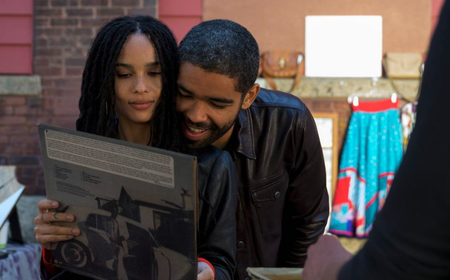
Nnamdi and Tessa were already attached, and we had discussions about the tone and how we wanted it to look, because it’s this period in New York. The rhythms of language were specific to that time period, so that was one of the things that was important to everyone. Finding those rhythms in the audition process was key to making it feel as authentic as we could. We did sessions at my office, so we’d give notes to the actors, and then we’d send the tapes off and get notes back from the director and Nnamdi and have callbacks and do more work with the actors. It was a pretty interesting process because we didn’t have director sessions, which is rare for film. We got to really be hands-on with the actors. That’s one of the joys of casting; you get to find specific things that are part of the beats of a scene [and] part of the transitions in the language itself, and it’s a thrill to be able to do that with actors.
 Nnamdi Asomugha Remembers the Moment He Quit the NFL for Hollywood
 How does the ensemble aspect of the film impact casting?
The character descriptions are just a blueprint; it’s something that we work from. When we have an actor cast, it’s making sure that all the puzzle pieces fit together. You can always file down a puzzle piece and ram it into the puzzle, but it’s better if it fits in a perfect way that makes it seamless. I find that when you start throwing ideas at actors, they start coming up with ideas that are even more rich than the script or the description, and it brings it alive. Most of my directors in the audition process will find stuff in the script that they didn’t see before because an actor brings in an idea or says something with a different inflection or a different rhythm. Even if we don’t cast that actor, they’ll incorporate that note into the final product, because it’s a little layer or element that maybe the writer or director didn’t see initially. An actor’s connection is with the life that that person is living outside the scene, if that makes sense.
How was casting this project different for you?
We cast completely in our office on tape and sent the tapes; that was unique for film. There were so many roles and so many important small characters that we saw a lot of actors we hadn’t met before, which was phenomenal. It was so much fun to meet a whole new pool of talent that I was not familiar with. When I get a script that has this many characters and is specific to this time period, it’s like, Oh, now we have to really dive in and find some new talent, or talent that’s new to me.
Where do you like to look for new talent?
I go to a lot of theater in New York; I go to some theater in Los Angeles. I also teach at different companies, so I’ve done seminars where I’ve found people all over the United States. I’ve also taught seminars in Australia and New Zealand, so I find new actors there. I did a lot of location casting when I first started, so it would start with the initial L.A. auditions and then New York as well, and then go to the location where a film was shooting and got used to looking all over that way. Especially when we’re looking for kids or teens, we’re looking at schools and anywhere we can find kids who think they might want to act, in addition to the phenomenal kids’ agents that we work with.
“You can always file down a puzzle piece and ram it into the puzzle, but it’s better if it fits in a perfect way that makes it seamless.”
Music is a huge part of the film. Did actors have to be able play instruments?
We actually did audition and cast a few musicians who had a background in jazz, specifically. I found—over the last decade, especially—that a lot of the actors that I’ve cast in films like “Love & Mercy” and “Sylvie’s Love” and “Pitch Perfect,” actors I’ve known for years, are actually musicians as well. It’s a delight. It’s fun to find people from different arts that can transition from one to another. It’s fun to find the combination of the two and make sure it works.
READ: The Best TV and Film Ensembles of 2020
What advice do you have for actors?
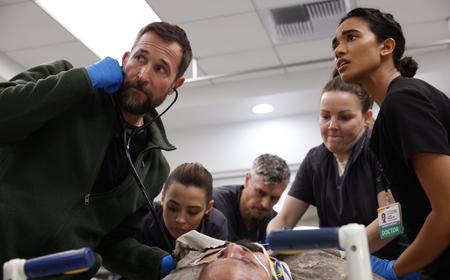
I think actors have to love what they do. It’s a difficult journey, and there are just so many people out there who want to do it. One of the important things for actors to do is to act. They’re in a community of other artists; they should do readings or take classes or find an acting coach that they love and get together with other actors. It can be very competitive, but it’s mostly supportive; I think actors are hoping that their friends get work. Also, look at people’s work; it’s so easy to access a director’s work when you’re up for an audition—you not only should have a script, but also know the director’s work and what kind of tone they usually work in, if that’s something they do. You can Google anything nowadays. I was doing a film called “Shot,” and one of the small but very important roles was a paramedic, and this guy came in and he nailed it. I said, “How did you make this so specific?” and he said, “I Googled it. I had no idea what a paramedic does.” It’s not just saying lines. My mother can say lines, but she’s not an actor.
What can an actor expect from the way things are done remotely now?
Our job has become way bigger than it used to be. We get to see six people an hour, maybe six hours a day if we’re doing a really heavy day. Now, we’re getting 300 tapes for the same role. So we’re having to plow through all of those tapes to see which ones we want to present to the team. Unfortunately, we can’t give feedback on them because we’re not in the room with the actor, so it takes twice as long and it can get diluted through the agent or manager. Then we have to get the callback tapes, as opposed to working in the room with the actor and making that adjustment immediately. It’s impacted casting a lot, but we have access to a wider pool of talent than we would have had in person. We’re finding actors that we may not have had time to see. Now, when we do the Zoom callbacks, you lose some warmth, because you’re on a screen on the computer as opposed to in the room. We’ve also done chemistry reads on Zoom, and that’s odd as well. We’re making it work. Actors need to get really comfortable with self-tapes. It’s easy to get skilled in it technically, but being comfortable with it is another thing that is helpful to us, because we’re losing that warmth. Also, when you’re doing a self-tape, I think actors should always do a couple of ideas of that scene and feel free to send two tapes, maybe even three. Not 10, because you know 10 aren’t gonna be that great, but actors can do it as many times as they want, so I would say to send in a couple of takes that you feel are transforming the character, as opposed to just doing the one take—if it feels right.
What makes an actor memorable to you in an audition?
It’s the same thing in the room and remotely: being able to listen. Be able to incorporate whatever notes you’re getting, process them, and then change whatever you did in the first take. Actors get in their heads, we all know that. If they’ve got an idea of what they want to do and they do it and then if they don’t listen and hear what’s given to them to transform the character, sometimes they’ll do the exact same thing. Just take those moments after your first take and relax back into the discovery of the character; that’s an important transition for their second take. They also are dealing with a reader, usually, so listening to the reader and listening to what the reader is throwing at them is going to make a little bit of [a] transition in their approach to the scene as well. I think the most important thing for an actor is to be able to listen, and then incorporate what they’re experiencing, what they’re hearing, [and] what they’re being given.
This story originally appeared in the Feb. 25 issue of Backstage Magazine. Subscribe here.
Looking for remote work? Backstage has got you covered! Click here for auditions you can do from home!