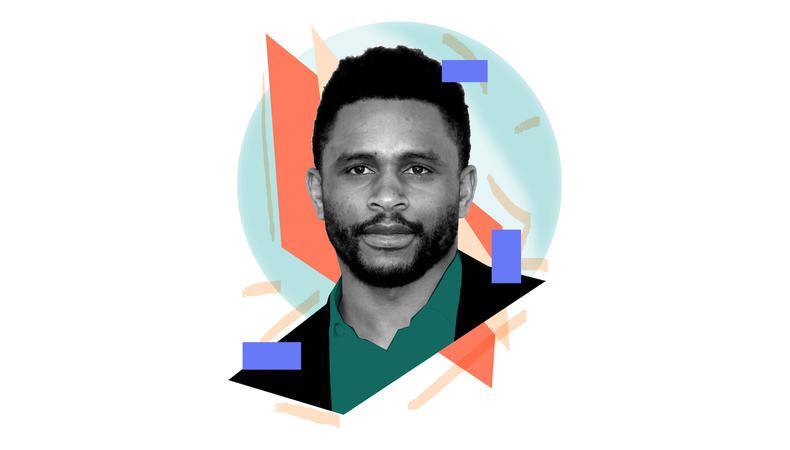
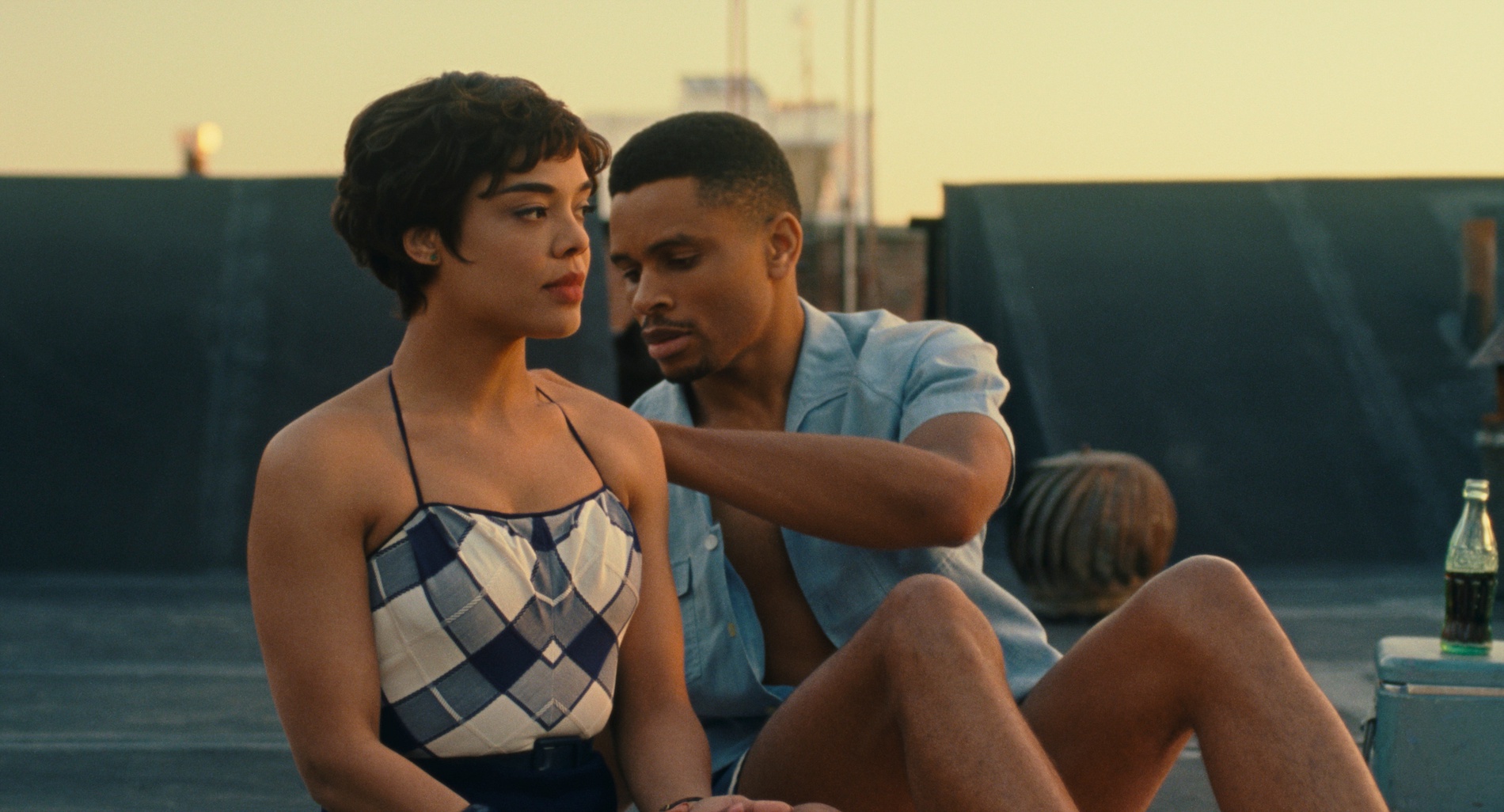
After 11 years in the NFL, professional football player Nnamdi Asomugha knew he needed to make a career pivot. While he made guest appearances on “The Game” and “Friday Night Lights” while still in the NFL, Asomugha had his acting breakthrough in the Amazon Studios crime drama “Crown Heights” in 2017, which he starred in and produced. Asomugha again resumes the actor-producer role in Amazon’s glossy old Hollywood romance “Sylvie’s Love” alongside Tessa Thompson as jazz musician Robert.
“I also really believe that if it’s for you, it’s for you. And if it isn’t, then it’s on to the next thing.”
You played football professionally. What was the moment you decided you wanted to be an actor and a producer?
I remember when I had to start thinking about what my second career would be. It was my second year in the NFL and one of my teammates, his brother was having a wedding. His brother’s wedding was on a weekday, a Thursday. He told the coach, “Look, my brother has a wedding, I have to go. I’m going to miss a couple days of practice.” Our coach told him, “If you miss those practices, you don’t want to be a member of this team.” So he didn’t go to his brother’s wedding. He stayed for the practices and then three months later he was cut from the team. It didn’t even matter, and it destroyed me that he missed his brother’s wedding for something that didn’t matter at the end of the day. That’s when I started thinking about a second career. I don’t know when acting came in, but I knew I had to start producing in order to act. When you don’t come from the Yales and the Juilliards and you’re coming from the NFL, I don’t know that you’re going to be first in line for any role, even if the role is the pizza delivery guy. The projects I was getting were very interesting, but I felt like I could do more than what was being asked. So I decided to make my own stuff. I became a producer so I could have that ability to create my own work.
 ‘Sylvie’s Love’ Costume Designer Phoenix Mellow Became Her Characters’ Psychologist
 How do your roles as producer and actor differ? Does one job impact the other?
They impact each other. I fell in love with producing. It wasn’t what I wanted to do at all. I thought, Let me go down this road of acting. And then, as I started to make these projects, I started to really fall in love with the world of producing and all that it entails: being able to ask other actors for roles and being able to hire crew and being able to put something together from scratch. When you’re an actor and a producer on the same project, you can become a stronger actor because you see the full picture. A lot of actors, when they come in to do their role, they know a lot about their character and they know the script. But as a producer, you know the entire world. Everything that the director’s looking for, it’s also your vision in some respects. It just really fills you up as an actor, being able to produce your own stuff.
What has starring in and producing “Sylvie’s Love” added to your creative skills?
I learned how to play the saxophone, which was over [a] year’s long journey of trying to figure out this instrument. I dug deeper into my character. I think that’s one of the joys of acting for me: What is the new thing that you don’t have that you’ll be able to learn from embodying this other character? I did a film called “Crown Heights,” and the [character’s] accent was Trinidadian-American, so I had to learn that accent. There was no greater joy for me in the process of that film than having to do that work.
READ: The Secret to Writing + Producing Your Own Content
How did you first get your SAG-AFTRA card?
It wasn’t until I did “Crown Heights” that I knew what a SAG card was. I know I did a couple of TV shows, like a line or two in a TV show before “Crown Heights,” so it must’ve been one of those, but I don’t know when I got my SAG card because I didn’t know what it was. Maybe it was “Friday Night Lights” or “The Game”? I’m not sure.
What is your worst audition horror story?
I had gotten sides from a friend of mine who was in the business and they said, “When you go into auditions, make sure that you have a backstory for your character.” Make sure that you’ve got it there and you’re ready and it’s however many pages long and it fills you up. They’ll be impressed by that. I thought he meant [to] write the backstory out and give it to the casting director before you do your audition, but he just meant write it out and make sure that it’s inside of you, because they’ll see that, they’ll know that. So I went into this audition and, I’ll never forget it, I handed the casting director six pages of backstory on my character before I started the audition. She looked at it and said, “What’s this?” I said, confidently, “That’s my backstory.” And she said, “Are you trying to give our writer notes?” I said, “No! Not at all! It’s just backstory. I wanted you to see how deep I’d gone.” And it spiraled down into this nightmare. She plopped it on the table and said, “Whenever you’re ready,” and she didn’t talk to me the whole audition. She said thanks and I walked out. It was taken completely the wrong way. It was a mess! Those were the early days.
What’s the wildest thing you've ever done to get a role?
I like to send notes to the director or the producer, but it’s less about [saying] “please put me in this role” and more about the gratitude for thinking of me for the role and my respect for them. I think that’s the furthest I’ve gone. I do understand this world of doing whatever you can for the part, and I think at some point maybe that will happen for me. But I also really believe that if it’s for you, it’s for you. And if it isn’t, then it’s on to the next thing. I don’t like to get in someone else’s head about their process. Just because I’m on the other side of it, I don’t know how effective that is on my side. If my mind was set in another way, I don't know that it could be swayed.
Looking for remote work? Backstage has got you covered! Click here for auditions you can do from home!