
The following Career Dispatch essay was written by Beth Riesgraf, who stars on “Leverage: Redemption”; the first eight episodes can be found on Amazon’s free streaming service IMDb TV, with more episodes premiering this fall.
I remember sitting crisscross applesauce in my farmhouse attic. Positioned in front of me was my old AM/FM cassette tape recorder. Nestled inside, I had placed my sister’s mixtape with a handwritten label: “Meatloaf! Do not record over!!!”
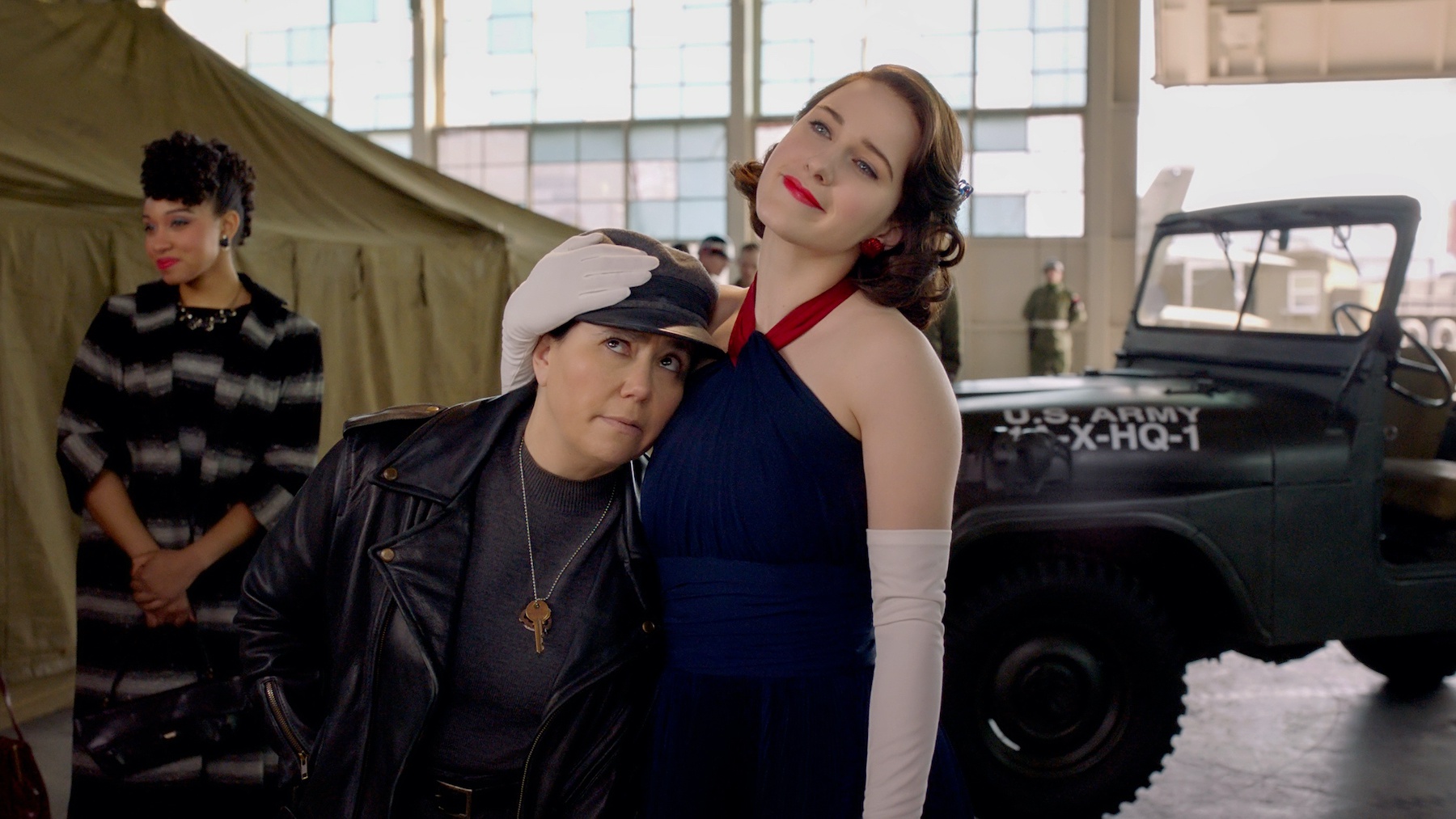 How To Get Cast on ‘The Marvelous Mrs. Maisel’
 I had a few props, and my foley kit was ready: a rock tumbler, lime green “Ghostbusters” slime, a Valentine’s Day Barbie with a buzz cut courtesy of my sister, Mary (she needed to do it for beauty school practice, Beth!), a few puffy stickers, metal utensils, a brown Pound Puppy, and a stack of “Garbage Pail Kids” trading cards. My wardrobe included neon “Punky Brewster” high tops, an oversized t-shirt (that probably belonged to one or more of my five older sisters), and a pair of brightly colored knee-length shorts.
I didn’t have a script. I don’t think I even knew what a script was. But what I did have was my imagination, and that was enough. “The Mad Scientist Radio Show” was prepped, and I was ready to play.
Fast forward to 2021. I’m on the set of “Leverage: Redemption”—and directing myself once again. Only this time, instead of an imaginary laboratory, I am on a beautifully designed set and surrounded by an insanely talented crew.
While prepping this particular episode, I had come up with a new way for my character to enter a scene. The idea involved rigging an open parachute to my back and inflating it to make it seem like I had just jumped out of a plane. I could see it perfectly in my mind. However, the logistics of executing the shot were a little tricky. I arrived on set to find my prop master and special effects teams scratching their heads. The humongous chute was laid out in front of them. They were having issues making the gag work. I asked if I could give it a try, they all smiled and said, yes.
I wiggled into my stunt harness, found some rope, and tied the line from my harness to the exiting lines of the parachute. My team grabbed the outer edges of the fabric and stretched it back behind me. They lifted the parachute fabric and began fanning it up and down. As it filled with air, another crew member positioned behind them flipped the switch on a turbofan. With some tension now on the back end, I started to run in place, and after a few seconds, I yelled, “Go!” They cut the fan, and as I jogged forward, they let go of the fabric. It chased and spilled all around me—as if I had just touched down from jumping out of a plane. We nailed it! We all screamed and hollered so loud that the entire crew came running around the corner to see what had just happened. We laughed and high-fived together like we were kids.
I’ve always tried to approach my work as both an actor and director with a spirit of play. Play is the vessel that allows you to take risks. It gives you permission and the freedom to try all the things you may usually be embarrassed or scared to try. Play provides the parameters for structure and allows you to be spontaneous, mischievous, wild, curious—and anything else you want to be.
My 6-year-old self taught me a lot about developing a creative process. When considering my technique as a director all these years later, I realize that in many ways, my approach to visualizing and executing stories now is not all that different from when I was a kid. I still have that same child-like enthusiasm for storytelling. I prepare and collaborate. I work fast and furiously, allow my imagination to run free, work with my friends (although now they are actual living people), and I follow my intuition—even if that means breaking a few rules along the way.
Looking for remote work? Backstage has got you covered! Click here for auditions you can do from home!