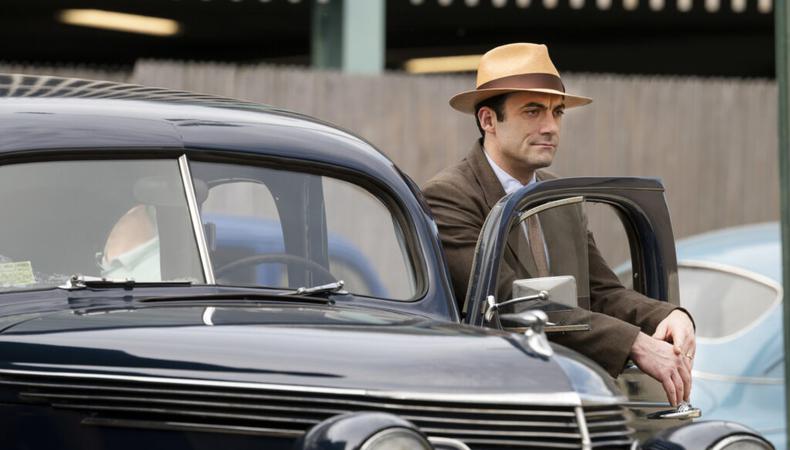
The following Career Dispatches essay was written by Morgan Spector, who stars on HBO’s “The Plot Against America.”
It’s a strange moment to be talking about anything so profoundly pre-pandemic as one’s “career.” Certainly, jobs still matter—in fact it’s become clearer than ever that certain jobs actually matter and certain jobs just…don’t. Which category actors fall into is an open question; nobody is going to starve if we never get to go back to work. Are we all losing our minds in quarantine a bit more slowly thanks to the labor of actors in television and film? Maybe. Then again, Joe Exotic. So who knows?
It’s a strange moment to be talking about anything, really. Pretty much every sentence seems to need to begin with the phrase, “It’s a strange moment.” But here we are.
I never wanted to be a person who was defined by their job. When I was in my twenties, people used to pass around this vague piece of wisdom that Europeans (who really know how to live) don’t ask you about your job, instead they ask about you, what you’re interested in, in order to understand who you are. Based on my interactions with Europeans, this is largely bullshit, but when I was younger I thought it was both true and somehow significant. Forget your job. Your job was just the arrangement you made with the powers that be in order to have as much freedom as you could wrest from reality. What about love and sex and art and good drugs and all the shit that actually makes life worth living?
 David Simon on Making 2 Decades’ Worth of Urgent TV: ‘My Job Was to Get it Right’
 I avoided office jobs, worked in restaurants, where at least, except for when you had to work brunch (fuck brunch), you could sleep in before work. But then I started to get work as an actor. And of course the problem with having a job that you actually love is that it has no boundaries. You don’t leave work at work because you can’t stop thinking about it, and you don’t want to, because thinking about it makes you happy! Hardly something to complain about, I realize. But what began to dawn on me was the irony that when your artsy dream job stops being a dream, it tends to make you an absolutely brutal careerist, as absorbed in your professional life as any dead-eyed 80-hour-a-week desk jockey straight from Bret Easton Ellis.
You get your first professional job, and you begin fantasizing about getting more of them. You get more of them, you start dreaming about the fancy jobs. You get a few of those, and eventually, your fantasies of a creative existence lead to working insanely long hours for giant corporations. Congratulations! You’ve got a career! Back in the ’90s we used to call it “selling out.”
Anyway, here we are, everything on pause. I’m lucky enough that I have a job to go back to (probably) when this is over, though when that will be is anyone’s guess. TV and film sets seem like particularly improbable spaces under the shadow of COVID-19. When will it be the moment when hundreds of people can safely congregate in an enclosed space and share snacks? One thing I find myself thinking about though, between moments of dread about what kind of country this catastrophe will create, or the moments of deep gratitude that I am healthy, that my family is healthy, and that this disease doesn’t make children sick, is what kind of artist I am without my “career.” It’s hardly the most important thing to think about these days. But friends, we’ve got a lot of time on our hands.
Curious how others are coping? Get more Career Dispatches right here!