The relationship between actor-model Pamela Anderson and rocker Tommy Lee is rife with headline-grabbing stories and salacious situations. But what has hindsight taught us about the way media and the public at large treated them in the aftermath of their infamous sex tape?
That’s the question that Hulu’s “Pam & Tommy” so brilliantly answers over the course of its eight episodes, with Lily James and Sebastian Stan portraying the iconic duo. In this exclusive panel discussion, sponsored by Hulu, they’re joined by co-star Taylor Schilling (previously of “Orange Is the New Black” fame, and here playing adult film star Erica Boyer) for a deep dive into the series, the acting processes that brought these real-world figures to life, and the importance of reframing a story we thought that we knew.
Dread was a driving force behind James’ portrayal of Anderson.
“There was so much fear. I realized that it was quite a good place to work from, because it really motivates; there’s no chance to rest on your laurels. Particularly with this, we’re experiencing not only real people’s lives, but something deeply sensitive. So I was driven, and I cared so much, and all I wanted to do was do her justice and to explore this story and its greater repercussions. We all did that seriously, with great heart and great commitment. I think, also, it is an exciting place to work from because it pushes you to your boundaries and pushes you to the limits of what you thought possible, and allows you to really transform and explore another person. That, as an actor, is such a gift.”
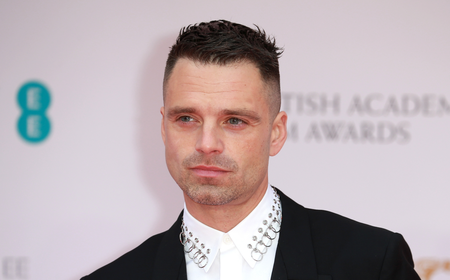 Sebastian Stan Ponders Playing Tommy Lee + Life After the Winter Soldier
 For Stan, playing Lee was a lesson in relinquishing control and acting in the moment.
“I spend a lot of time trying to control everything in a scene. I obsess over what it means, what I’m going to do; I spend all this time the night before making all these choices [about] how I’m gonna say it, all these things. And then, really almost every time that I go on [on] the day, it never ends up that way. What I’ve learned is that two things happen: One, you have to factor in that there’s going to be other people in a scene, and a director, and there’s going to be a multitude of ideas, and you have to stay open and not try to drive some agenda through the thing. Whatever made sense to you yesterday might not make sense now. And then you have to be OK with that. So you almost, like, relinquish control.
“And [secondly], on the way to getting there, guess what? You didn’t really sleep well the night before because maybe you had a fight with somebody; or, I don’t know, you got a distressing phone call; or the morning of, you spilled your coffee. There are 50 things that happen before you get to that moment anyway, and along the line, somehow you have to factor that in. Somehow, that might help the scene. It’s almost like this weird, unconventional marriage between applying the book-smart, studying part of it, and this other part where you just say, ‘Fuck it,’ and go with whatever’s true for you on that day, in that moment.”
Schilling knew that her character’s perspective played a vital role in reframing the truth of Anderson’s story.
“I think it took a woman who was inside of a successful career in sex work and the adult entertainment industry to speak authentically and clearly…as to why Pamela Anderson was not engaged in sex work and why she was not involved consensually in the adult entertainment industry. What Erica, my character, is doing is consensual, adult, of her own volition—a choice. She’s able to say, ‘What happened over there is different from my experience.’ It’s a grace note to the series, but it’s very vital to the story to sort of illustrate and dramatize what makes that different. I loved that. I think it’s Episode 6 or 7 where Erica is able to say, ‘Were there fucking consent forms?! What she’s doing is not what I do, and do not conflate us.’ I love that. That scene I was like, ‘Sign me up!’ ”
Watch our full video with James, Stan, and Schilling below, and catch more in-depth conversations with today’s biggest stars on our YouTube channel.