When Gene Wilder took on “Franken-steen”—not Frankenstein—in “Young Frankenstein” (1974), he went beyond mere horror spoof to demonstrate one of the most technically demanding comedic forms in an actor’s toolbox: the parody. Whether you’re lampooning a specific public figure, an entire cinematic genre, or a certain type of person, parody requires a unique and sophisticated skill set. So what exactly is parody? And if you’re cast in one, what can you do to make sure your performance is the best around?
A parody is any body of work that exists to poke fun at another existing work. Parodies can be highly specific (a famous person, an incident in the news) or broader (a type of person, a genre of film). In any case, parodies exist to comment on their subjects, regardless of whether they come from a place of loving homage or critical social commentary.
1. “A Very Brady Sequel”
In the 1990s, Paramount released “The Brady Bunch Movie” (1995) and “A Very Brady Sequel” (1996), a duo of films based on “The Brady Bunch” TV show (1969–1974). Despite what the titles may suggest, the films were not reboots but rather parodies that imagined the very ’70s Brady household transported into the ’90s. Both were hits with audiences, due in no small part to the way all of the actors meticulously channeled their sitcom counterparts. In a scene that’s had a viral afterlife (despite being from a 30-year-old movie parodying a 50-year-old TV show), Jan Brady (Jennifer Elise Cox) tells her family about her new (i.e., made-up) boyfriend, George Glass.
If you watch the source material scene back-to-back with the one from the parody film, you’ll notice that the actors’ interpretation is very true to the original, just dialed up about 10%. (It doesn’t need much more than that: The original “Brady Bunch” was pretty cheesy by modern standards.) It seems that level of attention to detail wasn’t by accident. Christine Taylor, who played Marcia Brady, said in a podcast interview earlier this year: “Jennifer, who brilliantly played Jan, and I were the only two who were fans of the original. We were obsessive about it. So everything we did in that movie came through the lens of Jennifer and me saying, ‘Well, she would never say it that way,’ or ‘We’ve got to change that line,’ or ‘We’ve got to fix that because that’s not right.’… In “A Very Brady Sequel,” the line where I say, ‘I’ve never heard of a George Glass at our skewl,’ The director stopped me and said, ‘Can you just say school? We don’t know what you’re saying.’ And I said, ‘No, I can’t, because Maureen McCormick said skewl. It was a very specific way of saying it.”
2. “Girl You Wish You Hadn’t Started a Conversation With at a Party”
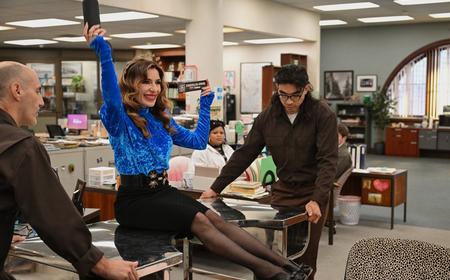
If you’re looking for examples of parody, look no further than any given episode of “Saturday Night Live,” where you’ll likely find several. This particular sketch is of interest because it isn’t lambasting a real-life person but rather an entire genre of people most of us have run into at one point or another. It works because it plays upon universal themes. What works so well about this performance is that Cecily Strong (who co-wrote the sketch) identifies specific universal truths about this type of drunk girl—she rambles, she mispronounces words, she’s at once flirtatious and combative—and dials them up to the highest degree. While this level of kookiness might be a lot to maintain for an entire feature film, it works perfectly for a sketch-size performance.
3. “Avenue Q”
Parody isn’t just for screens. In 2003, the musical “Avenue Q” came to Broadway, promising life lessons, puppet sex, and former child star Gary Coleman as a washed-up superintendent. In this instance, the actors have to do very little—outside of being talented comedic performers and puppeteers—to make the parody work. The clash of context here is the squeaky-clean world of “Sesame Street” mashing up with the gritty backdrop of New York City, and the writing does all of that heavy lifting for the actors. Consider how Kate Monster turning to the audience and dropping an f-bomb in the show’s opening number would hit rather differently if she had already come on stage projecting the NYC grittiness of the piece. Instead, the parody works because the actors are pure “Sesame Street” in tone, but with very different life lessons coming out of their mouths.
4. “Young Frankenstein”
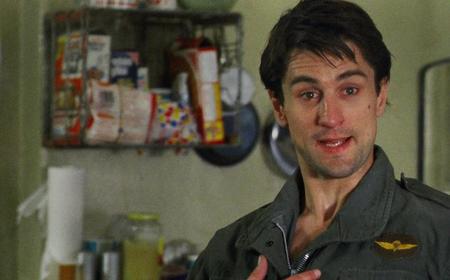
Mel Brooks’ “Young Frankenstein” (1974) is one of the most recognizable films in the parody genre. Apart from Brooks’ signature comedic touch, the film’s wide appeal can also be attributed to its smart sendup of Mary Shelley’s “Frankenstein” and the tradition of classic horror films it inspired. Though not a direct parody of Shelley’s novel—Wilder’s Dr. Frankenstein is meant to be the grandson of the original—the story plays out similarly, with similar, tropey characters (the hunchbacked Igor, the infamous monster, etc.).
What’s so fun for the actors and audience alike is the way the film takes established characters that the audience has an expectation for and puts them in situations the audience has no expectation for. We expect Frankenstein’s monster to be a big, hulking, scary thing. We do not expect him to be singing and dancing to “Puttin’ on the Ritz.” Peter Boyle (the monster) does the bulk of the comedic heavy lifting in that scene, adopting the physicality made famous by Boris Karloff in “Frankenstein” (1931) and translating it into unsure, off-beat swaying and shouted lyrics. The results are nothing short of hilarious.
If you’ve found yourself cast in a parodic role, here are a few things to keep in mind.
1. Know your source material.
Parodies can be hard for audiences to enjoy when they don’t know the source material, so actors need to understand what’s being spoofed before they can perform it well. If you’re going to parody something, make sure you’re as familiar with the thing you’re parodying as possible. Dig into your source material, whether that’s a specific person or film, and make sure you know them inside and out.
2. Find the funny.
Parody works best when you identify what’s funny or unusual about a character and then exaggerate it slightly—or significantly, depending on the medium and tone of the piece. This can be almost anything: the way the character stands, an accent or particular manner of speaking, the way they dress, or a certain phrase they like to use. Whatever the unusual thing is, figure out a way to bring it to the forefront.
3. Keep it honest.
Even if it’s incredibly over the top, the best parody works in large part because it is rooted in some kind of universal truth. Don’t let wackiness get in the way of maintaining everything else that makes a memorable and engaging character arc. This is especially important for actors in full-length parody films or TV episodes: You’ll want to give your character the necessary depth and growth to sustain a multi-hour performance. Don’t put mimicry above character.
4. Make it universal.
Although parodies are always going to be more enjoyable to audience members who understand the references, it’s also the job of the actors—and the writers—to make sure that the work is still funny if you aren’t as familiar with the work being parodied. Don’t get so bogged down in the details that you forget to craft a legitimately funny or intriguing performance, with or without the added context.
Ready to book your next parody role? Check out our audition call-board.