Round House Theatre artistic director Ryan Rilette used to be an actor. “I still am an actor,” he clarifies, though these days he is more focused on directing and running the midsize Washington, D.C.–area company. He came to Round House after working around the country and noticing something peculiar.
“At the very large regional theaters in town, you have to live in a different city in order to be able to work there,” Rilette says, noting that big theaters tend to fly in talent, usually from New York City. So when he got the Round House gig in 2012, he made it a mission of the theater to “always prioritize the use of local artists.” He’s made good on that promise. “I think in our current season, there are probably three or four people from out of town. But everyone—from designers, directors, actors, across the board—is all local,” he says.
Rilette is able to pull that off because of D.C.’s robust and “phenomenal” pool of actors. Every season, Round House holds an Equity and non-Equity open call. The theater also has an in-house database filled with the résumés and headshots of every local actor who has ever auditioned for the company. In addition to the open call, Rilette and his staff will pull the names of individuals they think will best fit certain roles in the season and call those actors in for an audition. It’s when those two routes fail to bear fruit that “associate producer [Danisha Crosby] will get on the phone with the casting people at Arena Stage or Shakespeare Theatre Company and say, ‘Hey, we’re looking for this,’ ” Rilette explains. And in the unlikely case that all fails, Round House will then bring in out-of-town talent, usually from New York. “We only cast out of town when we absolutely cannot find the person that we need locally.”
READ: 6 Tips to Help You Ace Your Next Open Call
But why all this trouble to mine the local pool? According to Rilette, artists who’ve worked together before produce better work. “There’s a way to get greater depth in the work because they have a familiarity and a trust with each other that a group of strangers who have never met can’t possibly get in three to four weeks,” he says.
That’s especially helpful when you have a theater with a mission like Round House’s, where the focus is on modern classics, new plays, and contemporary musicals with an ensemble edge. “We talk a lot in our staff about what makes a Round House play,” Rilette says. “I think for us, it needs to be an ensemble play and it needs to be a play that really touches the heart.”
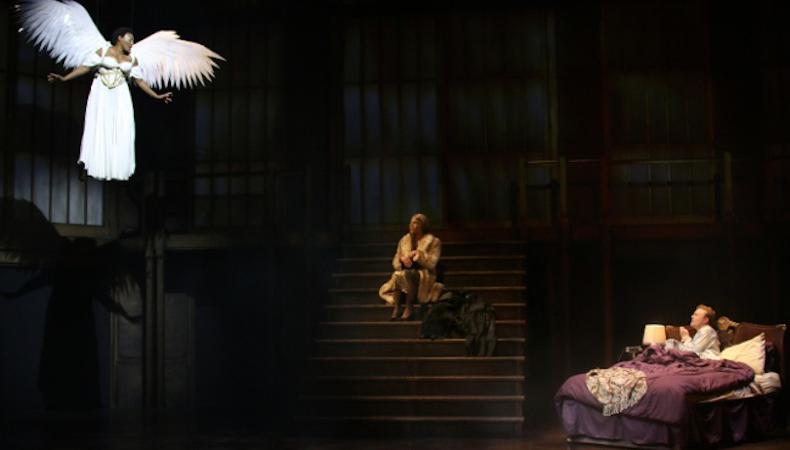
With that in mind, Round House opened this season (its biggest yet) with both parts of Tony Kushner’s opus “Angels in America,” co-produced with the local Olney Theatre Center. Other large-cast works in 2016–17 include “Miss Bennet: Christmas at Pemberley” by Lauren Gunderson and Margot Melcon, and the musical “Caroline, or Change” by Kushner and Jeanine Tesori (Jan. 25–Feb. 26). In choosing these pieces, Rilette also considered other components of the theater’s mission, including gender parity in the playwrights selected and diverse faces onstage. “We’re trying to make sure the work on our stage reflects the makeup of our community,” Rilette says.
For any actor new in town who is looking to get on Round House’s radar (and into its acting database), Rilette has this simple piece of advice: “Just send us your stuff. Even if we don’t know you, there’s a chance a role is going to come up where you’re going to be the one person that we’re looking for.”
Ready to break into the Washington, D.C., theater scene? Check out our theater audition listings!