Post alone and the algorithm serves your work to your followers—but post with a partner and it lands in front of theirs, too. In today’s social media landscape, platforms increasingly reward creators who team up. Here’s how collabs work, for creators and brands alike.
JUMP TO
At its core, social media collaboration is a coordinated effort between two or more parties to create, publish, or promote content on social platforms.
A partnership might involve:
- A brand and a media company
- A creator and a brand
- A creator and an organization
- Two or more creators
The important distinction is that collaboration involves some form of shared value. Each participant should have a reason to be involved.
Credit: Pixel-Shot/Shutterstock
The best team-ups usually begin with alignment. Before anyone starts filming, both parties should understand what they’re trying to accomplish.
1. Start with a shared goal.
A brand might want to introduce a product to a new demographic. A creator might want to grow their audience. An organization might want to drive event registrations. Those objectives can coexist, but they need to be discussed explicitly.
A campaign designed to generate sales will look different from one designed to build awareness. Establishing the goal early also makes it much easier to determine whether the partnership actually worked.
2. Find the right partner.
This might seem obvious, but it can’t be overstated. Imagine a fitness brand choosing between a massive lifestyle creator whose followers have little interest in exercise and a smaller fitness creator whose audience regularly asks for workout and nutrition recommendations.
The second creator may be the better fit even with a fraction of the followers. Creators should approach partnerships similarly. Pairing with a complementary creator can introduce them to an audience that is genuinely likely to care about their work.
3. Define everyone’s role.
A successful social media collaboration should establish who is responsible for what. That might include:
- Cross-posting
- Developing the concept
- Paying production costs
- Posting content
- Producing and filming
- Responding to comments
- Writing scripts
For paid partnerships, these responsibilities should be documented alongside compensation, deadlines, deliverables, usage rights, and approval processes.
4. Preserve creative authenticity.
One of the biggest advantages of working with creators is authenticity. Audiences can often tell when someone is simply reading ad copy. If a brand takes too much control over the creative process, the resulting content can feel disconnected from the creator’s normal output.
Brands should communicate the information and requirements that matter while giving creators room to determine how that information fits within their voice. Creators, meanwhile, need to respect the brand’s legitimate requirements.
The strongest campaigns find the middle ground: brand objectives expressed through the creator’s authentic style.
5. Make the content work for both audiences.
A collab shouldn’t feel like an advertisement that has been dropped into one person’s feed. The content should make sense for the creator’s existing audience while accomplishing the partner’s objectives.
That might mean integrating a product into a tutorial, having two creators debate a topic they both understand, or developing a challenge that naturally encourages audiences from both communities to participate.
The partnership itself should be part of the idea—not merely the distribution strategy.
As with all social media posts, there’s no single metric that determines whether a collab worked. The appropriate benchmarks depend on a number of variables.
Reach and impressions: If the primary objective is awareness, reach and impressions can be particularly important. Reach measures the number of unique users exposed to content, while impressions measure the number of times that content was displayed. A campaign designed to introduce a brand to a new audience might reasonably prioritize these figures.
Engagement: Likes, comments, and other interactions can indicate whether people actually responded to the content. Engagement rate is especially useful when comparing creators with audiences of different sizes.
Views and retention: For video partnerships, views tell only part of the story. Watch time and audience retention can show whether people stuck around after clicking on the video. A video with 500,000 views and an average watch time of one second may be less valuable than one with 100,000 viewers who watched longer.
Clicks and conversions: For campaigns intended to drive action, brands may care more about what audiences did after seeing the content. Useful metrics can include:
- Click-through rate
- Link clicks
- Promo-code usage
- Website visits
Ultimately, brands and creators both want to know whether the collaboration generated enough value to justify its cost.
Credit: rblfmr/Shutterstock
Looking at real successful influencer campaigns makes these principles easier to understand.
Dunkin’ and Charli D’Amelio: Dunkin’ built one of the most recognizable creator partnerships of the TikTok era when it teamed with Charli D’Amelio in 2020.
Rather than simply paying D’Amelio to post a conventional advertisement, the chain connected the deal to her existing identity and audience. In September 2020, her go-to order—a cold brew with whole milk and three pumps of caramel swirl—went onto the national menu as “The Charli,” followed by an Instagram contest, a second drink called the Charli Cold Foam in February 2021, and a limited-edition merchandise line.
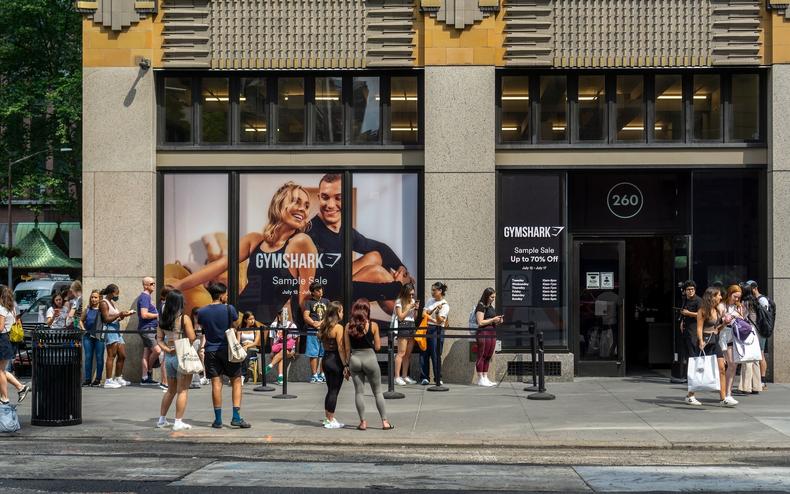
Gymshark and its creator community: If you follow any fitness influencers, you’ve probably heard of Gymshark, the apparel company Ben Francis and Lewis Morgan founded in 2012. It has built a broad creator strategy around athletes, fitness personalities, and social media creators rather than relying on traditional advertising.
The approach started small: Francis mailed free clothes to fitness YouTubers he admired. Today, creators supply Gymshark with content and access to highly engaged fitness communities, while the brand supplies them with partnership opportunities, products, and a recognizable ecosystem to belong to.
Spotify Wrapped and creator participation: You may have personally participated in this one! Spotify’s annual Wrapped campaign, rebranded from Year in Music in 2016, demonstrates another form of collaboration: giving users and creators something inherently shareable.
With Wrapped, creators and everyday users effectively become participants in the campaign by sharing personalized results and building conversations around them.
The broader lesson is that the strongest social campaigns give participants a reason to make content themselves.
Once you understand how these deals work, the next question is where to find them. It all begins with a good pitch.
1. Make your account partnership-ready.
Before contacting brands, look at your profile from a potential partner’s perspective. Is it immediately obvious what you create? Does your content demonstrate a consistent point of view? Can a partner see examples of your best work without scrolling through hundreds of unrelated posts?
A clear niche, recognizable style, and passionate following can make your account considerably more attractive.
2. Build an engaged audience.
Speaking of a passionate following—you don’t necessarily need hundreds of thousands of followers. Brands often care more about whether an audience trusts a creator and responds to their content.
Focus on producing work that encourages genuine interaction and demonstrates that your audience listens to your recommendations.
3. Use creator marketplaces.
Creator marketplaces and influencer platforms can also connect brands and creators.
These services, like Backstage’s (cough, cough), allow brands to discover talent based on factors such as niche, location, audience, platform, and content style. For creators, they can provide access to opportunities that would otherwise be difficult to find independently.
4. Look for complementary creators.
Consider collaborating with fellow influencers. Look for people who share your audience but aren’t direct competitors. A filmmaker might pair with a cinematographer, editor, or actor. A fitness creator might partner with a nutrition creator. A travel creator might join forces with a photographer.
The key is finding someone whose audience would have a genuine reason to care about your work.