Last year, near the end of the Screen Actors Guild Awards (now the Actor Awards), Timothée Chalamet admitted what most actors would be afraid to. Accepting his male actor in a leading role trophy for his portrayal of Bob Dylan in “A Complete Unknown,” he didn’t mince words. “I know we’re in a subjective business, but the truth is, I’m really in pursuit of greatness. I know people don’t usually talk like that, but I want to be one of the greats,” Chalamet said at the podium. Then, he name-checked some inspiration—Marlon Brando, Daniel Day-Lewis, Viola Davis—before calling the award “a little more fuel, a little more ammo to keep going.”
The speech was a little jarring, if only because the rhetoric was so explicitly ambitious. The general playbook for acceptance speeches is to be grateful, humble, sometimes emotional, and—when invoking industry titans—deferential. Especially if it’s your first win. Chalamet did very little of that. He was bold, direct, and projected a confidence typically reserved for after-parties, causing some fans on social media to bristle. After spending the last several years becoming a model ingenue, taking advice from legends, praising his contemporaries, and making smart, deliberate career choices, something felt different. Was this polarizing, award-hunting actor the real Chalamet?
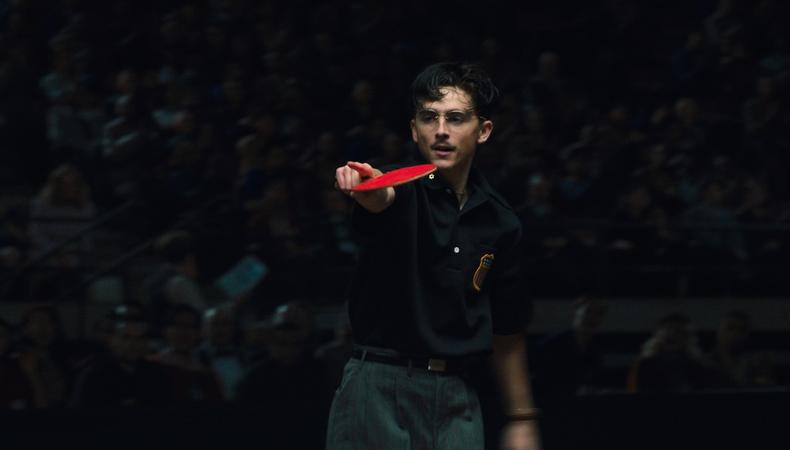
Six months later, the answer came into sharper focus. Chalamet reemerged during an inescapable press tour for “Marty Supreme,” Josh Safdie’s frantic portrait of Marty Mauser, a young Jewish American scheming and striving to become a world champion ping-pong player. Eschewing the standard marketing rollout—a few Instagram posts and junket interviews—Chalamet attacked the A24 movie’s promotion like a rabid grassroots campaigner, building hype and expectations with guerilla-style tactics. He pulled off both real and online stunts, announced spontaneous pop-up merchandise shops, and spread the “Marty” gospel at every turn.
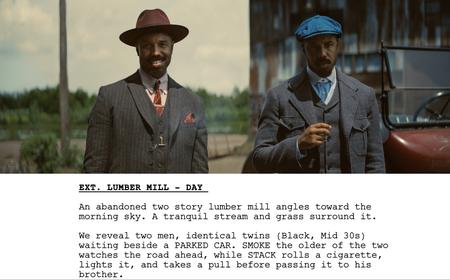 Script to Screen: How Michael B. Jordan Turned the ‘Sinners’ Screenplay Into a Polished Performance
 The unorthodox press circuit mimicked the movie’s frenzied energy and Chalamet’s manic performance, which eventually won him a Golden Globe and earned him Actor and Oscar nominations. It also crystallized a new form of movie marketing. At a time when theaters are losing the war of attrition with streaming and people’s screen time is surging, Chalamet knew he had to build real sweat equity in the attention economy. What better way to cut through the noise—and sell tickets—than by taking on all the characteristics of his feverish, manipulative, and highly talented protagonist?
To his credit, Chalamet had experience headlining obscure awards campaigns. Throughout the promotion of “A Complete Unknown,” he reintroduced himself to the most mainstream and niche pockets of America through a variety of antics. He showed up to the U.K. premiere on a Lime bike, dressed as Bob Dylan at his hometown New York premiere, and turned up at his own look-alike contest. He showed off his immense college football IQ on ESPN, hung out with internet interviewers Brittany Broski and Nardwuar the Human Serviette, and slummed around a dark warehouse listening to Bob Dylan and Black Eyed Peas songs on a livestream.
It looked like performance art, but his pivot to promoting “Marty Supreme” had a more brand-focused, Method-style approach. It began with Chalamet sealed inside a glass box in the middle of a field. He wore an orange ping-pong ball over his head and a “Marty Supreme” zip-up. Around him, a small swarm of lookalikes rallied at ping-pong tables, all wearing the same absurd headgear. Not long after, he went from surreal to meta, hopping onto a livestreamed, 18-minute Zoom call with A24 employees to discuss the movie’s marketing strategy (paint everything orange!). At one point, Chalamet’s computer background featured a photo of him accepting his SAG Award, all but confirming his speech was the unofficial start of “Marty” awareness.
The stakes got higher as the movie’s release got closer. Chalamet committed to a promise he made in the Zoom call, filming himself beneath a bright orange blimp circling above Beverly Hills on the night of the movie’s Los Angeles premiere. The aerial acts continued with a stop at the top of the Empire State Building before Chalamet flew to Las Vegas and attempted his most daring feat yet: shouting out the movie’s release date on top of the Sphere, which resembled a giant orange ping-pong ball. In between, the actor crisscrossed the country, outfitting legendary athletes with “Marty Supreme” jackets and making pit stops on talk shows and podcasts with persistent and consistent messaging: “ ‘Marty Supreme.’ Christmas Day.”
For the chronically online, it felt like a breathless assault on the senses. It also felt like a challenge. Maybe all of Chalamet’s posturing was self-aggrandizing, but it beseeched his fans to purchase tickets and hold the star’s claims of greatness accountable. And it seems to have worked—the movie has made close to $100 million domestically, making it the biggest box-office haul in A24 history.
“This is the new way of doing stuff. I’m trying to reach audiences. I don’t want to be in the pretentious in-crowd,” Chalamet told Variety. “ ‘Marty Supreme’ in America had the least frequent moviegoing audience this year—people that weren’t going to see everything. That’s my favorite feedback on the movie.”
Throughout the current awards season, Chalamet has made a visible effort to peel himself away from Marty and reassert the default version of Timothée. His speeches have been far less brash (and extremely deferential). He’s also bristled at the cynics, rejecting the idea that any of this was a gimmick. Instead, he framed the whole thing as something “coming from my heart and soul,” proof of “an artist expanding.” The irony, of course, is that he still sounds uncannily like Marty Mauser, a man so aggressively determined in his convictions that it’s hard not to believe anything he tells you.
Eventually, the comparisons will fade. What’s harder to argue is that this path is reproducible. There aren’t many modern movie stars with the appetite (or the nerve) to push it this far—and even if they do, the calculus is still hard to crack. Last fall, Jennifer Lawrence and Robert Pattinson engaged in a Vanity Fair lie detector test for their relationship drama “Die My Love.” Around the same time, Jesse Plemons and Emma Stone took a New York Times cooking lesson, a subtle nod to a dinner scene they share together in “Bugonia.” Neither on-theme stunt seemed to attract the amount of moviegoers they wanted; “Bugonia” brought in around $17.6 million domestically, while “Die My Love” earned just $5.5 million.
The best takeaway for actors? Be earnest. Be authentic. And treat the character, and the movie itself, as a creative playground rather than a product launch. Then, trust the audience is intrigued enough to show up.
Leading up to the 98th Academy Awards, the race for best actor might be the tightest of the season. Should Chalamet win, he’d be justified for blurring his personas and having spread his unvarnished bravado. Then again, the moment feels primed for something a little softer. After all, at the end of “Marty Supreme,” the ping-pong prodigy finally breaks. He can’t help but weep at the sight of his newborn child, overwhelmed by the realization that his scamming and jet-setting has led him to a real sense of purpose. Would Chalamet do the same while holding an Oscar? That would really be Method.