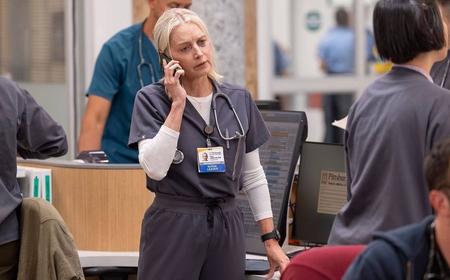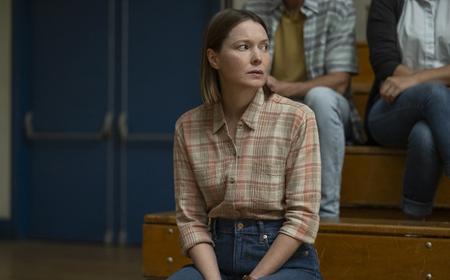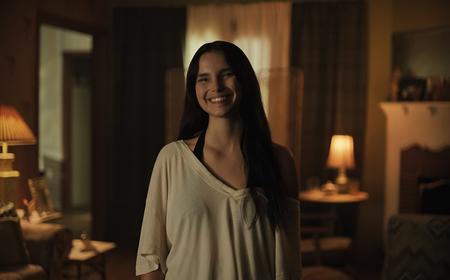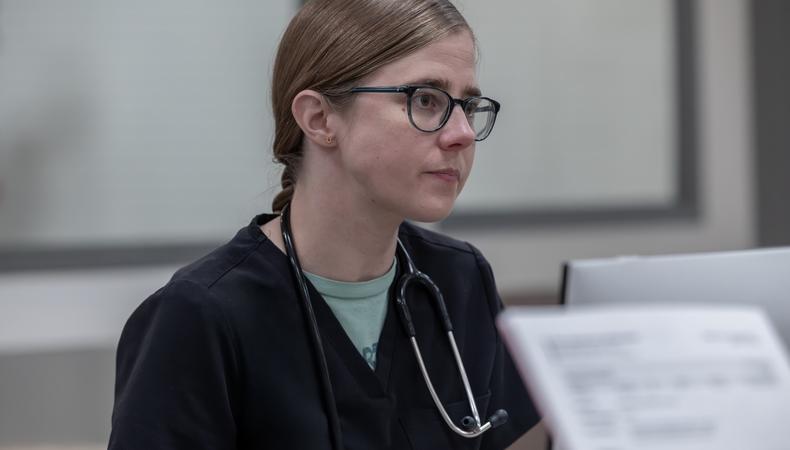
Taylor Dearden didn’t set out to play Dr. Melissa “Mel” King as just another brilliant TV doctor. Instead, she built one of the most memorable characters on “The Pitt” from the inside out, drawing on her own experiences with ADHD to shape her character's neurodivergent traits. The performance resonated with audiences and earned Dearden her first Emmy nomination. From mastering high-stakes medical dialogue to building multidimensional characters that feel fully human, Dearden breaks down the intense preparation required for the HBO Max hit—and shares her essential advice for the modern performer.
What keeps Dr. Mel from becoming just another TV doctor?
I think the key to Mel is her heart. Leading with her heart is what makes her different from everyone else in the ER. She's a deeply empathetic person who also just loves people and wants the best for everyone. I think we need more of that in our lives. That's what I also love about playing her.
You’ve spoken openly about your own experience with ADHD, and viewers have praised you for bringing a real emotional heart to a neurodivergent character. How did your own experience shape the role?
What frustrates me about watching neurodivergent characters portrayed on TV and film is that they don't show how much of life is panic—for me, for us. If we can't hear our own tone, which is a symptom of both ADHD and autism, we could sound angry but be happy, and people react to us as if we're angry and we don't know what's going on. There's so much anxiety in trying to say the right thing the right way and not knowing how it comes out. And, especially with ADHD, we have an added bonus of a gigantic group of the population that doesn't believe it exists, doesn't believe its symptoms and how varied they are because everything is a spectrum.
They might have a friend or family member with ADHD, and they think that's what it is. And it's like, nope. It's a huge, wide range. And I think the big thing is that we're really trying hard, and people don't see that.
Do you have any advice for a fellow actor with ADHD who is trying to make it in this industry?
You're in the right industry for us. I mean, what's interesting is that anything creative works for ADHD. There are so many of us in this industry. There are so many representations of neurodivergence in this industry, and so I think, honestly, you'll find your way. And what I try to do, because I'm on the severe side of ADHD, is when I meet someone I announce what they might see from me. It's not an excuse, but an explanation. And I always try to say, if I say something and the tone is off somehow, just ask me questions.
Like, “Are you angry right now?” because then I'll be like, “My God, no, I was really excited!” and I'll confuse the tone. So just ask questions and believe them.
You initially self-taped for “The Pitt” in a batch of auditions, and you said you didn’t think you looked like a doctor based on the types of characters you usually book. What helped you make the role your own?
Never think of what they want; think of what the character wants. The more you try to play a mold, the worse it's gonna be.
Mel was originally described as “peppy,” and I was like, well, I can't play peppy. I'm not a peppy person. I am anxious. I can play anxiety, but I can't play pep. And so I went for that instead. And so whatever you think the character needs, just find a way to get there.
I can't imagine, after your portrayal of Dr. King, her being peppy.
I know. I was like, “God, I don't know how to do peppy at all.” I'm so low energy most of the time.
Credit: Warrick Page/HBO Max
“The Pitt” is a true ensemble, and you're constantly paired with new guest stars. How do you quickly find a rhythm when you only have a few minutes to rehearse?
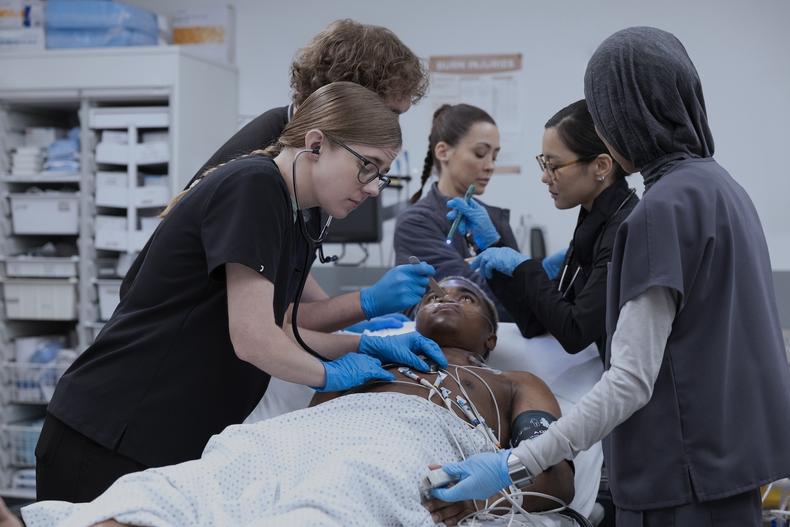
I always introduce myself as soon as possible—especially if there's something we have to do that might be tricky. We've all learned to go through everything we're doing because there's a tendency to talk to us about the procedure, but not to the person receiving it. And so, we actors have taken it upon ourselves to go, “Okay, I want you to feel this. It's a scalpel, it's flat.” And they'll feel it. And we'll go, “I'm gonna put pressure here. Let me know if this is OK.” And then we just go through all the things we’re also looking out for. And saying there's a double tap for stop.
And so we'll let them know about the double tap. You can also squeeze us, you can slap us, whatever it is you need to stop. And just go over what it is with them specifically, in a one-on-one setting. This season we're much better at it, but the first season [was] kind of bumbling around trying to figure out how to talk about it.
“The Pitt” unfolds over a continuous, hour-by-hour shift, and the cameras never seem to stop rolling. How do you lean into that go-go-go energy on set?
That's a really good question because that's really hard for me. I kind of have to stay in character physically, not so much anything else. So I like to start bouncing a little bit. Mel has a bounce to her, and so I try to keep my energy up, but it's tough. Especially because on our show, there's a lot more waiting than normal.
I think we've all tried to figure out ways to help. We all became nappers. I never napped before, and now it's a necessity.
I remember last season with Baby Jane Doe. The baby got to determine its own shooting schedule. And so we'd be in the middle of a scene, and it's like, “No, it's baby time.” And we [would] all have to go to the trailers for a few hours. This one time, we all came back to set and all of our hair was a little bit [mussed], and we all had this look on our faces. And we all just went one at a time, “Did you guys nap, too?”
But it's been a challenge. I still don't really have a handle on how to keep the energy up because it’s tough. Also, there are other things Mel has, like a higher-pitched voice than I do and a faster talking pace, so it's a lot of breath work and trying to get into my body that way.
Do you think the rapid pace forces you to trust your acting instincts more?
I think so. At first, most people–-myself included–-are terrified of this show. Whenever we see a guest star, especially one who has to do anything medical, they've got this deer-in-the-headlights look, and it's like, yeah, we've all been there. And there is an element of, I don't have time to think about this. You just go for it. And it's nice to have people you trust around you. There are a few of my costars I have no problem asking, “Did this come off stupid? Please tell me.” And getting some quick direction from them, too, because everything has to move so fast. But you do end up having to trust yourself, which is, especially for actors, incredibly hard to do.
Let's talk a little about the heavy medical dialogue. Do you have any tricks for memorizing all of that complex medical jargon?
In the first season, I tried different methods of memorization, but nothing worked well. Every time I would prep, I'd get to the scene and be saying the medical dialogue from a different scene. Because they would get really jumbled in my head. Then I started doing this thing–-and it's worked so far, I don't know why–-where I'll go over it a bunch of times, but I don't try to memorize. It's kind of similar to doing a play for me, where often it has to be in my body for me to [remember] it. So I'll have gone over it many times, and then in rehearsal I'll have my script, and as soon as I'm moving around with it and reaching for something, that's when all the words start coming to me. Then it clicks. I don't suggest everyone try that because that's a crazy method, but for some reason I need it to be in my body for me to get it.
TV actors often have to shoot episodes without knowing how the season ends. How do you make choices in a scene when you’re being kept in the dark about your character's future?
Yeah, I'm not a big fan of that aspect. Coming from more of a theater background, we know absolutely everything there is to know right away. We know the playwright's favorite dog's name. We know literally everything, and then you can just really live in the character.
With TV—because it's also not films, just TV, and especially something like this where it's an hour at a time—I would love to know what I'm supposed to get to, because you have to make specific choices for that to make sense. Because we don't get that, it's been quite a challenge.
I do use Noah as a resource a lot. He's a writer. I remember the first season, I could not figure out where they were taking me, and I just pitched to him, “I'm gonna start doing this.” And he goes, “That'll work.” Then a lot of us realized we can go to him and just be like, “I'm gonna start going in this direction,” and he'll go, “Yeah, maybe try a little bit this way.” We won't know exactly what it is, but it's the only way we can get any hint.

Credit: Warrick Page/HBO Max
Everyone is excited about Season 3. Is there anything you can share about Mel's character development without spoiling anything?
I have what I have in my head, but I don't know if that's what the writers want. I was lucky I went to USC for theater, and a few of my teachers said, “You're going to work jobs at some point where they don't tell you anything.” It's really tough, but I have to say, my teachers did prep me to be my own director. And just kind of make decisions that feel right.
Your dad, Bryan Cranston, recently said you’ve already mastered subtle on-camera techniques that took him decades to figure out. Since he lets you carve your own path, what’s a specific technical choice you brought to Mel that you figured out entirely on your own?
That's a really good question. Especially for neurodivergence, no one follows the same pattern. Everyone is different. Everyone has different symptoms and varying levels of severity.
Being a part of that world, but also what we were just talking about, of not having all the information, I just committed to where she is on the spectrum. It's not officially on the spectrum. Mel doesn’t know, and that's also a choice I made. I have two friends whose siblings were nonverbal autistic, and their parents never noticed that they were also autistic. I would talk to them about it and ask, “Have you ever wondered?” And they're like, “No, because that's autism. This isn't.” You don't understand that it's a whole spectrum. If you have only one thing that you see in your life, you don't know how nuanced it can be and how you're actually a part of it, too.
Making the decision of where she is on the spectrum—what she's really good at, what she's not so good at, and what makes her lovable—I got to choose that, and that was really fun. There will be times when all of us throughout our careers will have to fight for our character in bigger or smaller ways, but just to have a handle on where she is in her emotions, seeing where she starts struggling and where she's doing amazing, and having it specific. You can write it down if you want, but it's also just in me.
Is there any lesson that your dad may have taught you that you take into every role?
No, we don't really do that as a family because it's also my mom, my grandparents, and all the way back [who worked in theater]. There was no choice. My parents kept saying, “You're good at math, go, go.” And it's like, no. [But] because it's kind of the thing we're all good at, [we] end up not talking about it.
Season 2 ends with a viral karaoke scene with you and Isa Briones’ Dr. Santos. I’d love to know what your go-to karaoke song is.
I have a story about that, too, and it is a perfect example of what I was talking about: trusting your costars. When I heard about this [scene], I went, Mel doesn't drink. I don't know what to do. I asked Isa, “Hey, I need help. I don't know how to play this.” Because they wanted us drunk at the bar, and I was like, “I don't know how Mel could drink. I can't justify this.” And she goes, “But I would totally spike your drink. I'd order for you. You wouldn't know what it is; you'd think it's soda.” And it was like, thank God! I needed that because I wouldn't have known how to play it otherwise. Isa's so great to bounce [ideas] off of.
My go-to karaoke song would be not singing karaoke at all. Silence. It's singing: I can’t do it. I'm fine looking like a fool and everything. And in character, I can sing, but it's not me. I don't know why.
This interview has been edited for clarity and length.