Four-time Academy Award winner Colleen Atwood first met fellow costume designer Mark Sutherland on the set of Rob Marshall’s 2009 movie musical “Nine”; they then teamed up to work on the “Fantastic Beasts” franchise. Their latest collaboration is on “Wednesday,” Alfred Gough and Miles Millar’s “Addams Family” spinoff starring Jenna Ortega. The Netflix hit, which has been renewed for a second season, spawned several viral fashion moments; it also led to some shared moments of joy for the two designers. “We work hard, but we also realize how crazy we make ourselves, so we both laugh at the same things,” says Atwood. “It’s a really nice work relationship to have.”
How much did you lean into previous iterations of the “Addams Family” characters when you were coming up with your vision for “Wednesday”?
Mark Sutherland: Most of the information came from [Charles Addams’ original 1938] comic rather than the [1964] TV series everybody knows and loves. We wanted to take it back to its real roots, developing the fabric from the original comic but moving those characters into the modern world. [Director and executive producer] Tim Burton wanted to make them more real than they have been in the past. Wednesday has to stand out whilst being someone her generation could identify with. It was about humanizing the characters [whom we’ve always seen as] a bit strange and a bit weird.
 How to Get Cast on ‘Wednesday’
 Wednesday has some memorable Gen-Z fashion moments on Season 1. What was your starting point for her look?
Colleen Atwood: The whole evolution of Wednesday has a lot to do with Jenna’s quiet presence and how she actually moved in the costume. She didn’t have a peppy walk; she had a glide—a very quiet sort of animal quality to her stride. The first time we see her and she drops the piranhas in the pool, we establish her posture right away.
As fashion designers, how much do you collaborate with actors?
MS: It’s not until you meet the actor that you can move forward on the development of a character. Their input is so important.
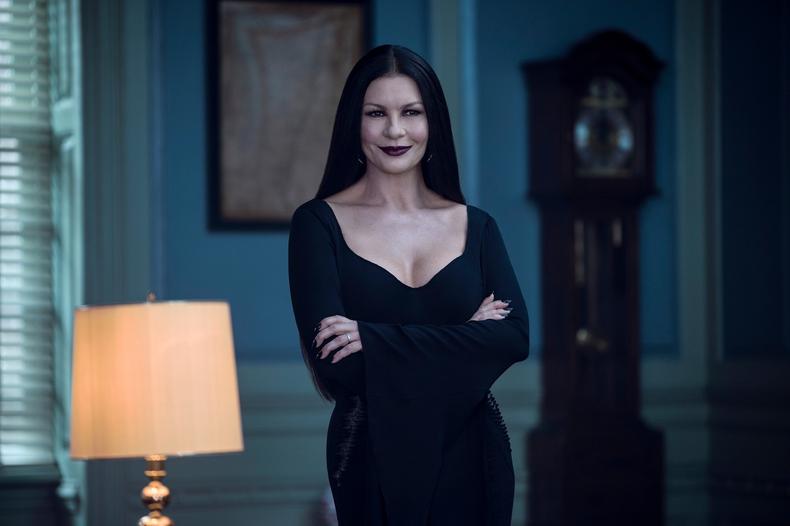
CA: Catherine Zeta-Jones actually came on our initial Zoom call in her version of Morticia’s hair and makeup! I worked with her on “Chicago,” and she’s a real pro. She just said, “This is what I’m thinking,” and we talked about the neckline and silhouette and what would work best for her.
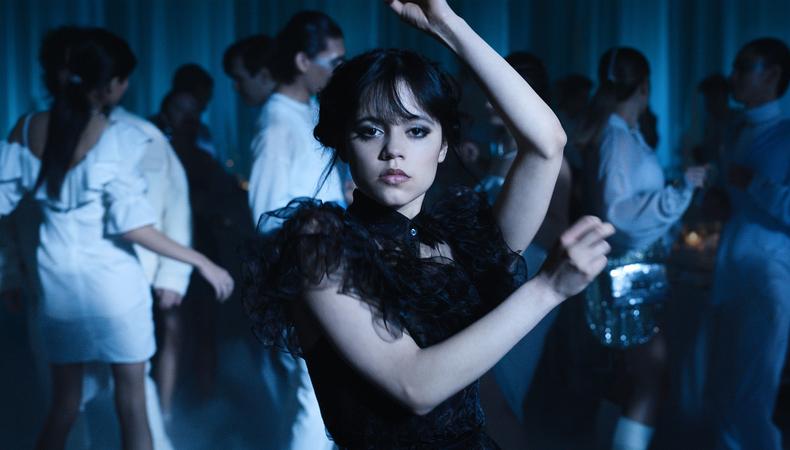
Wednesday’s most recognizable look is the black chiffon Alaïa dress she wears in a now-viral dance scene at the Nevermore school ball. How did you know that costume was the one?
CA: I was walking past the Alaïa store on Bond Street in London when I saw it in the window. I went in to look at it, and it turned out it was the only one they had made. I was with an assistant at the time who was tiny, so I got her to put it on and dance around the shop in it.
MS: I don’t know, if she had asked me, if I would have done the same thing.
CA: As soon as Jenna put that dress on, we knew it was made for her.
MS: The issue was that there was only one dress. We needed four to shoot her at the ball and under the blood rain. These things never happen in sequence, so we had to have enough dresses to cover all of these scenes. The dress was hand-stitched, so making three more of them was an epic thing to do. Luckily, we had amazing people to make that work.
Do you have any advice for actors about working with costume designers?
CA: I think it’s important for actors to know that their ideas are welcome to the costume designer—they don’t have to hide them. And sometimes it’s OK to change the costume. It’s a layering process. It’s not just: ‘This is your outfit; this is who you are.’ It’s important for actors to know that costumes should be clothes. They should be something that you wear rather than them wearing you.
You’ve both worked with Tim Burton before. How does that inform your creative process?
CA: When you work with Tim, you learn how to make a black dress. The good thing is knowing their creative process and how to present things to them. Tim is a reactive director, so I always try to show him as many things as I can, see how he feels about them, and then proceed with the next phase. That’s more helpful than waiting for him to tell me what he wants. If I show him a lot of stuff, he can guide me through what he’s thinking.
This story originally appeared in the June 1 issue of Backstage Magazine.