Imagine finishing your magnum opus (a dramatic monologue with perfect lighting and sound that would make Stella Adler weep), then checking YouTube Studio and seeing a yellow dollar sign instead of green. Welcome to the emotional roller coaster that is YouTube demonetization.
Plenty of creators have experienced this: Channels with millions of views suddenly going mute on ads, or uploads that once paid out like a sweet ensemble gig now earning exactly $0.00. Here’s what every creator, from sketch comedians to singer-songwriters, needs to know about demonetization on YouTube: how it works, what triggers it, what it looks like on your channel, how to avoid it, and how to fight back when it happens.
JUMP TO
Sergio Photone/Shutterstock
In the simplest terms, YouTube demonetization means that ads stop running on your video or channel—which typically means no ad revenue from that content. This can happen to a single video or your entire channel if YouTube suspects rule violations. Demonetized videos can still be watched, shared, and exist on the internet, but they don’t earn ad money.
Think of it as the platform saying, “This content is fine to watch, but advertisers, we’re not bringing you along for this ride.”
For context, to be in the ad money game in the first place, creators must be part of the YouTube Partner Program (YPP), which generally requires 1,000 subscribers and 4,000 public watch hours in the past 12 months or 10 million public Shorts views in 90 days.
YouTube has a set of advertiser-friendly content guidelines that steer which videos are eligible for ads. A violation doesn’t always mean the video is bad, just that advertisers might not want their products next to it. Common reasons for demonetization include:
- Inappropriate or controversial topics: Hate speech, harmful content, violence, adult material, drug use, and other sensitive subjects
- Misleading metadata: Titles, tags, or thumbnails that don’t accurately represent the content
- Copyright and reused content: Using music, clips, or other materials you don’t have rights to can shrink your monetization faster than a theater kid shrinking their favorite rehearsal sweater
- Spam or deceptive practices: Clickbait, scams, or shady tactics
- Inactivity: Some reports suggest that channels with long stretches of no uploads can be at risk (though this isn’t always clear from YouTube’s official pages)
There’s no official, definitive YouTube demonetized words list released by YouTube. However, community-generated lists (which include terms like “violence,” “drugs,” and those that refer to other sensitive topics) are often used by creators as rough guidelines, because YouTube’s AI can flag terms in titles, descriptions, or speech.
Can you get demonetized for swearing or controversial words?
Yes, but it’s complicated. Strong profanity and controversial language can trigger limited ad revenue, especially in titles and thumbnails. However, in July 2025, YouTube updated its policies to allow stronger profanity (like f-bombs) in the first 7 seconds of videos without automatically losing monetization—as long as it’s not excessive and not in the title or thumbnail.
At the same time, hateful, discriminatory, or slur words are still likely to get flagged because advertisers avoid supporting content that targets groups or encourages harmful behavior.
So yes, you can technically swashbuckle through some swearing, but think of it like stage combat choreography—context and control matter.
The short answer is no. When a video is demonetized, AdSense does not place ads on it, so neither you nor YouTube earns from that content until the status is corrected.
How does demonetization affect my revenue?
When a video is demonetized, ad revenue stops; and unless corrected, no advertising dollars are generated. Existing earnings before demonetization typically remain safe and will still be paid out through AdSense according to usual timing. However, if your channel loses Partner Program status, payouts may delay until you requalify. This means a channel could be demonetized and still have income from previously monetized videos, but new earnings from ads go dark until fixed.
Does YouTube make money from demonetized videos?
YouTube does not earn money through AdSense from demonetized videos. That said, it still earns from the platform overall by running ads on other eligible videos, even if some content is demonetized. The demonetized content simply doesn’t participate in ad revenue sharing.
It’s like being cast in the show but sitting in the audience during payday. You’re there, but you’re not getting paid.
Litepix/Shutterstock
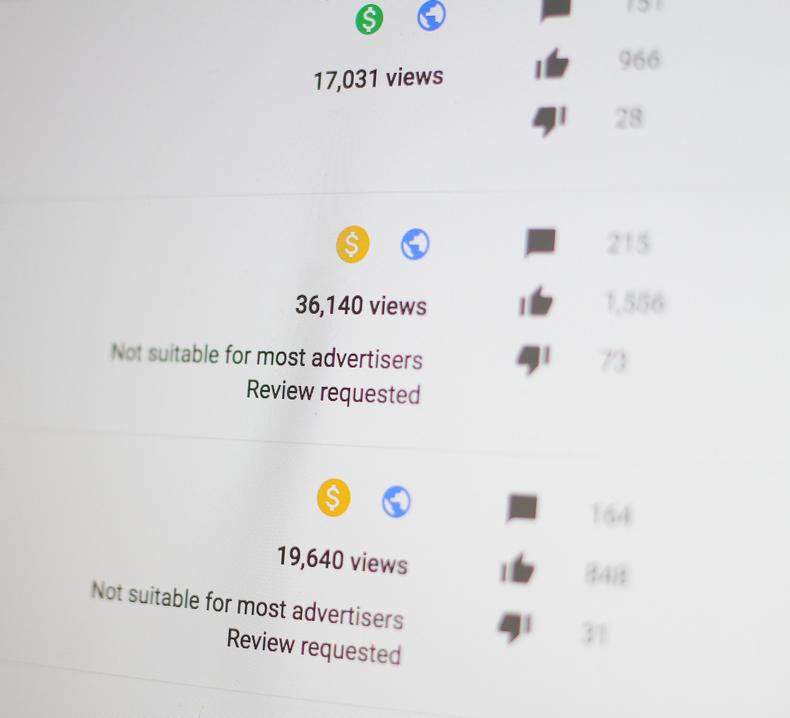
In YouTube Studio, demonetized videos are marked with a yellow dollar sign instead of green.
That means:
- No ads will run on that video until it’s approved.
- The video may still get views and engagement.
- Your overall channel eligibility could be affected depending on how widespread the issue is.
In some cases, channels can even lose access to monetization tools or be suspended from the YouTube Partner Program entirely if violations are severe or repeated.
Here are actionable strategies every budding creator should know to avoid that dreaded yellow dollar sign.
1. Play by advertiser-friendly rules. Keep content appropriate for a wide range of brands by avoiding hate speech, violence, overly explicit language, and misleading thumbnails.
2. Clean up metadata. Titles, descriptions, and tags should accurately reflect your content. No bait-and-switch.
3. Avoid copyright trouble. Use royalty-free music or YouTube’s Audio Library, and don’t upload content (audio or visual) you don’t own or have licensed rights to.
4. Be consistent and original. Reused content—clips from other creators, unmodified reaction footage, or aggregated clips—is a common demonetization trigger.
5. Think beyond ads. Diversify income with merch, Patreon, Super Chats, and brand deals so demonetization doesn’t feel like an existential threat. Casting directors of streaming platforms might actually dig a creative with multiple revenue streams.
If a video or your channel gets demonetized, don’t throw your laptop across the room (save that for auditions).
1. Check the issue in YouTube Studio. YouTube often provides a reason or policy reference for demonetization.
2. Edit and correct content if possible. Fix titles, remove problematic segments, or adjust metadata to comply.
3. Submit a review/appeal. Within YouTube Studio, use the “Request Review” or appeal option to have a human reviewer reassess your video.
4. Be patient but persistent. Some reviews take time, and creators sometimes need to provide context or justification for why content is actually advertiser-friendly.
If you miss initial appeal windows or your channel is suspended, you can often re-apply to the Partner Program after a waiting period (typically 90 days) once issues are resolved.
Remember: Demonetization feels like a slap in the face, almost like landing a callback but then hearing “We’re going in a different direction.” But it doesn’t mean the end of your channel or creative career. Audiences can still watch and share demonetized videos, and many creators earn more from fan support, merch, and influencer gigs than they do from ads alone. (Hello, open casting calls for content creator/influencer jobs!)
For creators who want to go deeper on building audience, monetization strategy, and content growth, check out our resources on becoming a YouTube influencer, getting more subscribers, and the best ways to make money on the platform.