This year’s British Film Institute (BFI) London Film Festival came to a close 13 October, with the international premiere of Martin Scorsese’s new Netflix venture, The Irishman. Celebrating its 63rd year and taking place at 12 venues across London, this year’s festival screened over 345 films across its 12 days. Alongside its trademark gala screening program, which boasts star-studded premieres of some of the year’s most anticipated films, the festival is known for drawing the biggest and brightest to Leicester Square to announce their awards.
This year’s festival kicked off on Wednesday with the The Personal History of David Copperfield, directed and co-adapted by Armando Iannucci. Dev Patel stars as the titular Charles Dickens character alongside megawatt stars Peter Capaldi, Hugh Laurie, Tilda Swinton, and Ben Whishaw in the adaptation of the classic novel, which premiered in September at the Toronto International Film Festival. In the week that followed, the festivities boasted an impressive slate of other events and screenings, featuring hundreds of directors, writers, and actors on hand to introduce their films and take part in Q&As.
For the second year in a row, the majority of films in competition were directed or co-directed by women, a rare occurrence in the film industry. Just last month at the Venice Film Festival, there were only two women directors out of 21 films in competition. This year’s BFI jury heads—Official Competition president Wash Westmoreland, Jessica Hausner, who headed the First Feature Competition, Yance Ford, the head of the Documentary Competition, and Jacqui Davies, overseeing the Short Film Competition—returned to Leicester Square to hand out the accolades.
Of this year’s offerings, festival director Tricia Tuttle said, “Our awards highlight the most distinctive, urgent and accomplished filmmaking from around the globe and it has been an incredible festival—with audiences moved, provoked and dazzled by these films, many of which engage with pressing social and political themes in very inventive ways. We are hugely grateful to our juries for their time this week in picking the award winners. I know the quality of the nominated films made many of the decisions very difficult and the juries brought a tremendous amount of passion, integrity and expertise to the deliberations.”
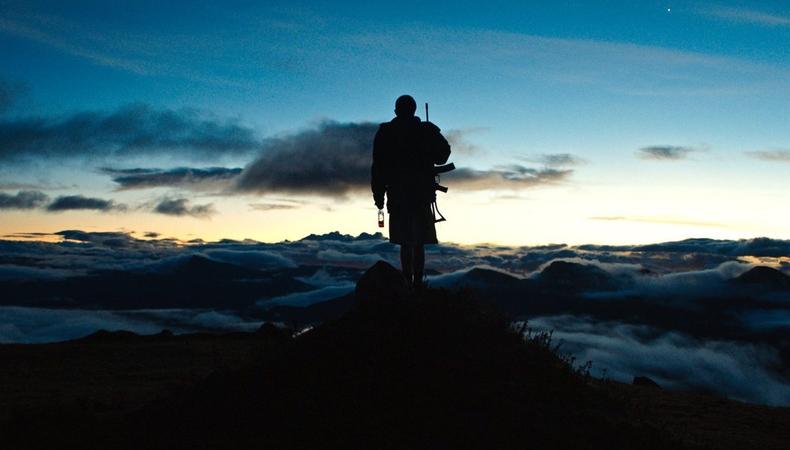
The biggest winner was Colombian-Ecuadorian director Alejandro Landes. His film, Monos, debuted last winter at Sundance where the Neon film took home the World Cinema Dramatic Special Jury Award. Westmoreland remarked, “Monos is a stunning cinematic achievement, marrying dynamic visuals, faultless performances and groundbreaking storytelling. It’s a masterpiece!” Westmoreland’s jury also gave out two Special Commendations: one to Amazon Studios’ Honey Boy, from director Alma Har’el, and the second to A24 and Studio Canal’s Saint Maud, directed by Rose Glass.
This year’s prestigious Sutherland Award for first feature film went to French-Senegalese film Atlantics, Mati Diop’s directorial debut. Diop made history earlier this year as the first black woman to direct a film in competition at the Cannes Film Festival; the film went on to win the highly coveted Grand Prix and distribution from Netflix. Hausner said in a statement, “Atlantics is a film that intrigued us by its original and refreshing use of genre elements in a story that also has a strong political impact. Set in a country that is going through transition, this film dares to invent a poetic fable, mysterious and challenging. A crime scene that becomes a nightmarish tale, held together by a story of the endurance and persistence of young love.” The First Feature Competition jury also honoured Bora Kim’s House of Hummingbird with a Special Commendation.
In the documentary competition, White Riot from Rubika Shah took home the prestigious Grierson Award. Ford said of the film: “In the spirit of the Grierson Award criteria, White Riot is both a provocation and a tremendous opportunity. In this moment around the world the film implies that perhaps the lessons of the past were never learned. This rhetoric and politics of this moment in our history is familiar. And although language and symbols evolve, their meaning remains. Without nostalgia for 1979, the power of White Riot is that it points directly at 2019. Rubika Shah has used the power of film to remind us of where we have been and asks how long it will take us to change course.”
As film awards season gears up, keep checking in with Backstage for full festival coverage!
Check out Backstage’s UK audition listings!