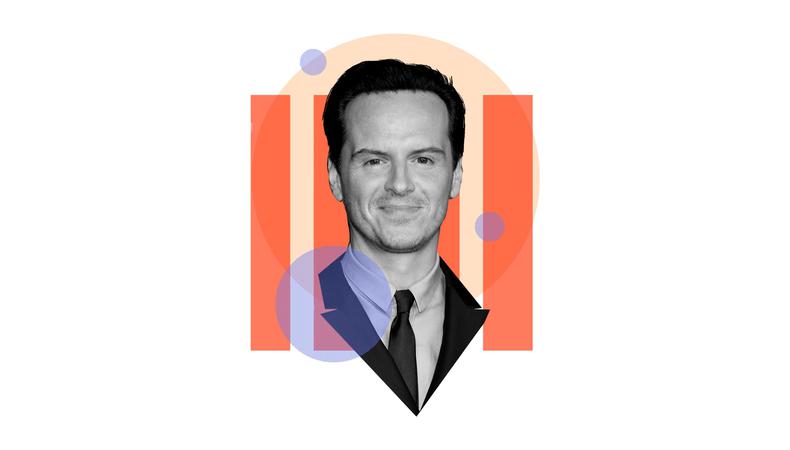
Long a beloved actor on the U.K. screen and stage, Andrew Scott made his international breakout opposite Phoebe Waller-Bridge on Season 2 of “Fleabag.” While his turn as the Priest missed out on the Amazon Prime series’ 2019 Emmys sweep, his layered performance on Season 5 of “Black Mirror” could be what earns him a deserved stateside statue. The actor, who began working at 17, walks us through the lessons he's learned since.
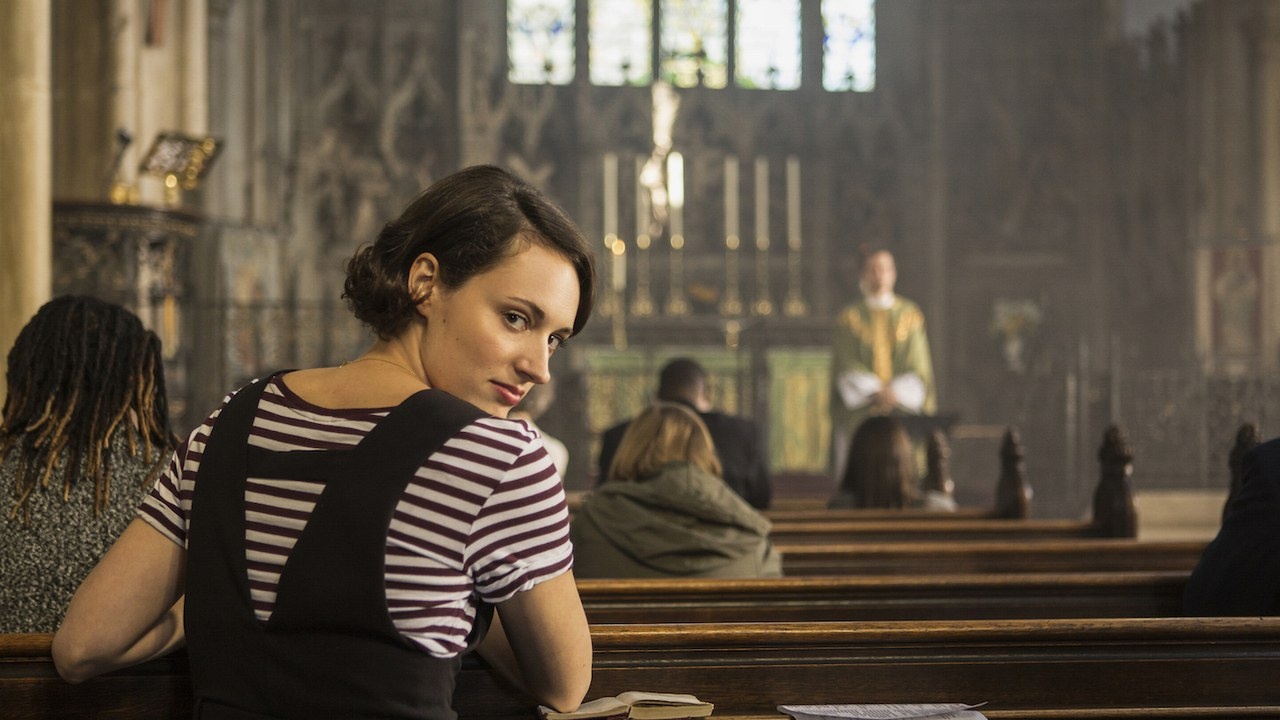 Phoebe Waller-Bridge on Why—and How—Actors Should Create Their Own Work
 How has this latest role as a desperate ride-share driver on “Black Mirror” made you a better actor?
The big challenge for it was [that] you have to try and make the character as interesting as possible while never changing location and never changing costume, never changing scene partner. The idea is to sort of map out the trajectory of the character so you don’t reveal too much too soon. It’s a little bit like theater in that sense, so it doesn’t become all one-note. If the eye doesn’t have anything to look at, you’re looking at the character in a way for plot details in the sense of what you should take seriously and what you shouldn’t. That’s what the challenge was.
What was your acting training like while growing up in Ireland?
I was very shy as a kid, so I took drama classes to sort of combat that, and then I did what we call youth theater over here, I guess sort of theater camp, you’d call it over there, just in the afternoons. I never actually officially trained. I just did that, and then I got a call up to be in a movie when I was 17, and then the Abbey Theatre in Dublin came calling after that and I went on to audition when I was 18 or 19. So, I was in the theater really very young; I was playing on the Abbey stage in Dublin. I am completely training-less.
I did a film [“Korea”] with a brilliant Irish character actor called Donal Donnelly when I was 17. What I noticed was he was incredibly kind and generous with everybody around him on the crew. And that’s how you really learn: You take things in. If you see people being cruel and nasty and dismissive and demanding on a set, I always think, Don’t do that, because there are people watching you and that’s how they learn to behave themselves. He was an extraordinary man that I learned so much from, which is why I think learning on the job has been incredibly unique and beneficial to me.
Where did you first get Equity? Was it at the Abbey Theatre in Dublin?
Yeah, I think it probably was the Abbey Theatre.
“I certainly know that a lot of my takes are totally cringeworthy. You’ve gotta be allowed to play. Kids don’t care about being embarrassing.”
What performance should every actor see and why?
What a brilliant question. I don’t know—the thing that I always feel, and something that I really believe at this stage, is that acting is about playfulness, so any acting that has no humor in it, I think, is just bad manners. What you do is you play a part, so playfulness, a sense of fun, a sense of comedic acting is greatly underappreciated. People think that in order to be a great actor, it has to be all relentlessly emotive, you know? You can’t really access the dark unless you’ve got access to the light. All the great actors have that. The one I’m thinking [about], of course, is Meryl Streep, who’s got an incredible sense of humor. And Jack Lemmon [has] an amazing sense of humor. Joaquin Phoenix. I think if you look at all these really brilliant actors, they disguise their lightness, and I think that’s a great skill in itself. They can get a message across without having to throw you over the head with it; they lead you in, and I find that very inspiring.
“Disguise their own lightness,” I love that. Where’d you develop that sensibility?
Well, I feel like that’s the way life is. There’s an expression that goes, “Tell the truth, but tell it slant.” Any kind of story that you want to tell, you have to start at Point A and finish at Point Z, so you have to go on a journey. If you’re starting really heavy and you’re starting at a P or a Q, people don’t see the journey; the journey becomes a little less epic. And I feel like that’s just the way life is: We start unburdened, and then we become a little more burdened. The greatest challenge, I think, as you become older, particularly as an actor but also as a human being, is to keep your lightness, to keep your wonder and lightness alive.
What advice would you give your younger self?
I think the thing is that whatever makes you sort of divinely you, the thing that you find distasteful or unacceptable or ugly or different, is genuinely the thing in actors that we look for. Most people’s favorite actors are people who have got a really distinct sense of themselves. If you don’t have a strong sense of who you are and all of your idiosyncrasies, it’s very difficult for you to adopt other peoples’ idiosyncrasies. You’ve got to have a kind of weird acceptance of who you are. I think sometimes actors feel like they’ve got to look a certain way or say lines in a particular way, or they’ve got to be the worst thing, which is “cool”—who wants to be cool, I say! So that’s what I would say: The stuff that actually people appreciate in performers is the something that is uniquely you, otherwise everyone would be doing it.
Certainly, and that wisdom only really comes through trial and error, failures and successes.
Making mistakes, absolutely. I think it’s really important, in the rehearsal room for the theater and on set, to be able to make and do really bad takes. I certainly know that a lot of my takes are totally cringeworthy. You’ve got to be allowed to play. Kids don’t care about being embarrassing. [Keeping] that freedom and holding onto that and just not taking it or yourself too seriously—even if you’re playing a serious part.
Do you have an audition horror story you could share with us?
Oh, yeah, I have loads. As my agent will tell you, I’ve always been very bad at reading scripts. I think because the majority of scripts are just not good, and so over the years, the more you read, the more depressed you get. Anyway, I was auditioning for this thing, and at the end, I read the sides—it had something to do with horseracing I think—and the [casting director] said at the end, “So, would you do it?” And I hadn’t a clue what she was talking about. I said, “Well, yeah, I think I would do it. I don’t see any harm in it.” And she looked at me ashen in the face. I’d sort of bet on the fact that what she was talking about was something that was an honorable thing to do. And it turns out it had something to do with the terrible abuse of horses in order to make a quick buck—this is what this whole show was about. She said, “So, you’re trying to tell me that you would flog a horse?”—it’s so bizarre when I think about it now—and I was like, “No! I mean, I don’t mean I would, I mean, no!” I literally went the color of a beetroot. And that’s just a lesson in at least reading the script, because they’re always going to ask you some sort of question.
“The wonderful thing that I love about being an actor—it’s the curse but it’s also the great magicalness of it—is that you really do not know what’s around the corner, so it’s certainly not boring.”
What’s the wildest thing you’ve done to get a role?
I think I wrote a couple of letters to somebody once to say, “I could be good in this part”—and I didn’t get it. But I don’t see any shame in that. I always feel like putting yourself out there and taking a bet on yourself and saying, “I feel like I’d be good for this.” Actors get so used to rejection. There are so many reasons why you could get or not get a job. I always say, if you feel passionately toward something—you don’t feel passionately toward everything—put yourself out there, and getting used to rejection is a big part of it.
What advice do you have for actors today during these extraordinary times of coronavirus and industry shutdown?
Well, obviously, there’s a huge sense of uncertainty internationally. I’ve been talking with a lot of drama students during the pandemic about this. Actually, as actors, this is in a way a very good training ground for what it’s like to build your day when you’re unemployed. You go, What am I going to do? What discipline am I going to employ to make myself feel that I’m not worthless? You have to be self-motoring as an actor, and I think a lot of people are experiencing that thing where they’re at home—actually, we’re in a sort of privileged position where it’s not unusual for an actor to be at home at 11 o’clock on a Tuesday going, “OK, well, I’m going to plan this and I’m going to do this.” When control is taken away from you when you’re an actor, you have to have a sense of discipline and really keep a sense of dignity while you’re unemployed. That’s the most difficult thing about being an actor. But, actually, it means that you can have this incredibly varied life! You can go and have a cycle in the middle of the day; you can go and meet people. Life isn’t always about cramming in as much work as possible in this finite amount of time we have. The idea of getting on a packed subway at 8 o’clock in the morning and coming back at 7 o’clock at night, I’ve always found it a great privilege that I don’t have to do that. So, even though there’s a huge amount of insecurity and uncertainty in the acting profession, to me, it’s a very honorable thing to do, and if you choose to look at it in a very positive way and a creative way, that there is more than one way to live a life, this unusual time can be a breeding ground for creativity in the sense of how we live our lives as creative people.
Right. As an actor, the variety of your days is in part what makes it all worthwhile.
Exactly. The wonderful thing that I love about being an actor—it’s the curse but it’s also the great magic of it—is that you really do not know what’s around the corner, so it’s certainly not boring. Trying to ape the way that other people live their lives in a more conventional way is pointless. The wonderful thing about it is that you can create your own life. I love the expression “Stop the glorification of busy.” I think it’s a really, really good one—this idea of busy-ness and being busy all the time isn’t natural. You don’t have to be productive all the time. You don’t have to be doing something all the time. In any sort of artistic job, you’ve got to be able to ebb and flow a little. The ebbing creates the flow.
This story originally appeared in the Aug. 6 issue of Backstage Magazine. Subscribe here.
Looking for remote work? Backstage has got you covered! Click here for auditions you can do from home!