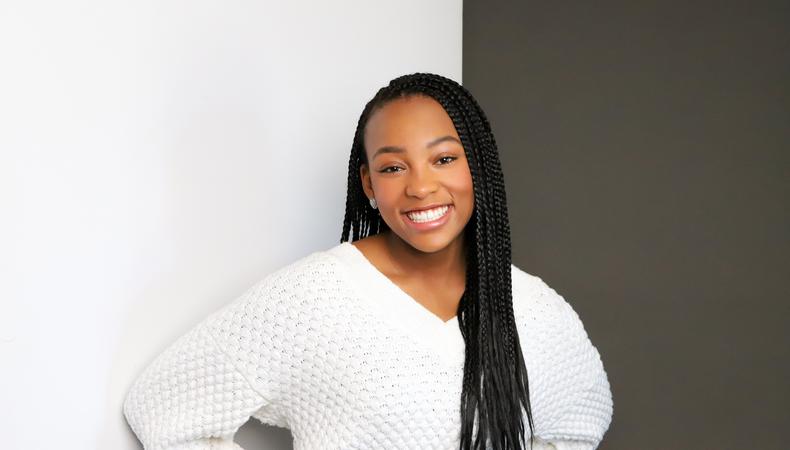
The following Career Dispatch was written by “General Hospital” star Sydney Mikayla.
I believe that authenticity can be a difficult word for an actor of color to process. Sometimes, we might wonder if our likeness is palatable and understood by white audiences. I used to believe that authenticity was straightening my hair to fit into certain roles, or to be more “sassy” so as to be deemed the funniest Black girl.
As I matured, I realized that authenticity was coming into myself. Multihyphenates like Issa Rae and Tiffany Haddish (who are both L.A. natives, like myself) inspire me to sit into the pockets and reach into the depths of my likeness; to explore the awkward, oddball, insecure parts of me that I thought no audience could relate to.
So that's what I brought to Trina Robinson, the character I play on “General Hospital.” As I researched the series, I wasn’t sure if my acting style could fit the cadence of the show. Could I do the dramatic looks or cry on cue? However, as I prepared for the audition and callback, I put all that aside. I tried to make Trina as genuine and raw as possible; instead of making her an over-the-top teenager, I made her a vulnerable 16-year-old who is loyal, independent, and fun.
 How ‘Days of Our Lives’ Is Surviving COVID-19 Against All Odds
 As I have grown into the role and into my other acting roles—such as Wolf on “Kipo and the Age of Wonderbeasts,” or Maya on “Craig of the Creek”—it has been important for me to continue the search for authenticity with each and every character I portray. How does every role I play relate to me? How can I make it relate to others?
As I prepared for the role of Wolf specifically, even though I knew she was an action-packed superhuman, I also knew that she was a scared little girl in desperate need of friends, a pack of her own. Oftentimes, strong Black girls are masculinized and ostracized by society, so I knew it would be easy to fall into the trap of making Wolf more subdued. That wasn’t who she was, though. She was a tough warrior, and after hearing fans’ feedback, she seemed to be a role model for many young girls who wanted to be strong and fearless just like her.
READ: Soap Operas Taught Judith Light How to Audition
That’s when I realized the importance of bringing truth to every role, and why it is vital for artists to express themselves in the most vulnerable way possible. Niche ideas and unique characters create representation of underrepresented groups that are ready to see versions of themselves onscreen.
This is why I hope to one day become a producer, to create a world and a community of oddball people, underrepresented minority groups, and tell and create new stories that aren’t often told. I want to be a part of a movement that creates a Hollywood where no actor of color has to ask themselves, “How authentic is too authentic?” My goal is to showcase the real, the raw, and the relatable. And I’m going to do just that.
Looking for remote work? Backstage has got you covered! Click here for auditions you can do from home!