Facebook has introduced a feature that allows users to make multiple personal profiles. While Finstas and other fake pages have long been a way for people to separate their personal, superpersonal, and professional lives, this new initiative opens up a metaverse of possibilities for performers to target specific audiences and curate content tailored to their interests. Here’s everything you need to know about the multiple profiles feature and how it can help you build your brand and expand your fan base.
JUMP TO
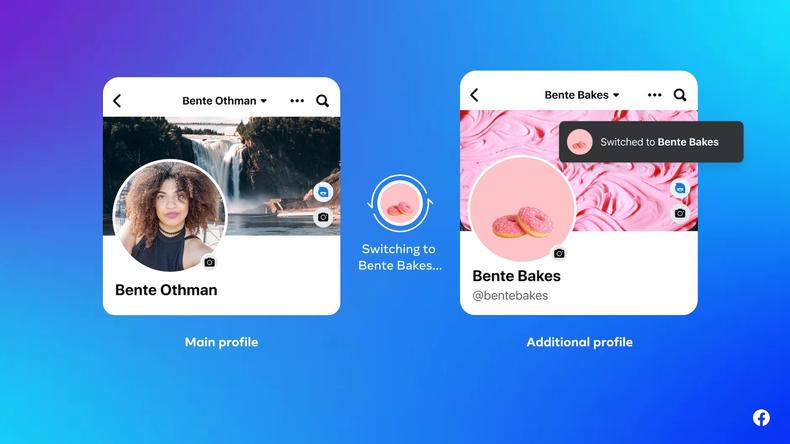
Courtesy Meta
You can now create up to four additional profiles that branch off from your main profile account. According to Facebook, “These profiles can represent different things about you, like your interests or communities you belong to. Each profile will have its own friends list and feed, and each can follow different groups and pages.”
Facebook added the multiple personal profiles feature after receiving feedback from users who said they wanted the ability to target different audiences. A statement by Facebook reads: “You may want to keep your personal and professional relationships separate, or you may want to keep one profile tied to a community you’re a part of and another profile just for friends. Creating multiple personal profiles lets you easily organize who you share with and what content you see for the various parts of your life.”
How do I make multiple profiles?
According to Facebook, to create another personal profile, you should:
- Click your profile photo in the top right of Facebook.
- Click “See all profiles.”
- Click “Create Facebook profile.”
- Click “Get started” and follow the instructions on the screen.
To create other additional profiles, repeat these steps.
 How to Make Money With Facebook Reels
PixieMe/Shutterstock
Utilize Facebook features: Whether it’s posting Facebook Reels about your craft, hosting live Q&A sessions, or letting your network know about an upcoming event, use the platform’s native features to connect with your audience.
Build and engage your fan base: Join relevant groups to connect with fans. Share insights and actively participate in discussions to establish a strong presence within the community. For example, actor marketing specialist Heidi Dean recommends that actors comment on fan Facebook pages. “This is a rock star way to get more exposure for your Facebook page[s] with a target audience,” she wrote. “Find pages where your audience is already having conversations and join in.”
Connect with other performers: You should also use your profiles to find opportunities for collaboration and other forms of connection. “Collaborating with other actors and content creators can be an excellent way to promote oneself and reach a wider audience,” wrote creative director and producer Luis L. del Rosario Jr. “Actors can collaborate on projects such as short films, web series, and podcasts. By working with other actors and content creators, actors can gain exposure and create valuable connections within the industry.”
Create multiple personal brands: To get the most out of customizing your online personas, consider the personal brand you want to promote for each. “An actor can understand what their brand is and find a way to monetize it,” says agent Scot Reynolds. “Authenticity is key—the more real you are, the more attractive you appear to followers. People like to see the real you.”
Brand strategy coach Ratana Therakulsathit broke down finding your personal brand into these questions:
- How do you see yourself? Fill in the blanks: “I am ___” and “I am not ___.” For example: “I am organized, insightful, and playful. I am not rude, gruff, and unprepared.”
- How do others see you? To get an answer, you could organize an informal survey or send a quick email to 10–20 people in your circle—or look at past feedback from bosses, teachers, friends, and family.
- Do you notice any patterns? See if any words or phrases pop up multiple times across your survey. You can use those similarities to help define (and refine) your personal brand.
Ask these questions for the different types of work you want to create. For example, your personal brand as a sitcom actor might be sardonically hilarious, while your brand as a playwright might be erudite and serious (look at you, you multihyphenate talent!).
Curate content: Tailor the content on each profile to cater to each target audience. A dry humor video might be perfect to post on your actor page, but it may not fit so well on your serious dramatist profile. Share updates and behind-the-scenes looks, highlight your performance abilities, and engage with your fans in a way that matches each profile’s vibe.
LightField Studios/Shutterstock
What are the benefits of having multiple profiles?
Separation of personal and professional: Having multiple profiles allows you to keep your personal life separate from your professional life. Multiple profiles mean more control over who sees your posts. For example, if you’re an aspiring comedian, you likely want potential fans to see your collab with comic Lisa Gilroy—but not so much your post wishing a happy birthday to your Aunt Gladys. You can curate the image you want for your career in entertainment while keeping personal moments as they should be: personal.
Customizable online personas: Beyond simple separation of personal and professional, multiple profiles allow you to customize your online presence. You can tailor your content to specific audiences and let your talent shine where it will be most appreciated.
Strategic networking and promotion: The new feature means you can join industry-specific Facebook groups and communities for each distinct profile.
What are the downsides of having multiple profiles?
Burnout: Dean notes that being in charge of multiple profiles on one platform can lead to stress. “For creatives who are exclusively focusing on Facebook, making multiple profiles may be a great way to separate the personal and the professional,” she says. “But please be careful. If you’re already on Instagram, X, TikTok, YouTube, Threads, etc., ask yourself if you really need multiple Facebook profiles. It’s better to totally rock one or two platforms that help you reach your goals than to get burnt out [posting] on four. Choose the ones right for your career and your goals and give those 100%.”
Difficulties streamlining: Figuring out what content to post, when to post it, and how much to engage with other users is difficult enough when you’re only using a single profile—and streamlining the process can be even more difficult for those with multiple profiles, advises digital strategist Tony Howell. “The idea is to streamline when possible. It makes social media easier to manage and grow. In terms of setting up accounts and sharing content, remember: Personal is professional. Professional is personal. Nothing online is private.”