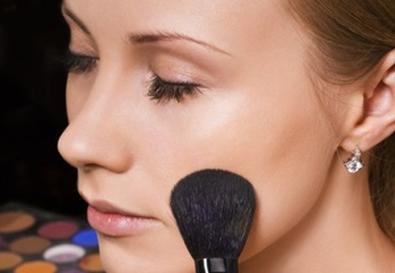
After you've determined what your type is, make sure your look—your physical appearance—fits your type, complements your type, and helps you sell yourself as that type. Use your hair, makeup, and wardrobe to help others see who you are as an actor—in your headshots, at auditions, at classes and workshops, and anywhere else industry people (casting directors, agents, managers, producers, and directors) might be.
Adjust Your Look to Fit Your Type
Mandi Moss determined her type was "quirky and/or artistic techie." As she has observed, "If it says 'quirky' or 'seeking interesting people,' they call me." She decided to adjust her hair and glasses to help her look match her personality. Her hairdresser had suggested bangs would make her stand out, so Moss tried them and was pleased with the results. Then she traded her simple wire eyeglass frames for chunky black square ones. "At first I thought I made a mistake," admits Moss. "I mean, those glasses were huge. But with the combo of the bangs and the glasses, it has really helped me zero in on a type I was already getting called in for anyway. Those two changes really help drive home my type and helps [my agent] sell me."
Sarah Glendening, who says her type is "feisty ingénue," had two slow years in New York. "When I first moved to New York, I did a Broadway show and that was great and everything. But directly after, there were two years where I couldn't get arrested. I was temping, and all I'd get is a reading here or there. Then I got cast in a Web commercial for Sunsilk, a hair product, and they dyed my hair red for it. I was so upset at first because it was not what I had signed on for. But I got used to it and started really liking it, so I kept it." Glendening started booking jobs regularly—including a pilot, more theater, a role in a film, and a guest spot on "Cold Case." Most recently, she booked a contract role on "All My Children." "I don't know if it was purely the hair, but when you look at the timeline…after I dyed my hair, I was getting a lot more work. Pretty soon I was able to quit my temp job."
Glendening believes she was always the feisty ingénue inside, but the red hair helped her sell it. "It made people notice me more," she says. "I'm more specific all of a sudden. [Casting directors] can recall me more. The work I'm doing might not be any different, but there's a little flag in their memory."
Makeup and hair artist Elizabeth Dahl says actors should consider getting a makeover if they're not getting any work. "I know several former blondes who became brunettes so they could play the vixen and the bitch," she says. "Look at your wardrobe and decide if a big change needs to happen. Consider doing a drastic hair change—cutting your hair, coloring your hair." Dahl insists women and men should see a professional if they want to dye their hair: "Sometimes, when men start going gray, they dye their own hair too dark. That doesn't look good on anyone. See a hairdresser for good coloring and see them regularly. And don't forget to have them dye the eyebrows, goatee, and beard."
If men are losing their hair, Dahl says, rather than doing a comb-over or trying to hide their receding hairline, they should decide whether their type is bald or with hair. "You don't want to be famous for your bad hair," she says. "If you really don't want to be bald, consider getting hair transplants. I know plenty of men who have gone that route and felt good about it."
Though a complete makeover might be too drastic for some actors, Dahl says adjusting your look in small ways can help promote your type. "For women, if you wear your hair and makeup more upscale, you pluck your eyebrows and shape them a little more, you could be going out for those lawyer and judge roles," she says. "For men, sometimes they've got a lot of eyebrow hair covering their eyelid. If you took some of the hair off your lid, your upper brow bone, and groomed it a little bit, this might give you more of a leading-man role opportunity. It opens up your whole eye. You might not look so menacing or unkempt. More guy next door. With facial-hair grooming, trimming your hair, pulling it back, spraying it back, you could look more upscale and play a lawyer-type role or a businessman."
Bring Your Look to Your Pictures
Casting director Erica Silverman ("Criminal Minds: Suspect Behavior") says actors should take pictures that represent their type. "Make sure it comes through in the pose, the wardrobe, the setting, the whole thing," she says. "Don't rent or buy a costume. Portray that strength in you. People can take a really great, standard headshot, but when I'm flipping through 1,500 submissions for a very specific role like a cop and you're just submitting a regular everyday headshot, I'm probably going to skip over you. I have a very short amount of time to cast this exact role, and I need your picture to make me stop. By pushing yourself in that direction, it helps us so much."
Headshot photographer Jeff Ellingson of Jeff E Photo has actors bring numerous wardrobe choices to their shoots. "I ask them, 'Out of these options, which one feels the most like you?' and I have them put on that one first," says Ellingson. "The wardrobe, hair, and makeup should just accent the character but not be the point of the whole headshots. Casting directors are looking for real people. If you can show them [your type] without having it be all about the hair, makeup, and wardrobe, you're better off."
One of Ellingson's favorite examples of this is a shot he took of Scott Krinsky, a series regular on "Chuck." "This picture (see below right) is very quirky," he says. "But he's not trying too hard. He casually put his head on the wall and I thought it was a perfect way to capture that quirkiness without it being too posed. His wardrobe is very simple as well."
Ellingson, who is also an actor, urges his clients to think about what they want to achieve with the headshots before he snaps them. "A lot of times people just want to look pretty," he says. "And when you go for a headshot that just makes you look pretty, you're really doing yourself a disservice. If you're just a normal person who lives next door, there's going to be a lot more roles for you. Look at my personal headshots (see below). One is my old theatrical shot. I look good, but what would I get cast as? The [other] is a new, more laid-back approach. Much more castable."
Jessica Mills was having trouble getting her personality across in her headshots. "I'm the nerdy, wisecracking, awkward, clumsy best friend," she says. She didn't want to wear glasses or make a funny face in her pics; however, she took one in a Superman shirt. Although one casting director at a workshop disliked the shot and told her she shouldn't use it, it's the shot that gets her called in the most. "My other shots are too bland. That one gets attention," Mills says.
She decided to take the idea of showing off her type one step further. She developed her own Web series, "Awkward Embraces", in which she plays a nerdy, wisecracking, awkward, clumsy girl. She now uses it as her "calling card," even over her headshots. "I think it's our job as actors to develop what we're best at and then make that name for ourselves," she says. "Now it's easier for the industry to see me and know my type. I've developed this online presence of being this girl in the Superman shirt. That's me."
Be Your Type
When auditioning, most casting directors agree your wardrobe, hair, and makeup should suggest your character and type, but not be a costume. New York casting director Ilene Starger ("Did You Hear About the Morgans?," "The Pink Panther 2") says actors should think about the character's social standing and dress accordingly: "I think if one is playing an upscale, sophisticated character—i.e., a lawyer or a stockbroker—don't wear ripped jeans and a T-shirt. I don't mean come wearing a costume, but I think one should come in looking as much like the character as possible. Likewise, if you're coming in for a drug addict, don't wear a suit. I don't mean spend money to buy outfits or come in wearing a cop uniform if you're playing a cop; I'm just talking about good common sense."
Pat Moran (Washington, D.C., casting for "Big Love" and "State of Play") warns actors not to arrive wearing a stethoscope if they're reading for the part of a doctor. "If I couldn't see them as a doctor, I wouldn't have called them," she says. "The stethoscope thing makes me nuts. Why do you think I called you in? Or if they're reading the part of a coal miner, I don't need a coal miner's hat. I did see you as a coal miner."
No matter what you decide to wear to audition, the most important thing is that you loosen up and be yourself while wearing it so you can relax into your performance. "Actors perform best when they are comfortable," says Los Angeles CD Johanna Ray ("Kaboom," "My Son, My Son, What Have Ye Done"). "Sometimes when an actor dresses for the role—particularly if it's for something like a hooker—the outfit and the makeup can prevent you from seeing beyond that, unless the performance is absolutely brilliant."
Being a non-charactery type like leading man or woman comes with its own set of challenges. "Feisty ingénue" Glendening says she can't just roll out of bed and go to an audition. "If you're an ingénue, you need to look like an ingénue at all times," she says. "For auditions, it's an hour-and-a-half process of getting ready. You have to put yourself together because the competition is so fierce in that particular category. There are lots and lots of beautiful people who are incredibly talented."
"Quirky and artistic techie" Moss believes actors should be conscious of their type at all times and brand themselves in everything they do: "Whether it's what you wear on a day-to-day basis, what picture you put up on Facebook, or what you post on Twitter, staying on brand keeps people clear about who you are and what you do."