Hand models use their fingers, palms, and wrists to promote a wide range of products, from high-end jewelry to everyday items. But becoming a hand model isn’t just a matter of having great digits. To capture the attention of an agent or client, you also need a portfolio of images that showcases your hands’ beauty, versatility, and the unique qualities that set them apart in a competitive market.
JUMP TO

Ground Picture/Shutterstock
Like a traditional modeling portfolio, the hand modeling portfolio is a collection of professional images that highlights a model’s range and ability to present products and convey emotions. The portfolio is meant to capture the attention of clients by demonstrating experience, versatility, and specific handy talents.

Sofia Zhuravetc/Shutterstock
Making a hand modeling portfolio is a matter of getting your hands in tip-top shape, conducting research, and taking and compiling images.
1. Prepare your hands
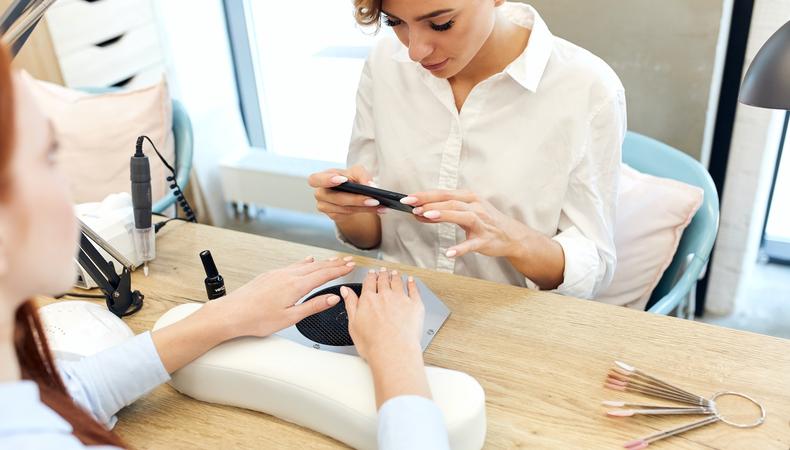
Before you start snapping pictures, ensure that your hands are impeccable by protecting them against harsh environments, moisturizing regularly, manicuring your nails, and doing exercises to build endurance and increase your range of motion.
2. Research
Much like traditional models might have a specific modeling type or might wear several different hats, hand models can range from being super-niche to taking on a diversity of roles. For example, many jewelry brands hire models with delicate hands to highlight the elegance of a bracelet or ring, while a home improvement company making an ad for a hand saw might prefer a model with more rugged features. Gender-specific considerations are also important, as male and female hands can suggest different qualities and may be sought after for different types of products. A male hand model portfolio might highlight strength and firmness, while a female hand model portfolio may focus on grace and delicacy. The portfolio must cater to these nuances, ensuring a diverse representation that aligns with the broad spectrum of commercial needs and client expectations.
3. Take photos
It’s best to have your photos taken by a professional photographer—especially one who has experience working with hand models—to capture images of your hands in their best light. Take high-res photos of at least 300 dots-per-inch (dpi) for web and 600 dpi for print, and request photo file sizes of at least 1MB.
4. Assemble the portfolio
Your portfolio should include photos, personal stats, a professional summary, and contact information.
- Photos: Include images of:
- Your hands in several different poses
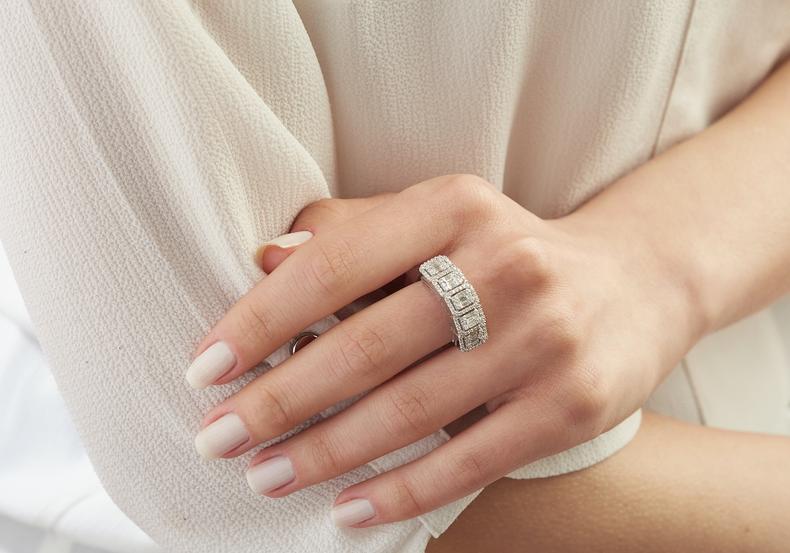
- Your hands wearing accessories and jewelry
- Action shots using different products
- The palms and backs of your hands
- Your hand bent at the wrist
- One of your face so that clients recognize you at go-sees
- Personal stats: Include relevant information such as your age, hand features (birthmarks, tattoos), and any unique qualities and skills (double-jointedness, hand magic tricks).
- Professional summary: Outline your technical and creative skills, modeling experience, any big-name clients and campaigns you’ve worked on, and if you have representation.
- Contact info: Make sure that clients can contact you by including your name, professional email address, phone number, city of residence, and any social media handles you use for modeling.
feedbackstudio/Shutterstock
These examples demonstrate that a good hand modeling portfolio isn’t static but rather a living document that evolves with the model’s career.
- Ashly Covington: Bold and playful, this portfolio is filled with bright colors and dynamic, artistic images.
- Matthew H: The images in this portfolio denote both strength and grace.
- Susan Schell: Schell demonstrates a variety of posing styles, from stills displaying couture jewelry to action shots of shampooing and using appliances.
- Ellen Sirot: This photo collection is consistently classic and simple across brands and styles.
Take these portfolios as inspiration; update your own with new work that reflects your current skills and styles, and seek feedback from industry professionals to gain insight into trends and client expectations. Construct a portfolio that not only shows off your hands but also tells the story of a professional ready to make a mark in the world of hand modeling.