GoPro has spent a decade building its marketing on footage its own customers shot. That candid, camera-facing energy is the engine behind UGC ads, and it is changing how brands earn attention. The winning formula pairs the right creator with a clear problem to solve on camera and builds ads useful enough to watch and memorable enough to act on.
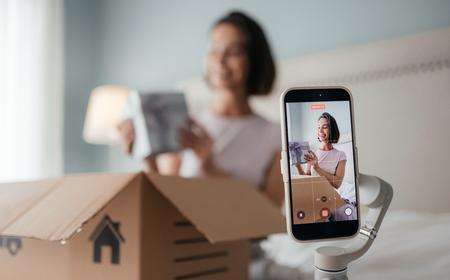
UGC ads are paid advertisements that use user-generated content or content made by customers, fans, and independent creators rather than produced solely by a brand’s in-house team. That content can be a product review, an unboxing, a tutorial, a testimonial, a day-in-the-life clip, or a short-form video showing the product in a real setting. Traditional UGC is created and shared by users, while paid or sponsored posts are a distinct arrangement. In today’s ad ecosystem, though, brands often commission creator-made footage in a UGC style and license it for paid social placements.
That separation matters. Creators often produce assets directly for a brand’s marketing team to refine, evaluate, and launch, rather than publishing to their personal channels or pitching to their own followers. The final advertisement still retains core UGC advantages: relatable scenarios, an authentic perspective, a human touch, and an approachable tone that avoids sounding sales-driven.
Why invest in UGC advertising instead of relying only on traditional creative? For one, it can make a brand’s message feel more like social proof than interruption. Nielsen’s Trust in Advertising studies have found that consumers trust recommendations from friends and family approximately 90% more than other forms of advertising, a useful reminder that peer-like communication carries a different kind of credibility than polished brand messaging.
UGC is also flexible. One smart creator shoot can yield several opening hooks, cuts, captions, aspect ratios, and calls to action, giving a performance marketer more creative variables to test. And while high-production campaigns still have their place, UGC lets brands show the product in the environments where it is actually used: at a bathroom sink, in a cramped apartment kitchen, on a commute, or during a hectic workday.
For brands deciding who should make that content, the creator with the largest audience isn’t always the strongest fit. The better casting choice is often the person who can make a target customer think, “That is exactly my situation.”
The most effective UGC ads are deliberately built around a persuasive idea while leaving room for a creator’s natural delivery. Here is what consistently gives them lift.
- A hook that earns the first few seconds: Start with a friction point, surprising result, bold claim that can be supported, or a highly specific audience callout. “If your foundation separates by noon, watch this” gives a viewer a reason to keep watching. A generic brand introduction does not.
- A creator who is believable for the use case: Casting is strategy. A busy parent, an avid runner, a skincare enthusiast, or a small-business owner can make a product’s benefit legible immediately because they embody the situation the product is meant to improve. When looking for partners, start with creator marketplaces and social platforms, examining who already discusses the industry, researching competitors, and identifying enthusiastic customers. Focus on finding people who feel natural on camera, know how to tell a quick story, and bring real credibility to your niche. Working with experienced talent can make a substantial difference, because seasoned performers are skilled at taking key points and making them feel like an easy, genuine conversation while delivering plenty of fresh takes.
- Authenticity: This matters enormously, though it should not be mistaken for unpreparedness. Give creators a concise brief that names the audience, product facts they must get right, desired deliverables, brand safety boundaries, required disclosures, and the action the viewer should take. Then protect space for their phrasing, humor, pacing, and ideas.
- A clear product role: The product should solve a concrete problem rather than simply appear in frame. Show the mess before the cleaning product, the tangled workflow before the software, or the makeup routine before the skincare step. Demonstration turns an assertion into evidence.
- Specificity over vague praise: “This is amazing” is forgettable. “It stayed cold in my car for six hours” gives the audience a claim they can picture and evaluate. The same principle applies to testimonials: Useful details read as more trustworthy than superlatives.
- Native pacing and visual language: Vertical framing, captions, quick cuts, natural lighting, onscreen text, and an opening that gets to the point can help content feel at home in a social feed. Native still requires care. Audio should be clear, the product visible, and the central claim easy to grasp without sound.
- A simple story arc: Great UGC often has a compact beginning, middle, and end: Here was my problem. Here is what I tried. Here is what changed. That structure delivers emotional movement and product information without a conventional commercial voiceover.
- A direct next step: End with an appropriate call to action, whether that is shopping a collection, claiming an offer, taking a quiz, downloading an app, or learning more. The CTA should match the campaign objective and the viewer’s stage of awareness.
Brands should also secure appropriate usage rights before turning creator footage into paid media. Set out where the content will run, how long it can run, whether it can be edited, and whether the creator’s handle or likeness will be used in whitelisted or partnership placements. Clear agreements make it easier to scale what works without creating confusion later.
1. Dove Creams creator ads
Dove’s TikTok campaign for Dove Creams demonstrates how creator storytelling can sharpen a familiar product category. Rather than treating the product as a generic beauty essential, creator-led videos made the use case personal and platform-native. Dove ran a test pitting creator ads against its traditional house ads, and TikTok’s case study reported a 7.2% lift in brand awareness, a 98.5% higher video view-through rate, and a 2.3% uptick in purchase intent.
The campaign pairs a trusted product with creator energy instead of disguising it as an ad. It is a useful model for brands with well-known products, since the fresh insight can come from the person using the product, the scenario they put it in, and the language they use to explain the payoff.
2. E.L.F. Cosmetics’ #EyesLipsFace
E.L.F. Cosmetics’ #EyesLipsFace TikTok campaign turned a branded original song and a simple creative prompt into an invitation for mass participation. It became the fastest branded TikTok challenge to pass 1 billion views, hitting that mark in six days, and its creative agency, Movers+Shakers, reported a final tally of roughly 5 million user-made videos and 7 billion views. The campaign asked people to do something other than repeat a long brand message. It gave them a flexible format that could fit their own dance, makeup look, personality, and social circle. Participatory UGC lands hardest with a prompt specific enough to be recognizable and open enough to inspire reinvention.
3. GoPro’s customer-video ecosystem
GoPro has long built its brand around footage shot by customers, athletes, and adventure creators. Its GoPro Awards program invites people to submit videos, photos, and editing work for a chance to be featured and rewarded, creating a steady pipeline of vivid real-world product demonstrations.
Every piece of creator footage doubles as proof of product capability. A surfer’s perspective, a mountain biker’s descent, or a dog’s exuberant run does more than testify. It shows viewers what the camera can capture under conditions that would be expensive, difficult, or impossible for a conventional production to stage convincingly.