What do Mike Wazowski, Violet Beauregarde, and Rolie Polie Olie have in common? They’re all examples of round characters (seriously!), but their spherical shape is just a coincidence (BB-8 from “Star Wars” is, in fact, not a round character). So if it isn’t shape-specific, what makes a round character?
A round character in a book, film, TV show, or play is a fully realized character with complex wants, desires, and motivations. While any type of character (whether protagonist, antagonist, hero, or villain) can be round, almost all main characters are round, as this depth and relatability makes a character both intriguing and worth rooting for. Round characters are:
- Usually protagonists or supporting characters. Most protagonists and many secondary characters are round, since being the focus of a plot often demands a certain level of depth.
- Fully fleshed out. The playwright or screenwriter will often give you lots of personal details.
- Multidimensional and complex. Round characters are complicated. They have fully realized desires and motivations, and they can be flawed, contradictory, or unpredictable.
- Growing. Round characters usually experience personal growth, meaning that round characters and dynamic ones often go hand in hand (with a few notable exceptions).
What’s the difference between round and flat characters?
If round characters are the heroes of their stories, then flat characters are more akin to plot devices, helping to move the story along. A flat character is a one-dimensional, one-note character who doesn’t have any hidden depth or complex layers (at least in the text).
Sweeney Todd, “Sweeney Todd: The Demon Barber of Fleet Street” (2007)
If you want an easy example of the difference between flat and round characters, consider the character of Sweeney Todd in his various iterations. In the original 1840s penny dreadful story, Sweeney Todd is a barber who kills people and bakes them into pies—pretty flat. In Stephen Sondheim and Hugh Wheeler’s 1979 musical (based on Christopher Bond’s 1970 play), and in Tim Burton’s 2007 film adaptation, Sweeney Todd (played by Johnny Depp in the film) is a barber who kills people and bakes them into pies…because he’s looking to avenge the murder and capture of his wife and daughter, respectively. Adding this backstory took the character from generic monster to complex character, and one the audience could potentially root for.
Lady Mary Crawley (Michelle Dockery), “Downton Abbey” (2010–2015)
TV shows are a great place to look for round characters because the multiepisode format means there’s ample time to dig into a character’s nuances. While you’d be hard-pressed to find a main character on Julian Fellowes’ “Downton Abbey” who isn’t round, Lady Mary is one of the show’s most complex. When she’s introduced, the Crawley family’s eldest daughter is portrayed as somewhat aloof, measured, and cold. In time, however, we learn that Mary can be thoughtful and warm, and that this aloofness is in part a wall built up to turn a rebellious head to a society that often underestimates her because of her gender. She’s still deeply flawed (aren’t we all?), but it’s this depth that makes her difficult not to appreciate, warts and all.
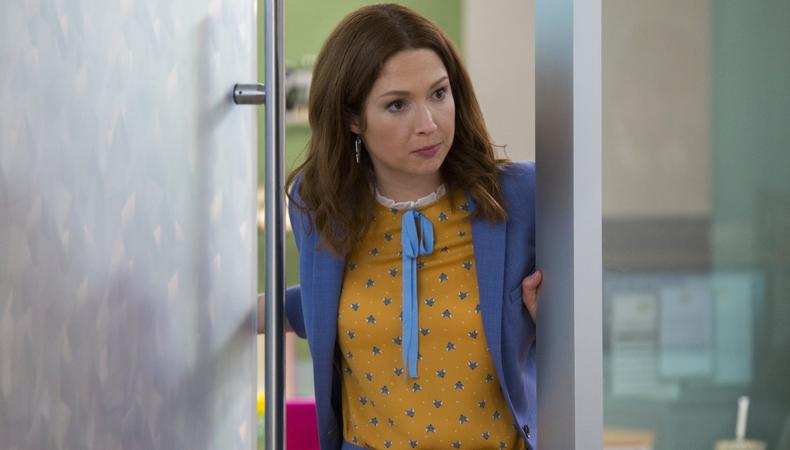
Kimmy Schmidt (Ellie Kemper), “Unbreakable Kimmy Schmidt” (2015–2019)
Drop in to any random episode of Kimmy Schmidt and you’ll be face to face with the naive, eternally optimistic, verging-on-cartoon-character Kimmy Schmidt, a woman in her late 20s just trying to figure the world out. Stick around for a few episodes, though, and you’ll discover Kimmy is not as one-note or surface as she initially seems. Her immaturity stems from being kidnapped and trapped in a bunker for 15 years (believe it or not, this is a comedy). Kimmy’s story is one of resilience and maintaining a positive outlook in the face of extreme adversity.
Woody (Tom Hanks), “Toy Story” (1995)
The toy cowboy protagonist of Pixar’s first feature film, Woody is surprisingly complex for what should be an inanimate object. He’s a charismatic natural-born leader, but the arrival of new toy Buzz also unearths his jealous, insecure, and occasionally callous side. Woody only gets rounder with every subsequent film in the franchise, when his role as leader of the playroom and backstory as a collectible are expanded; but he’s still fully realized in the original film, proving that depth can easily be achieved over a brief 81-minute run time.
1. Honor the text.
Playing a round character is both a gift and a challenge. On the one hand, you’ll have to do very little guesswork when it comes to understanding the basic facts and inner workings of the character. On the other hand, this can give you a long list of motives and traits to work with and around. Make sure any choices you make are consistent with what you (and the audience) have been told about the character.
2. Figure out your motives.
Just because the text will give you a lot to work with doesn’t mean you won’t still have homework to do. Round characters can be complex, so spend the time to make sure you understand how your character gets from beat to beat.
3. Revel in creating something new.
If you’re leading a new or original work, chances are you’re being given the opportunity to create a new character from scratch—enjoy it! Figure out a way to bring the character to life—whether it’s through specific exercises or applying your own experiences to help your character feel realistic and lived-in (if that’s what the text calls for).
4. Find a way to stand out.
Most famous characters are round, so find a way to make them your own without betraying the text. If you find yourself tasked with being the eleven-thousandth actor to play Roxie Hart from “Chicago,” think of a way to bring yourself to the role—like Gwen Verdon’s more nuanced take, as opposed to Renée Zellweger’s ditziness or Ruthie Henshall’s girlish excitement—without abandoning the quintessential things that make the character.