
Whether portraying a writer experiencing a surrealist crisis (“Barton Fink”), a bowling ball-licking criminal (“The Big Lebowski”), or everyone’s favorite macrodata refiner and OTP ship Irving (“Severance”), John Turturro is nothing short of versatile. We sat down with the protean actor to discuss his approach for Irving, the nature of human connection, and his advice for actors.
Turturro became an “investigator” to build Irving
One of the central conceits of “Severance” involves characters with split consciousness: workplace selves (“innies”) who have no memory of their outside lives, and everyday people (“outties”) who function (or dysfunction, as it were) in the real world. For Turturro, this duality didn’t require completely separate approaches, but it did mean taking the time to become what he calls an “investigator.”
“I like to create something physically, vocally, and costume-wise that I can get lost in the world of my imagination—and then bring all of myself and knowledge of things that I do know to that,” Turturro explains. “The stuff that I don’t know, I try to find out. I’m an investigator.”
RELATED: How to Get Cast on 'Severance'
Working alongside “Severance” director Ben Stiller and creator Dan Erickson, Turturro crafted Irving by delving into his dual backstories. Doing so led him to “research where the guy came from, why he was ever this and that,” he explains. “I did the proper research, and that led me to put together my approach.… To me, it’s like being a researcher, writer, journalist, and I enjoy that.”
This meticulous process helped him define the core traits that would translate across both versions of his character, while still representing their different life experiences. “Whatever the outtie is has to bleed through to the innie,” he says. “He still has his own language. He still has his own approach to a task.” Still, Turturro adds, “there’s enough differences that I can go somewhere with that, and I can bring myself to it, too, in my own experiences as a person.”
The paradox of Irving being legible as one soul across his innie and outie—while also being discernibly different as each—wasn’t that hard for Turturro to wrap his mind around, since he sees similarities to real-life experiences: “Contradiction is a big thing in life. People are constantly contradicting themselves.”
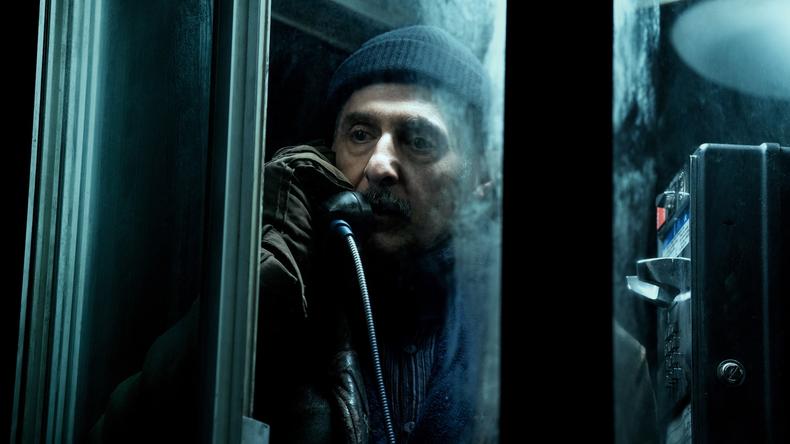
It’s all about the power of human connection
Turturro feels human connection is integral to acting—and is why he was initially drawn to “Severance.”
“Part of my job is to create something and also to unzip…and not be afraid to do that,” he explains. “It’s very interesting, the idea that you found this other person that you admire, and you share similar qualities with them. And then you can reflect that back on yourself. Because if you exude the same traits, it’s sort of like the act of love is self-regenerating, which is pretty beautiful.”
He adds: “Connecting to another human being is like breathing air, listening to music, or eating. It’s an essential part of life. Sometimes people don’t know what they don’t have until they discover it.”
He advises actors to be curious, go big, and have fun
Radical self-knowledge makes better actors, says Turturro. “Getting to know who you are, developing who you are, and trusting who you are, that can be enough, as long as who you are is expanding, growing, and curious and not stagnant.” With this mindset, “You’re bringing your full self to it.”
One tried-and-true way to expand into your full self? Remembering to have fun—which is why Turturro recommended long-time friend Christopher Walken for the part of Irving’s love interest, Burt. The actors’ prior connection made it easy to enjoy themselves and let loose as their characters. “It’s riffing off of each other, and we have fun together,” Turturro says. “And I think people who have fun together, you can go further, you can go deeper, you can be more emotional, you can be more vulnerable, you can be a lot of things.”