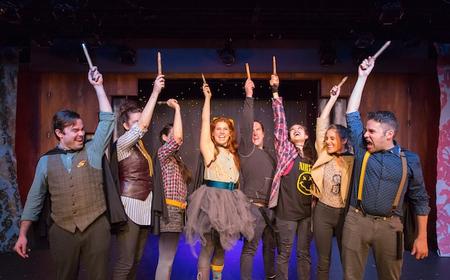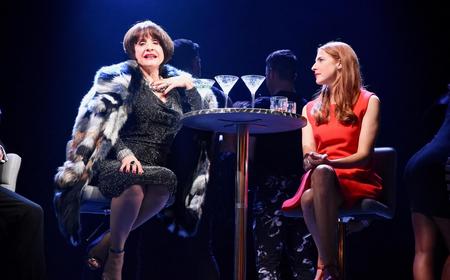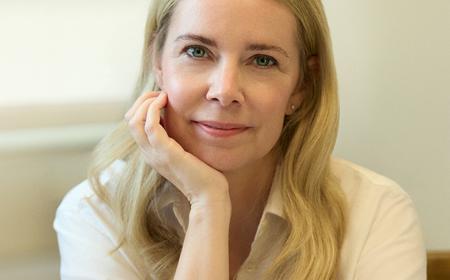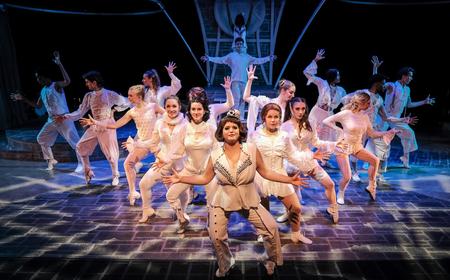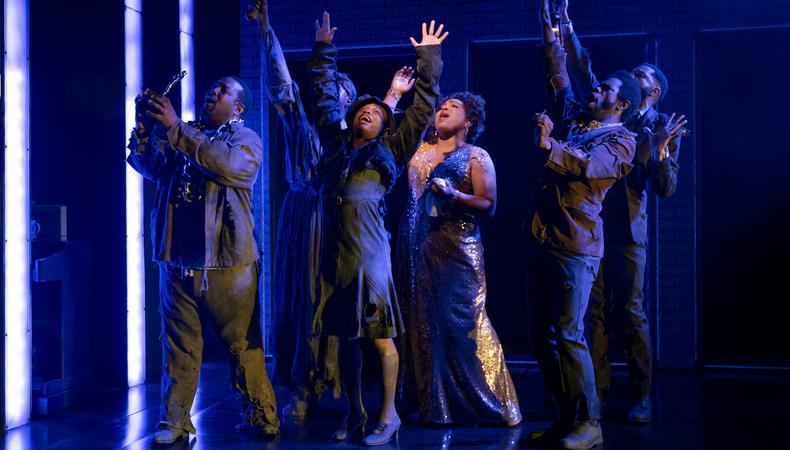
Since 1997, theater production company Page 73 has been finding, developing, and producing the stage’s next big thing, giving early-career playwrights their first New York City productions. The company has discovered the likes of Quiara Alegría Hudes and Heidi Schreck and, more recently under artistic director Walkup's leadership, has introduced playwrights including Clare Barron, Mia Chung, and Michael R. Jackson. (The latter’s musical, “A Strange Loop,” was a Page 73 co-production that went on to win the 2020 Pulitzer Prize for Drama.) Here, Walkup describes the ideal Page 73 candidate, how to become one (no MFA required), and what he sees for post–COVID-19 theater.
For those who don’t know, can you explain the work that Page 73 does?
Page 73 produces and develops work by really talented early-career playwrights who haven’t yet had an Off-Broadway premiere. We pick a specific and crucial point in playwrights’ careers to put all of our support [toward]. When we produce, that means it is that playwright’s Off-Broadway debut, and when we have our fellowship or our writers’ group, those are populated with playwrights who are working their drafts toward getting that Off-Broadway premiere.
What does your role as Page 73 artistic director entail?
One of my primary joys is I still get to run that writers’ group with our associate producer. It remains one of the bedrock joys of this company for me; it’s eight playwrights meeting every other week, sharing their absolute newest pages, usually finished that day. The sort of privilege it is to be with a playwright at that vulnerable point in their process is always really moving and powerful to me. We also have a fellowship in which we’re working with one playwright for a whole year, but in that exact same sort of awesome, generative mode. Primarily as an artistic director, though, my responsibilities are [to] the productions: programming them, getting them staffed out, getting them ready for workshops, and often [getting them produced] through partnerships. We’ve had a really wonderful track record of co-productions, and those always require months to years of collaboration. That’s really in my camp, to be shepherding.
 10 Playwrights Actors Should Audition With
 What kind of work does Page 73 look to develop? What makes a strong Page 73 playwright?
I’m always looking to develop playwrights before scripts, if that makes sense—a playwright who has a growing body of work, even if it’s not 20 years’ [worth]. It’s showing a real commitment to pursuing playwriting. I often joke that when a lawyer is like, “Hey, I wrote a really good play about lawyers,” that’s not a Page 73 playwright. This is a person working really diligently, and, obviously, the mysterious part of the job is deciding whose talent is really exciting. I’ve tried to put that into words from time to time. I’m really excited by playwrights who love theatricality, whose work doesn’t seem like it would translate immediately to film or TV, because it keeps the liveness of theater paramount. Usually that means they’re very excited by language and how language is a really important tool of the stage, and not something to be taken for granted. I think sometimes in TV and film, language gets taken for granted. Beyond that, I mean, we’ve done everything from musical to poetic drama to comedy with talking cats, so it’s hard to get much more specific about it. But huge amounts of talent [and] huge amounts of promise are really important.
What steps should someone who believes they’re a Page 73 candidate take?
Our application process is the most important pipeline for how I meet new playwrights. The simplest [advice] is: Apply. That process is usually open from January to April; of course, given everything, it might slightly shift next year, but there will be one. And then, in that application and then even if you were just meeting me for a coffee or something, I would say one of the less subjective parts of figuring out which playwright is right for these opportunities is their self-awareness over what they’re working on in their craft and what they’re working on in their career. If a playwright has a handle on that, then I can start to see how Page 73’s resources are going to help them further their craft or their career, ideally.
Speaking to playwrights who are not yet ready for Page 73, what should they do to prepare?
I wanted to talk about self-producing and self-creating places to hear and see your work outside of institutions. But as soon as I say that, I immediately want to [add a] caveat and say: Do not put yourself through enormous financial hardship to get there, [and] I don’t want it to seem like I’m expecting that people would. Especially in the musical theater world. I know a bit about what [“A Strange Loop” writer] Michael R. Jackson had to put in in his 20s out of his own pockets and credit card balances, and it’s not right. And I am so proud of where we got Michael R. Jackson in his 30s by the time we met him, but I don’t want to be overly precious about how awesome it is that he persevered through all that, because he really shouldn’t have had to, and it has a lasting impact.
But here’s the more positive thing: I think theater-makers work in micro-generations, and so working with your really immediate peers—directors, actors, other playwrights—who are right where you’re at, to get messy, to put things up on a shoestring, to quick-and-dirty learn about your work in three dimensions, rather than spending your energy shooting up to the larger institutions of the more experienced directors or the famous actors to further your work [is useful]. I think you get a lot more craft out of rolling up your sleeves with your own cohort, at least in the beginning.
READ: How to Become a (Successful) Playwright
I did want to ask your stance on institutions in theater—specifically, whether you think they’re important for up-and-coming playwrights.
One of the questions I get asked a lot is how I feel about MFA playwriting programs and whether they’re a necessary gatekeeper. I definitely don’t think they’re a necessary gatekeeper. I think the funded programs can be a beautiful experience for a playwright, where they are receiving not just an education, but really a couple years to be outside of the capitalist market, to a large extent. I think that can be really beautiful, but I really only mean funded programs. I think if you’re being asked to pay, you’ve got to put a much higher level of scrutiny on whether it’s going to be useful.
How have you been continuing to develop new work during the theater shutdown?
The thing that’s happening for Page 73 very specifically is that we are having a major conversation about audience right now, because, as much as we’re a production company—we produced this year’s Pulitzer Prize–winning show—as much as that’s our headline and that’s really important, we’re a professional service organization for playwrights. When the shutdown of theater production happened, we were coming along with our development programs. Sure, we have to meet on Zoom, but nothing’s stopping us from giving money to playwrights, really reading a script and having an hourlong conversation with them about it. But what it’s doing right now is it’s sort of leaving out the audience. I don’t want to exploit playwrights who are developing new work by forcing an audience on them when they aren’t ready for one. And yet I don’t want to come back from the pandemic reluctant that I forgot about people who love new plays and who love being part of the process of watching them develop by seeing a reading, by going to an early downtown workshop production. I think that’s an interesting balance to be trying to strike during the pandemic. If we succeed, it might mean we have a more intimate or more direct relationship to our audience by the end of all this, because we’ll know who was with us through this time when all we’re doing is development because there’s just no such thing as production.
How does it become apparent to you when a play is ready for an audience, and how do you help the playwright get it there?
The readiness is everything. I think it is [asking] both: When is a playwright ready, and when is the play ready? A playwright is ready when letting in a vastly larger number of collaborators is going to further their work, not stymie them. That’s a little bit psychological. You can start to tell when a player is there for a play. I might be a little conservative in programming, but I always really [believe that the] play better be ready on the first day of rehearsal. And then it will change and it will improve and the player will own it, but I am very nervous about processes that depend on the rehearsal process to even get it to a point where it might be ready. That’s where the word “conservative” comes in, where I’m like, I want to know that this play has ended. I mean, it’s almost a joke, but a lot of plays get programmed without an ending. One of my marks of a complete play, as basic as it might sound, is that there’s an ending.
When we do finally get to come back to the theater, do you think anything about the industry will look different?
One of the most surprising parts of this year has been Page 73, and all theaters, having a moment to reflect on equity and inclusivity at our institutions, [and to] to get more complicated and more rigorous with ourselves about what inclusivity means. I never would have guessed in April, when we were all freaking out, that we’d also find a way to make space for those conversations. But we have. Page 73 certainly has, and basically all of our peers have. If you go much higher up the ladder, I don’t know, but there are certainly signs that they are being had. I won’t decide whether or not they’re genuine. I think that that means both Page 73 and the field can come back and celebrate the return of something we all want, which is live theater experienced together in a space, and leave behind some of the harmful practices of donor cultivation on the backs of artists.
This story originally appeared in the Dec. 3 issue of Backstage Magazine. Subscribe here.
Looking for remote work? Backstage has got you covered! Click here for auditions you can do from home!