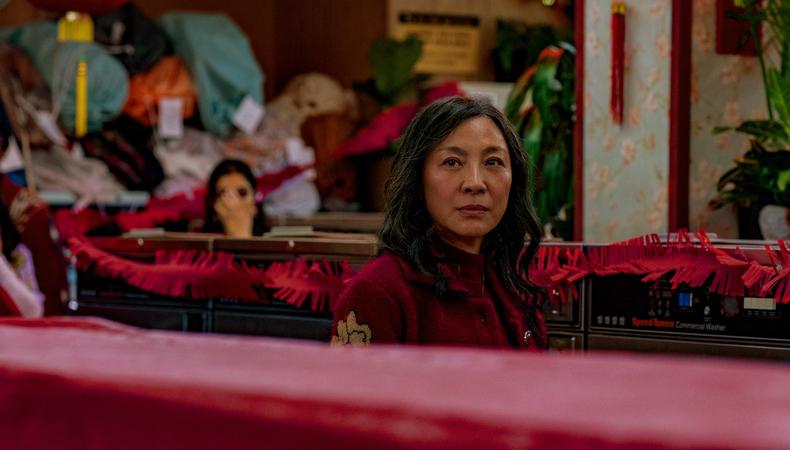
After nearly a century, the Academy Awards are still making history—and the 95th ceremony, which takes place on March 12, is no exception. Some record-breaking years point to Hollywood’s slow progress when it comes to diversity, while others signal a leap forward. No matter the case, it always makes for fun trivia.
Let’s start with that first category. This year, Malaysian Chinese performer Michelle Yeoh became the first Asian-identifying leading actress nominee for her turn as a universe-hopping laundromat owner in “Everything Everywhere All at Once.” (Though Merle Oberon, who was Sri Lankan and Maori on her mother’s side, earned a leading nod in 1936 for “The Dark Angel,” she kept her ancestry a secret.)
If Yeoh were to take home a statuette, it would be a groundbreaking moment for the Academy: No woman of color has won best leading actress since 2002, when Halle Berry became the first Black actor to receive the trophy. (The lack of Black nominees in the category this year has been a point of discussion, with notable snubs for Viola Davis and Danielle Deadwyler’s performances in “The Woman King” and “Till,” respectively.)
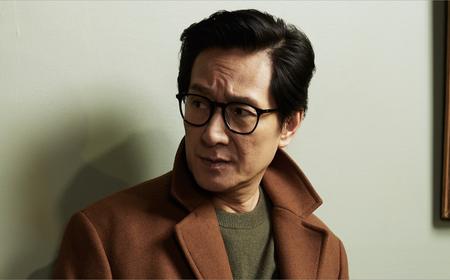 Ke Huy Quan Tells Us ‘Everything’
 “Everything Everywhere” is 2023’s most-nominated film, and its success signals multiple records for Asian performers. If Ke Huy Quan wins for supporting actor, he’ll become the first Asian man to receive the award since 1985, when Haing S. Ngor took home gold for “The Killing Fields.” And thanks to Stephanie Hsu and Hong Chau’s supporting nominations (for “Everything Everywhere” and “The Whale,” respectively), this marks the first time four Asian actors have been nominated in the same year.
Other milestones, on the other hand, signal how the business side of Hollywood is evolving. Angela Bassett’s supporting actress nomination for her turn as Queen Ramonda in “Black Panther: Wakanda Forever” isn’t her first Oscar nod—that would be for 1993’s “What’s Love Got to Do With It.” But it is a breakthrough for the Marvel Cinematic Universe: Though the first “Black Panther” earned seven nominations (including for best picture) and three wins in 2019, Bassett is the first to net acting recognition for the franchise.
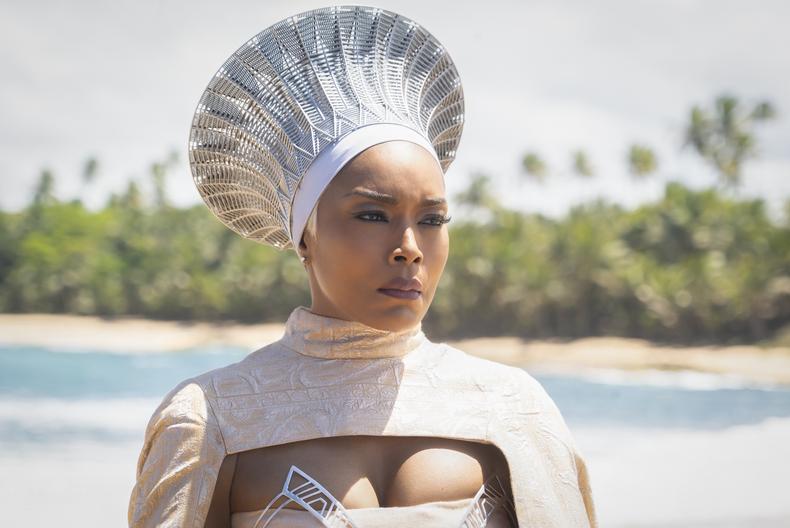 Courtesy Marvel Studios
Then there are the pieces of trivia from the 2023 roster that are just plain delightful. It’s a huge year, for instance, for newcomers in the acting categories: Out of 20 contenders, 16 are first-time nominees.
Judd Hirsch, however, has set some very different records for his supporting turn as the boisterous Uncle Boris in “The Fabelmans.” He was last nominated 42 years ago for “Ordinary People,” making him the record holder for longest gap between acting nods. And at 87, he’s just a year shy from tying with Christopher Plummer for the title of oldest-ever acting nominee. (The late performer earned a supporting nod for “All the Money in the World” at the 2018 ceremony.)
This year has also given us the oldest nominee in any category, period: the 90-year-old John Williams for his original score for “The Fabelmans,” a film from his longtime collaborator Steven Spielberg. And this certainly isn’t the legendary composer’s first ceremony: He’s been nominated 53 times (and won five of those) since 1968. Perhaps he can show all those newbies the ropes on what could be a game-changing Oscars night.
This story originally appeared in the Feb. 23 issue of Backstage Magazine.