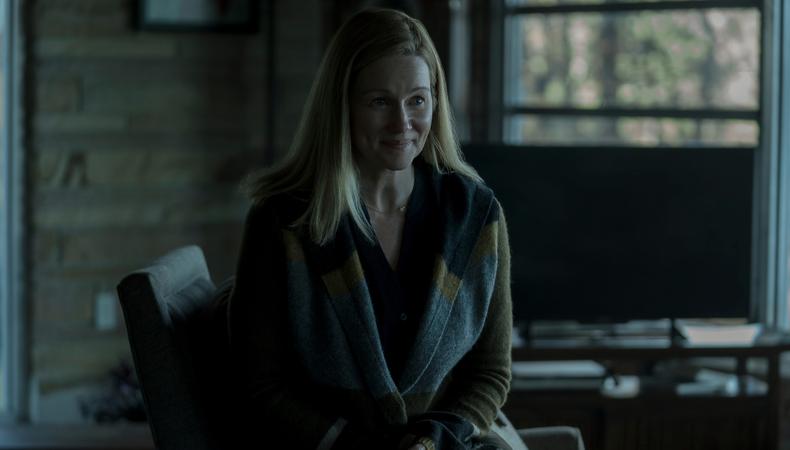
“Ozark” production designer (and 2019 Emmy nominee) Derek R. Hill may be one of the most meticulous creatives in his field—with massive payoff. In conversation with Backstage just days after receiving the good news of his small-screen recognition, Hill explains how he pores over every detail in every script in order to service one thing: the story. His work ultimately helps actors deepen their characters and helps establish the power dynamic between characters well before the actors ever walk on set.
How would you describe a television production designer’s role?
I’ve been doing it for a number of years, and I’ve floated between movies and television. I think that television’s content today is almost of equal quality to the movies. I look at the role as being able to—as someone told me a long time ago, you have a way of turning words that you read into what you see on the set. So I take each script [and] think of myself within the role: What would I do? Where would I enter a room?
READ: How to Be the Production Designer’s Favorite Actor on Set
Does effective production design help actors deepen their character development?
I think it does. If there’s no layering, there’s no character development. We know who the actors are, so then it becomes [about asking], What did this character do before [this moment]? And I try to dig deeper into that so that you’re telling a story. Like Ruth’s dad on [‘Ozark’]. How long had he been in prison? What was he in prison for? Was it petty theft, robbery? Then you start thinking this character is shady; he bounces around. And that’s how we develop it. You just have to think along those lines.
Are you working with actors on the sets they’ll inhabit? Or is it mostly with the showrunner or someone else?
The way it works on “Ozark” is I deal mostly with the showrunner, reading the script and understanding what the meaning of each of the scenes is. I get detailed, reading the words and understanding the meaning and what they’re trying to get out of this. Because Jason Bateman is the executive producer [in addition to the star], even though he didn’t direct all the episodes, he still has veto power, in a sense. He has to understand everything, because he’s in charge of the overall edit and the look of the season. Many times, we would have him in a meeting when another director is shooting the episode and he would say, “No, I don’t think we need to go into that detail because I don’t think that that’ll make the edit. It’s not necessary for the story we’re telling.” So, I’m working closely with the director and the director of photography to make sure it’s actually shootable, and of course with the executive producer and the showrunner. Also, because Laura Linney this year played a bigger role, I wanted to empower her in her office, the look, the feel. It all depends on the character.
What is your process for figuring out the design?
When I read a script, I’m really writing it out. I’ll Google everything, if I’m not sure what something is, and then I start trying to figure out, “OK, well this is what that room looks like, and they’re gonna be coming in this way,” or, “He’s got an outer office, he’s got a secretary. Where would she sit? And where’s the power in the room when he comes and walks in?” When I did the film “The Magnificent Seven,” Denzel Washington’s character rode into town on a horse, and you go, OK, well, what’s in the town? Let’s see, you gotta have a hardware store, a bank, a wagon repair place, a barn-type place, livery stable. Then you start trying to figure out and doing a little doodle on a piece of paper: How big is that town? How long is that ride between when he enters the town and when he passes the sheriff’s to the saloon? It takes me longer [than most production designers] because I’m really trying to understand each character as we go through the set and the show.
Is it safe to say, when it comes to production design, the more detailed the better?
I think it is, and that also [helps you to] develop a relationship with the actors. From all my years of being in it, I’ve learned more about it. I think what sets me apart from other production designers is I try to do character development and character layering and try to make it feel like these sets have been there for however long they have [existed in the story]. How long has he been in this house? How long have they lived in the city? How much do they know about the city? How much do they know their neighbors? All that goes into it on my end when I’m trying to put those notes together and put those breakdowns together. It’s finding where the character came from and what the character is into.
This story originally appeared in the Aug. 15 issue of Backstage Magazine. Subscribe here.
Ready to get to work? Check out Backstage’s Los Angeles audition listings!