Sometimes, it’s the non-actors and behind-the-camera creatives who have the best acting advice for their on-camera colleagues. Whether you’re an actor who’s interested in playwrighting, a comedic talent looking to adapt your improv show for TV, or simply an actor looking for inspiration to keep fighting the good fight, we’ve got a piece of advice for you from your future collaborators here. Below, we’ve rounded up 23 of the best quotes and bits from directors, producers, cinematographers, and playwrights from 2016 to get you in the right mindset and to make 2017 your breakout year.
1. “What I would suggest to the actor who’s approaching it for the first time is to make sure he knows what he’s doing—he being the character, he or she—make sure the character knows what they’re doing more than what they’re saying. But at the same time, learn your lines. Have the intention or the action or the objective, and then the lines will come out of it. That’s the dime’s worth of advice that I have to offer.” —“Rules Don’t Apply” writer-director WARREN BEATTY
2. “The people we look for are people who have usually done a ton of standup. Standup is a crucible in which you bake your voice. You need to spend time in front of a live audience living and dying by your voice. What you’re really doing is getting instant feedback on whether or not you can turn a phrase that captures people’s attention. I would say if you’re interested in doing ‘Bob’s Burgers,’ be a standup comedian for 15 years.” —“Bob’s Burgers” showrunner LOREN BOUCHARD
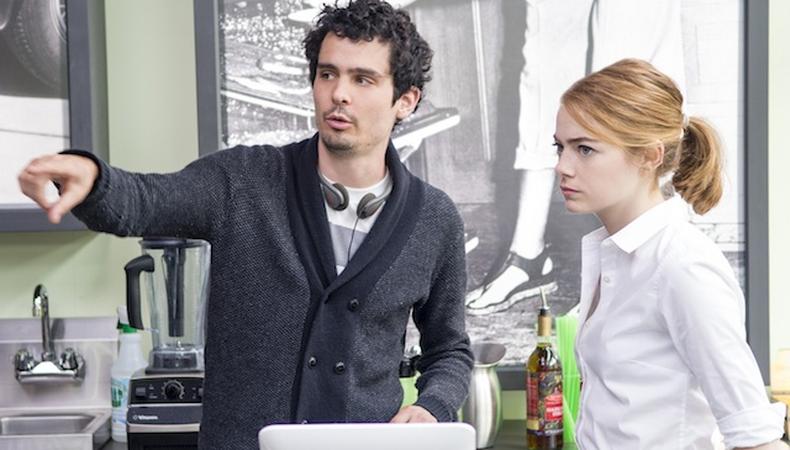
3. “Certain things that might seem like setbacks at the time might be the things that push your career forward. Especially living in L.A., it’s easy to be caught up in day-to-day ups and downs. Every up feels like you’re winning the lottery; every down is your soul being crushed. Try to take a step back and see those ups and downs, and see a journey. It’s a healthier way to be.” —“La La Land” writer-director DAMIEN CHAZELLE
4. “I think it’s about mutual openness. Learning from each other and approaching each role and project as something new—that’s how you’re able to make exciting and engaging work that ultimately moves an audience.” —“Five Nights in Maine” writer-director MARRIS CURRAN on succeeding on set
5. “It was all about having enough rehearsal and feeling safe and trusting each other. In my late teens and early 20s I thought terrorizing actors emotionally was a really good idea; as horribly corny as it sounds, getting there through love and support is the best way to do it. Otherwise, you’re just going to damage each other…. Sometimes we do have to suffer, but it’s different than traumatizing people. If you’re suffering and it’s self-imposed to better the work, that’s privilege. Sometimes it’s not about it being comfortable, but it needs to be the actor’s choice.” —“The Witch” writer-director ROBERT EGGERS on directing horror
6. “So much of [stage] improv can be really long and that’s kind of what makes it funny. Like, one of the characters tells another character literally a two-and-a-half minute story, and it’s hilarious. With most movies you can’t support that over and over again because then your movie would be four hours long…. [So the question is]: Can we make a version that’s 30 seconds long? Because that has a very high probability of being one of the great moments in this movie.” —“The Boss” writer-director BEN FALCONE on improvising for the screen
 “Hacksaw Ridge,” Mark Rogers
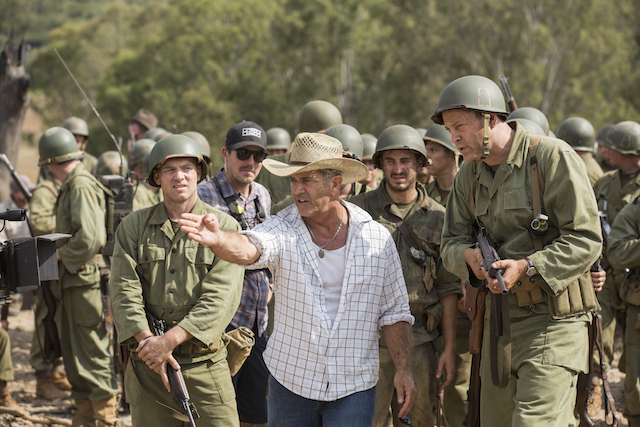
7. “Generally speaking, I’ll just sit and talk about the weather. You get an idea of who the person is and what they’re capable of within 10 or 15 minutes of chitchat…. I know what it’s like to be an actor in films, so I empathize with all their concerns. I listen to them. I certainly give them room to do whatever it is they think needs to be done because they’ve thought about it and they’re coming from their truth. All the guys I chose, I hired them for a reason. I was just glad to be in a conference of experts and to be able to bounce my ideas off of theirs and see what they gave me.... I know what it is to be in their shoes.” —“Hacksaw Ridge” director MEL GIBSON on casting and directing
8. “I feel very strongly that when you’re doing an adaptation you should have a point of view—because otherwise, why do it? Jane Austen wrote a brilliant, brilliant novel; what do I have to say that’s new? Or what does the novel mean to me? If someone’s coming to the theater, you should have a reason why this should be a play. Not, ‘I love that novel, let’s have actors speak it.’ ” —“Sense and Sensibility” director KATE HAMILL on adapting the classics
9. “It’s hard. If you haven’t been through that in your own life, or something similar to it, it’s very easy to judge that character and to look at her on the page and to think she’s this terrible mother. There was something about Tammy that was completely not judgmental about that woman. It was what was so great about her performance.” —“Tallulah” writer-director SIAN HEDER on judging your characters
10. “Comedy is always information. What information does the audience need at any given moment? All drama seems to be about objectives and obstacles, characters wanting things and being unable, for whatever reason, to get them. And farce is very much like that—only with the volume and the momentum turned up…. You actually need great actors who feel like real people and then can allow the stakes of the situation, of the ridiculousness around them, to pull them to such a frenzied state. I would dare say that every one of these [characters] think they’re in a tragedy. And the less funny they think it is, the funnier it is for the audience.” —“Noises Off” director JEREMY HERRIN on acting in a farce
11. “The big thing with this film was that I knew there was going to be a lot of silence. I was looking for someone who could emote without speaking, and mostly, that was in the eyes. I was really paying attention to what they were doing when they weren’t speaking, what they were doing with their eyes.” —“Moonlight” writer-director BARRY JENKINS on casting for silence
12. “I try not to overexplain anything about the script, because I don’t really know much more than what’s written there. The actors bring their own stuff and thoughts, and most of the time I don’t want to know what they are. It allows me to have more distance and observe what they’re doing without having the knowledge of what they have in their minds, so I can see clearly how that feels to me.”— “The Lobster” writer-director YORGOS LANTHIMOS on actors interpreting his work
 “Manchester by the Sea,” Claire Folger, Courtesy of Amazon Studios and Roadside Attractions
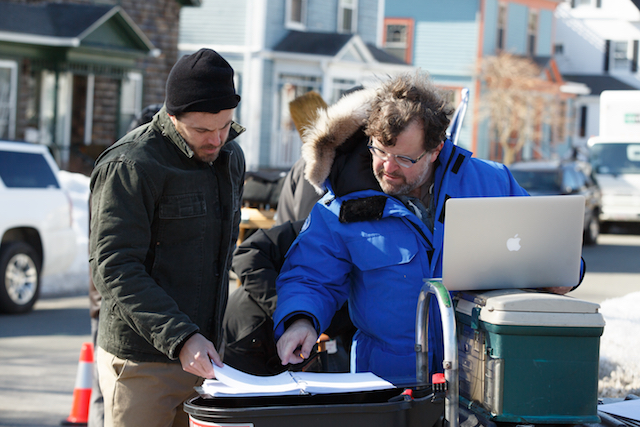
13. “There’s a certain emotional immediacy and veracity to really good actors that is evident from the beginning. Somebody walks in and you can really tell if they’re emotionally present or not, or if they’re putting on an act.... The capacity to really act, it’s Sandy Meisner: genuine emotion in imaginary circumstances. If someone can do that, they’re going to be interesting.” —“Manchester by the Sea” writer-director KENNETH LONERGAN on what he looks for in the audition room
14. “We’re just improvising, doing weird sort of experiential games together so that we’re all melted down and there’s a lot of intimacy. When I had everyone together, we would start the morning with a 9 a.m. dance party in my little office with me dancing as weirdly as I can with all of them. Music and dancing was such an important part of the story, but also [because] we’re all kind of embarrassed and wiggly in front of each other. It sounds simple, but it’s actually really super important.” —“20th Century Women” writer-director MIKE MILLS on wiggly actors
15. “Every scene has an event.... You work on the scene until you figure out what the event is. Then you essentially say [to the actor], ‘Anything you do that will convey or make that event happen, that will be fine. But if it strays from that event or it blurs or it eliminates it, then that’s wrong. You can’t do that.’…. You don’t pick a favorite [scene]—that’s important. Every scene has to be equally important. Not to the audience, because that’s not a way to tell a story, but it has to be equally important to you. You have to communicate to the cast of any given scene, ‘This scene has to be clear or the whole play will fall apart.’ That’s the whole analogy of the infinite chain—it’s exact. If one link goes weak the whole chain falls apart.” —“A Day by the Sea” director AUSTIN PENDLETON on scene work
16. “You have to hope it’s a sprint to the finish line, but prepare yourself for the marathon. Have patience, work hard. For some, it happens instantly; for others, it happens over time. You have to own that as a part of the journey. It requires stamina and tenacity and passion for what you do. I always appreciate hard work, and every actor has a different process. I appreciate focus. I appreciate actors who work very hard to get at the truth of the character they’re playing. That speaks to me and I try to protect that process because I value the focus and intention behind it.” —“La La Land” producer MARC PLATT
17. “I quickly learned that the only way to really learn, especially the kind of filmmaking that I wanted to do, the stories that only I wanted to tell, was to just pick up a camera...wrangle a group of people together, and go and shoot a movie.” —“The Girlfriend Experience” creator AMY SEIMETZ on transitioning from actor to director
18. “Two things: It’s less about the silly voice you create than the way you act in that voice. If you don’t get the emotion across, it’s lost. You need the belief that this character is real, even in the silly. Second, Bob Bergen is an animation teacher and he’s amazing. He’s done a ton of voice work on ‘Robot Chicken’ for us, and he gives all these pointers. He has classes; take them if you can.” —“Robot Chicken” creator MATT SENREICH on breaking into voice acting
19. “What matters most is being happy. That’s not something you hear from your professors or your boss or your mentors. Have a point of view. If you are waiting for people to come to you with the greatest opportunity, you’ll be waiting a long time. Improving your weaknesses is part of becoming a better person, but focusing on your strengths will help you so much more. Identify what you’ll be best at in the world and run at that.” —Seeso founder EVAN SHAPIRO
 “Girl on the Train,” Barry Wetcher
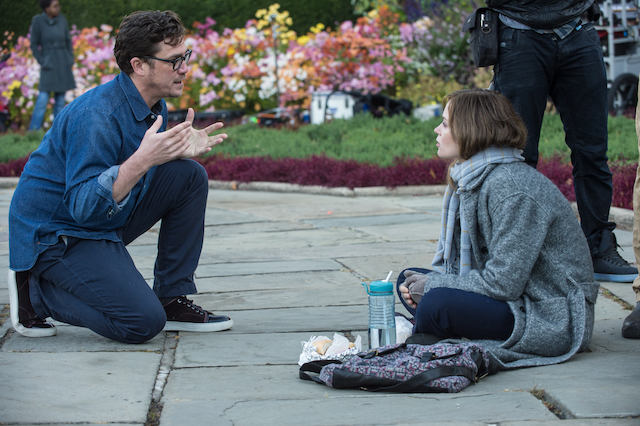
20. “When I have the rehearsal process, I have it in my home, and usually it’s around food I prepare and we really talk about it. Often as part of my writing process, we improv together. I act with them to come up with a natural way of saying something that complements the character they’re developing.... Kind of like wanting to paint your house, putting up a paint swatch, then putting up another one and going, ‘That didn’t work.’…. I attribute that to coming up through the Groundlings program and being an actor myself—being frustrated when I was told how to say a line and not miss a single word. I would think, they’re missing out because I know how to make this better.” —“The Girl on the Train” director TATE TAYLOR on the importance of improv and rehearsals
21. “Write the most truthful thing you can possibly write—until it kind of burns your heart. People will always pick up on that.” —“Fleabag” creator and star PHOEBE WALLER-BRIDGE on writing
22. “There’s no such thing as film acting. Tell the truth. Film acting, if anything, is more natural than theater…. Some [of our ‘Fences’ actors] were concerned: ‘It’s a film now.’ No, I don’t want anything different. Don’t worry, I’m coming around with the camera!”— “Fences” director and star DENZEL WASHINGTON on theater versus film acting
23. “[Cinematographers are] there to serve the narrative, and the narrative is always driven by the actors. The actors are leaders. When my camera responds to something or my camera decides to make a particular move or do something different with lighting, it’s generally because I was inspired by what the actors are doing…. You realize how much power actors have and how it does require really powerful symmetry and really powerful social harmonics to get the shot and the mood for the scene.” —“Arrival” cinematographer BRADFORD YOUNG on what he needs from his actors
Check out our film audition listings! And for more acting advice, visit Backstage’s YouTube channel!