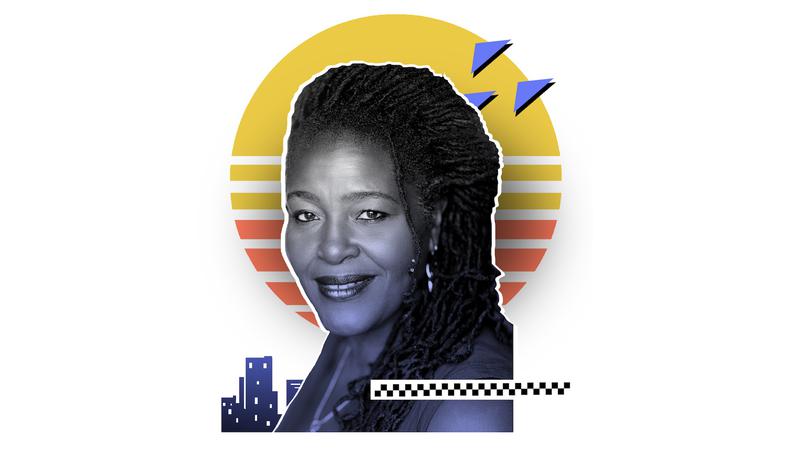
Sharon D Clarke has lived with Caroline, the maid for the wealthy Gellman family in “Caroline, or Change,” since 2017, when she starred in the Chichester Festival Theatre revival of the musical. She’s since played the character in the West End and earned an Olivier Award along the way. Last March, she was prepping for her Broadway debut as the musical was getting ready to open at Studio 54 via Roundabout Theatre Company; but the pandemic had other plans. A year and a half later, Clarke will finally make that debut when “Caroline” begins performances Oct. 8.
What is it like to return to this role and this story after some time away?
I’m in the very lucky position that I have lived with Caroline since 2016, 2017. This will be my fourth embodiment with this wonderful character. She feels like she’s something that I can slip back into but still be finding new ways of expressing, because I’m with a new team who have given me different things to feed off of. I’ll be reacting differently to the things that they give me. I’ll still be finding stuff for myself and able to keep it fresh. It’s my Broadway debut, and I’m not quite sure what I’m doing yet, and I’m really going to need the previews to warm me into the character. I’m just that little step ahead because I have lived with her already.
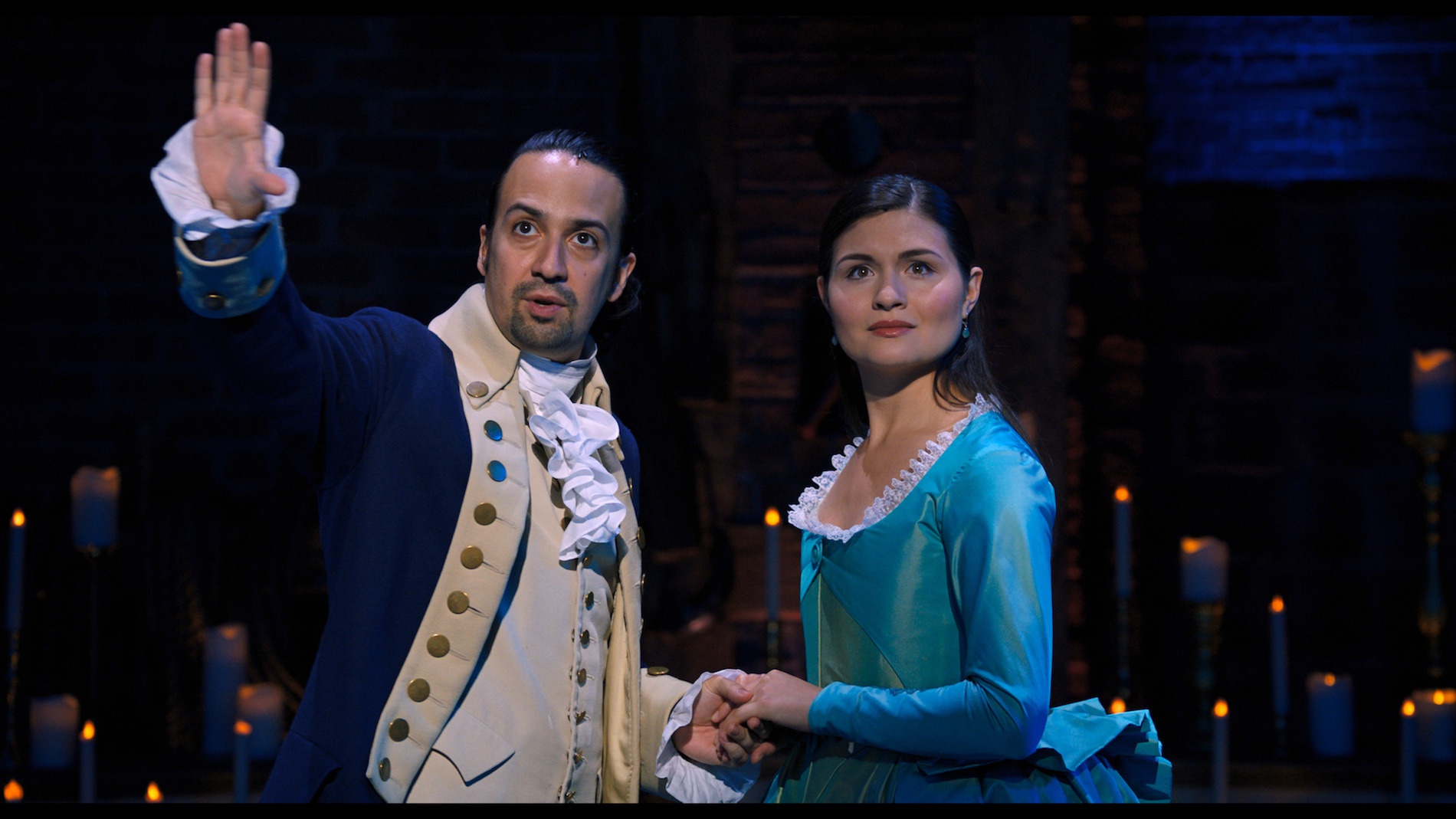 A Running List of All the Broadway Shows Set to Return in 2021–22
What does making your Broadway debut at this time—in your life, in history—mean for you?
It’s absolute joy! I think of some of the shows that closed when Broadway had to shut down and aren’t coming back. I’m in a blessed position to know that Roundabout has championed the show and we will still be able to tell our story and bring it back to New York. It’s given me something to look forward to. It’s not like, Oh, gosh, what am I going to do? I know that when I go back onto a stage, I’ll be doing a piece that I love, playing a character that I am honored to play, and bringing what I know is a world-loved story back to its home in New York.
“When I go back onto a stage, I’ll be doing a piece that I love, playing a character that I am honored to play, and bringing a world-loved story back to its home in New York.”
What has playing Caroline added to your acting skills?
When I was learning the score, I was thinking, Oh, my goodness, what have I done? It’s not an easy score. It’s not one of those things that you sit down and you listen to it once or twice and it’s in your skin. It’s something you have to work at. The work has been really diligent for me. I’m someone who has a good ear, I’m quite quick, and I love harmonies. So learning the score was quite a challenge, which is a lovely thing. I also feel that I’ve been growing with [Caroline], and I’m hoping to find even deeper, richer points that maybe I hadn’t found before. When I look back to what I played in 2017 and to how I think about the things that I want to do now, I’m not looking back on the show going, “Oh, gosh, if I’d done that again and had the chance, I’d try this.” I’m actually getting that chance. It’s a win-win situation for me in that way.
What advice would you give your younger self?
One of the things I would say to my younger self is: Don’t be so afraid of confrontation. My mom was a strong woman—very forthright, very outspoken—and was not afraid of confrontation in any way, shape, or form, which made me really admire that quality. But it’s not always so great when you’re on the receiving end of that as a kid. Then I had the opportunity to play a character called Dr. Lola Griffin in a series over here [in the U.K.] called “Holby City.” Lola I based very much on my mom, and Lola was very opinionated and strong. People loved her. This is my mom, and this is what my mom taught me—and it’s something that I’ve been running from, and actually it’s alright if I do it. It gave me the validation to go: You know what? Speak your truth. I was always afraid of confrontation and didn’t always feel like I had the right words to be eloquent enough. Lola has unleashed that side of me. It’s funny, when I was doing her, I’d be reacting to a situation, and my wife would be like, “I think you’ve brought Lola home.’’
How did you first get your Equity card?
I started at Ivy Travers Dance School when I was 6, and on my first show, I knew this was how I wanted to earn my living. And then as I grew up, I also knew that this could be a very precarious, reckless business, and so I trained in the only other thing I really love, which is people. So I went to college and did social work training. It was while I was waiting for my exam results that there was a copy of the Stage in the common room. I picked it up, [looked at the classifieds], and went for the job. It was a job at Battersea Arts Centre. Jude Kelly was directing, and Jude Kelly is a major player over here. Jude gave me my first job with my Equity card. When I went for the audition, they were like, “We don’t know if we can employ you, because it’s an Equity job.” But she gave me my card.
What is your worst audition horror story?
There’s nothing that’s coming to mind! The only thing I can think of—and it’s nothing to do with me—but a friend of mine was auditioning, and the directors were sat out in the front in the darkness. She’d finished her piece and the light was shining on her face, and they tried to talk to her and she couldn’t quite hear them. So she stepped forward and they continued to talk to her, and she still wasn’t quite hearing. So she kept stepping forward until she stepped off the edge of the stage. I really don’t have any for myself!
READ: Broadway Shutdown: Actors, Directors
+ More Reflect on a Dark Year
That’s impressive. How do you typically prepare for an audition?
This is a thing from my mom: It’s knowing what is for you is for you. All I can do is prepare my best, make sure I know what I’m doing, and give it my best. If that’s not right at the time, I can’t do any more than that. I will always walk into an audition prepared, doing the absolute best that I can do, so that I don’t walk away hanging my head going, “Oh, if only I’d learned that bit.”
What’s the wildest thing you ever did to get a role?
I’ve only done it once. I had been doing “The Amen Corner” at the National [Theatre] with a director called Rufus Norris, who, at that point, we found out was up in the leadership to become the artistic director, which he got. I heard they were going to be doing “Ma Rainey’s Black Bottom.” There was some event at the National, and I saw Rufus across the room and I headed to him and I just said, “Babe, Rufus, I hear you’re doing ‘Ma Rainey.’ That’s all I’m saying,” and walked away. You know that I’m interested. That’s the one time I had a little say, and it paid off. Eventually, if I hadn’t said anything, an audition would’ve come through. I just wanted to cut all of that crap and just be off with it.
What performances should every actor see and why?
The show was called “No Child….” Her name is Nilaja Sun, and I saw her at the Edinburgh Festival [Fringe] in a small space. It’s a show that she’d written from the No Child Left Behind Act. She played 20, 30 characters—one woman onstage, absolutely breathtaking. Just the way she morphed into each of these characters in a blink of an eye was a joy to behold. And there’s another piece called “Truth in Translation,” which I saw, again, at the Edinburgh Festival, and that was about the Truth and Reconciliation [Commission] in South Africa, where they had people being able to testify without judgment, whichever side of apartheid they were on. You got it all through the interpreters. The interpreters had to listen and dictate the stories, but they were never allowed to interfere to ask any questions. It was such a breathtaking piece of theater that the show finished, and there was absolute silence. Nobody clapped for about five minutes. Then the place erupted and then very quickly died down again. People just walked out shell-shocked. It’s one of those things that goes forth to helping to effect change and bring about healing.
This story originally appeared in the Sept. 9 issue of Backstage Magazine. Subscribe here.
Looking for remote work? Backstage has got you covered! Click here for auditions you can do from home!