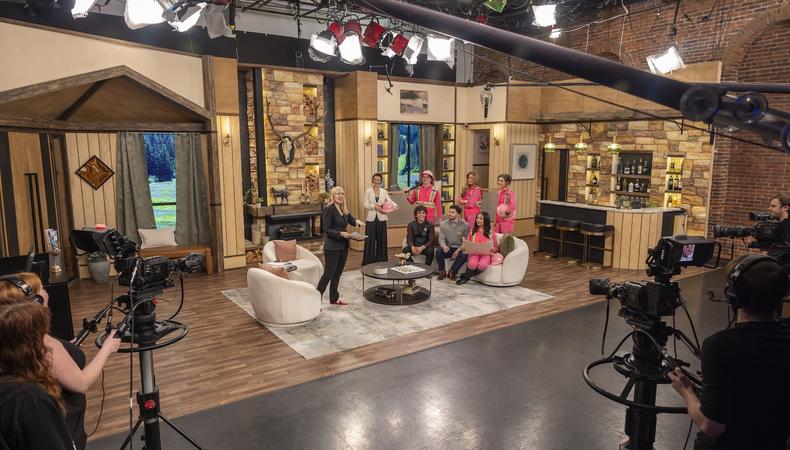
Maybe you’ve been here: sifting through casting notices, sitting in the hallway outside an audition, feeling like another face in the crowd. Acting is a competitive field, but the right training can change what you bring to the room. Here, we spotlight several highly specialized opportunities that you might not find anywhere else.
Video game voiceover at Toronto Film School
Courtesy Toronto Film School
The video game industry generates billions annually. For actors, that’s not a niche field, says Hart Massey, director of Toronto Film School’s Acting for Film, TV, and the Theatre program—it’s a primary career path. In the final term of the 18-month acting program, students take the “Voiceover for Video Games” class.
“We train [actors] on a foundational level, covering everything from the vocal health required for grueling ‘effort’ sessions—screams, combat, and exertion—to the depth needed for cinematic scenes,” Massey explains.
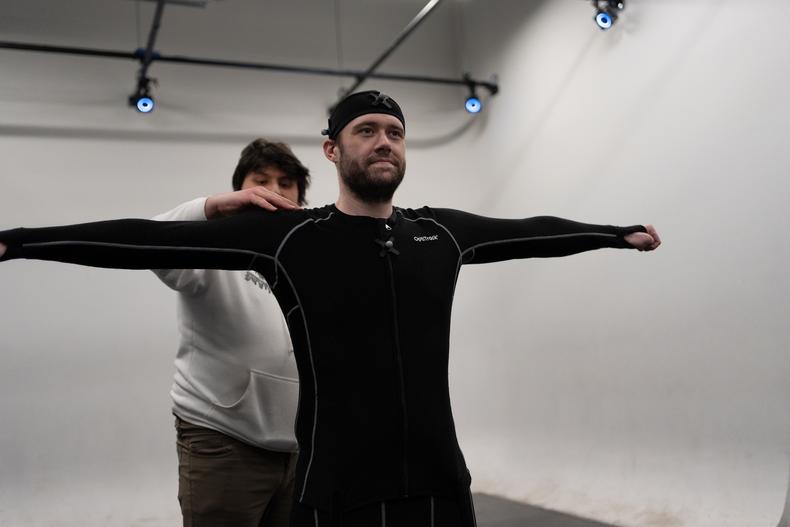
Learning the foundations of video game acting early means walking into recording sessions ready to create fully realized characters—“not just read lines,” says Massey. Plus: The school is incorporating a motion-capture studio into the program.
Uta Hagen’s technique en Español at HB Studio
Courtesy HB Studio
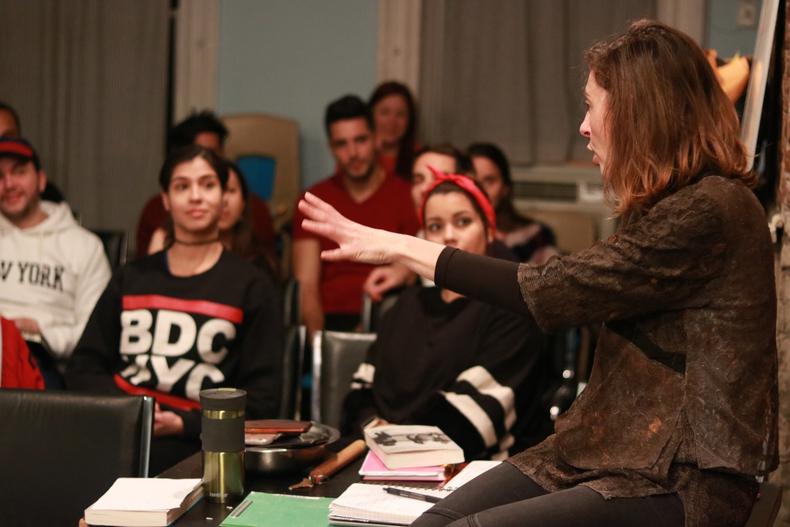
Spanish-speaking students need not feel caught between cultures at HB Studio, the New York City school where Uta Hagen and Herbert Berghof trained generations of acclaimed performers. The studio offers “Actuar en Español” (“Acting in Spanish”), a 10-week program applying principles from Hagen’s seminal book, “A Challenge for the Actor,” for fluent speakers.
“In a city where many actors are constantly navigating a second language, being able to explore vulnerability, imagination, and craft in one’s mother tongue is transformative,” says Maria Fontanals, who teaches the course.
The class helps Spanish speakers put Hagen’s lessons into practice through scenes from contemporary Hispanic plays. The curriculum includes text analysis, table work, and guided rehearsals.
“For many students, the first time they perform a scene or Uta Hagen exercise in their native language in New York, something shifts,” Fontanals says. “The work becomes less about translation and more about truth.”
It’s also a good career move. According to a 2025 report from Nielsen, explosive growth in the Hispanic population of the U.S. has also led to a boom in Spanish-language media.
Sitcom acting at Savannah College of Art and Design
Courtesy SCAD
The line between a school and a working set blurs in the best way at Savannah College of Art and Design. From freshman year, students learn their craft in collaborative, professional-style environments. The school touts its 11-acre SCAD Film Studios as the largest such complex in higher education.
“Our motto is we learn by doing, so that the step from classroom to soundstage or set is seamless,” says Andra Reeve-Rabb, dean of SCAD’s School of Film and Acting.
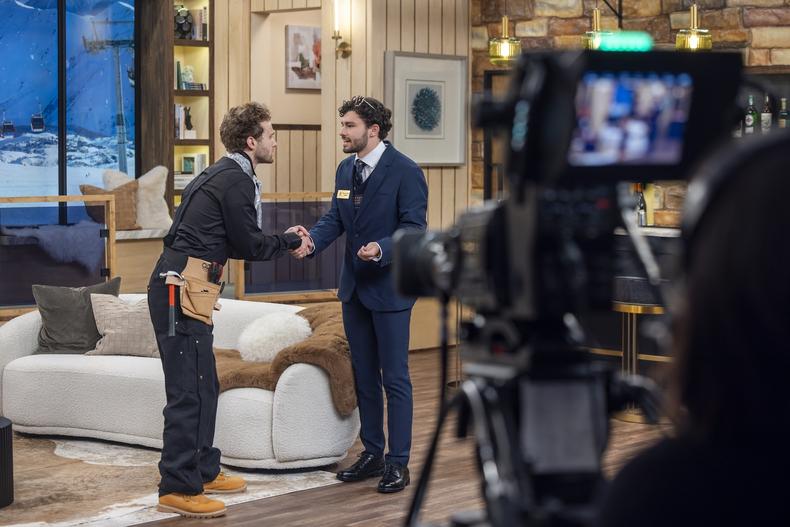
One of the more unique on-set training opportunities: a fully produced, multicamera sitcom filmed in front of a live studio audience. SCAD’s latest sitcom production involves 150 students across acting, writing, and design disciplines.
For aspiring screen actors, the firsthand experience offers a leg up when the time comes to book jobs in TV, film, and beyond.
“Being able to adjust on-camera performances to meet each of those mediums sets them apart,” Reeve-Rabb says.
SCAD also runs its own on-site casting office, which helps current students find professional work. Actors who participated in previous SCAD sitcom productions have landed work on hit TV shows like “The Marvelous Mrs. Maisel” and “The Summer I Turned Pretty,” sometimes while still enrolled in the program.
A distinctive comedic voice at Upright Citizens Brigade
Credit: David Clayton Jackson
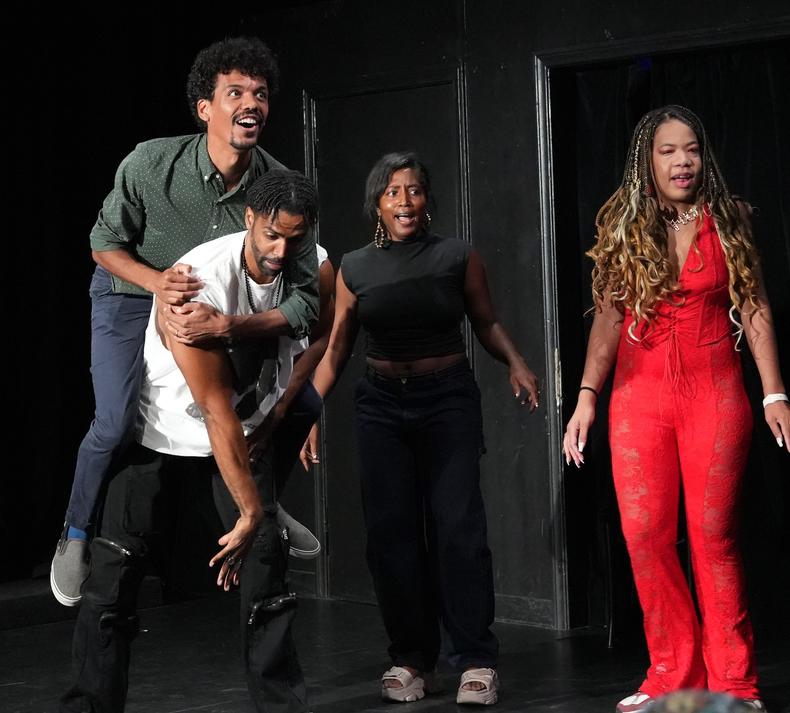
Upright Citizens Brigade—founded by Amy Poehler, Matt Walsh, Matt Besser, and Ian Roberts—has launched a who’s who of comedy talents since the ’90s, including Aubrey Plaza, Nicole Byer, Nick Kroll, Zach Woods, and so many more. UCB’s theater and training center, with locations in both New York City and Los Angeles, famously offers courses in improv and writing, but students can also study standup, musical improv, and even clowning.
“Establishing Your Comedic Voice,” an online class taught by instructor Jonathan Braylock, helps students find the brand of funny that only they can make. Performers learn how to identify and develop distinctive comedic strengths while crafting pitches and sketch packets that draw attention away from a producer’s pile. The class is aimed at sketch-writing students who have previous UCB experience.
Actually, just having UCB on your résumé helps you stand out, says Johnny Meeks, academic director for the training center. UCB’s signature approach to comedy foregrounds “the game”—instead of starting with the development of a character, students are first trained to find the internal comedic logic of a scene.
Merging theater and technology at New York University
Courtesy of NYU Tisch Innovation Studio
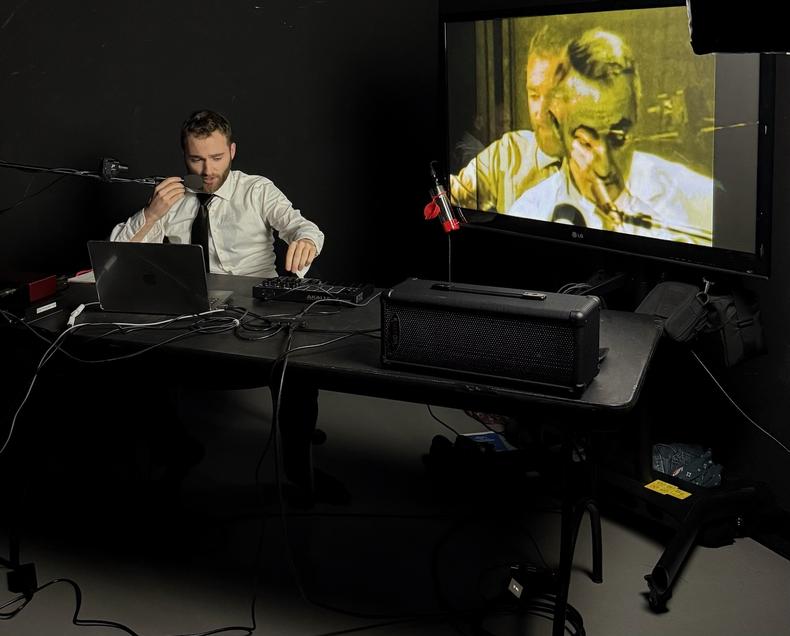
At NYU’s Tisch School of the Arts, upper-level drama students can embrace the future in the Innovation Studio, a semester-long theater research laboratory that integrates emerging technologies into the creative process. The hands-on curriculum engages with tech like AI and physical computing (such as motion capture) not just as tools, but as valuable artistic collaborators.
Rubén Polendo, dean of Tisch and director of the Innovation Studio, teaches “The Dramaturgy of Disruption,” a theater-making class with an interdisciplinary lens. Students study art by innovators of all stripes—from Björk and David Lynch to Marina Abramović and Antonin Artaud—for inspiration they can apply to their own work. The laboratory will next be offered in spring 2027.
“The goal is to cultivate artists who are nimble, intellectually grounded, and capable of shaping the future of theater,” Polendo says.
This story originally appeared in the Apr. 6 issue of Backstage Magazine.