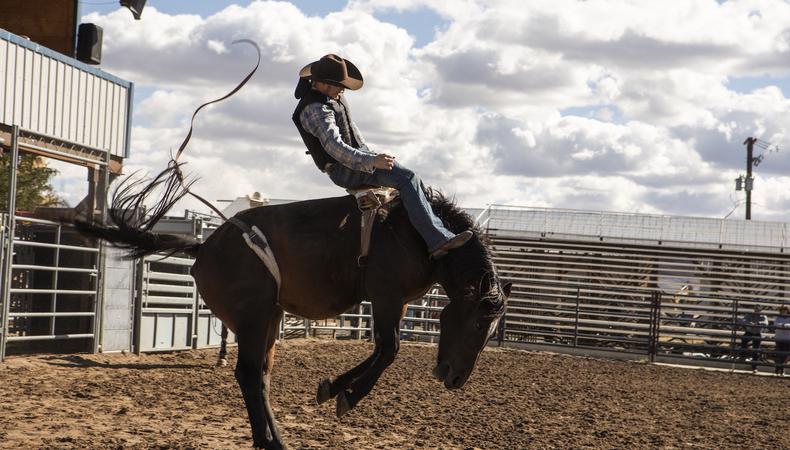
From games of cowboy poker to charging bulls and wild wolves, Paramount Network’s “Yellowstone” features many elaborate animal stunts. Capturing the life of rural Montana through careful stunt coordination is what gives the Western its authenticity.
Behind the action is Jason Rodriguez, a horseman and professional rodeo cowboy who serves as the show’s stunt coordinator. With credits that include “Fast and Furious,” “Cowboys & Aliens,” “Westworld,” Rodriguez has applied his experience living on a cattle ranch to crafting stunts for rodeo sequences on “Yellowstone.”
Talking to Backstage, Rodriguez discussed what a typical day on set is like, his background in wrangling and horseback riding, and how his career has evolved from being a stunt performer to a coordinator.
What does a stunt coordinator do?
A stunt coordinator is in charge of helping choreograph the action that’s scripted by the writer, director, and producer and making sure that everyone’s safe and that [stunts are] performed in an exciting way that represents the writing on the page. We’re also in charge of the overall safety of the actors, cast and crew.
I [also] hire all stunt performers, matching up doubles to actors, and choreographing whatever’s scripted. If it’s a fight, [I choreograph] the fight. It’s a collaboration between the director, writers, producers and myself. [It’s] also coming up with ideas because sometimes things are scripted that they don’t really know how it’s going to be accomplished so I have to try to figure out how to do it.
A Day in the Life of a Stunt Coordinator
How did you get started in stunts?
I started out working background on a TV show called “Dr. Quinn, Medicine Woman” because when I first moved [to L.A.] I wanted to break in as an actor. So I started working background so I could be around the business.
I come from a horse background and a famous rodeo family—a lot of stunt coordinators that were cowboys or wranglers knew me and my family—so I moved into wrangling on a show called “The Adventures of Brisco County, Jr.” that starred Bruce Campbell. I started doubling Bruce a little bit on that show and doing stunts, and then I decided that was the career path I wanted to take.
Transitioning to coordinating, you just get old and tired of hitting the ground. I wanted to get more into the real creative side of it. I wanted to interact with the directors and the writers and the creators and be a little more artistic. Now I’ve started second unit directing, so that’s another goal. As a stuntman, you work hard at getting to where you can coordinate and then that takes you to second unit directing.
 How to Become a Stunt Performer
 What type of training did you have?
I grew up in central California on a cattle ranch owned by my grandfather. My grandfather and my dad are both world champion cowboys, both in the ProRodeo Hall of Fame. I rodeoed professionally for a couple of years and decided I didn’t like being broke all the time.
When I first started [in L.A.], I got lucky because “Unforgiven”' and “Dances With Wolves” had just won Oscars. Every studio in Hollywood had a Western going. So just by sheer attrition, I started working, doing stunts, pretty quickly because there [weren’t] a lot of guys that could do horse stuff and the things I can do. I realized that if I only relied on horse work, I was going to have a long road ahead of me so I started to learn other aspects of stunt work.
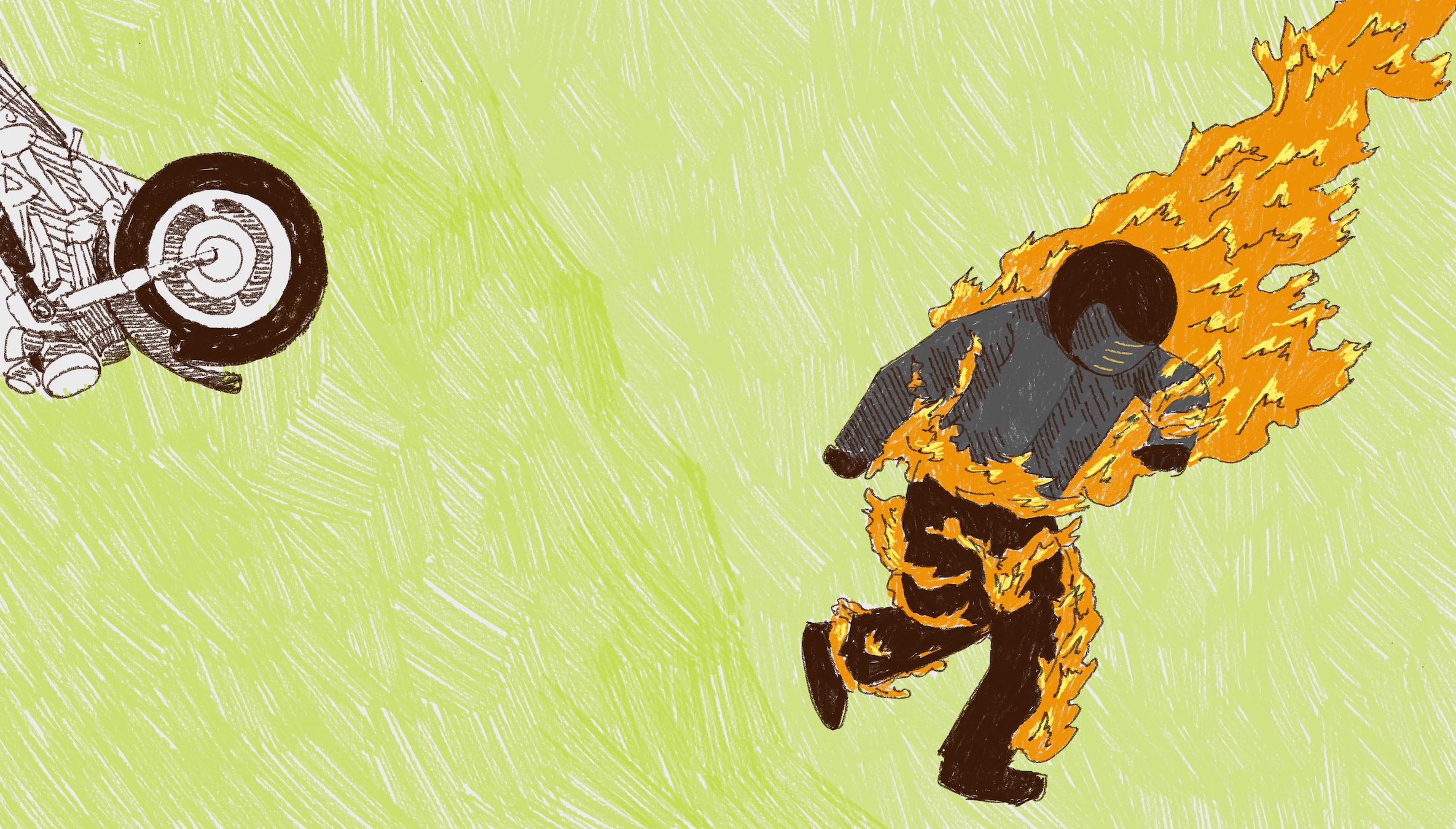
I had a few really good coordinators that just took me under their wing and showed me a lot of different things. I rented a guest house from, at the time, one of the best stuntmen that work with fire, so I learned how to do fire [stunts] from him. I had other guys that showed me the ropes. I started in the 90s, [but] now there are driving schools, fight gyms—I didn’t have any of that. Two or three of us would rent a car and just drive it around to learn the driving stuff. Now the stunt schools are specialized: if you want to learn driving, there are driving schools you can go to and learn how to fly cars and hit marks.
There are a lot of opportunities now for young [stunt performers] to seek those things out. But you do learn most of your trade on the job. That’s why I worked background for over a year and a half; I learned a lot just working [on set], watching other stunt people do their jobs. By just observing, you pick up on what a stunt person does.
When you’re hiring for your team, what do you look for?
I look at resumes. Everything that gets submitted to me, I look at and keep a file. But the main thing that I look for is who they’ve worked for so I can call for references. The other thing I look for is a specific skill set. Generally speaking, the people that “make it” are extremely good at one thing. (For me it was rodeo or horses.) I’m not talking about just training at this when they were kids, [but if] they became local champions or state champions, stuff like that. Eventually, [a coordinator] needs that skill for a project.
So I looked for a certain skill set for whatever show that I'm coordinating at the time. For “Yellowstone,” it’s horse work and real-life cowboy stuff, so I’m looking for that kind of person. I helped [a couple guys] get started in the business through “Yellowstone” because their regular job is work[ing] as cowboys on ranches, but they were good doubles. The first scene we had to do was a bronco riding scene, so I had to go outside of the known stunt world to find somebody who was skilled in that aspect.
How important is a professional network in your line of work?
The first people I hire are people that I know. I belong to Brand X Stunts, a stunt group kind of like a fraternity, so we network and people’s names get kicked around. We always talk to each other about who’s out there. If somebody comes on and does a really good job for me, I’ll put it in a group email. But I think that in the stunt business, you’re often looking for a specific skill that not a lot of people have. To get that certain specialized stunt done, you have to look outside the people you know or even can be referred to and try to find someone that’s proficient in that certain skill. I think stunts are a little different than other crew jobs in that aspect: sometimes you have to put it out there, search for somebody that might not have ever worked in the business before.
 How + Why You Need to Build Your Crew Network
 How do you find jobs?
I’ve been pretty blessed for the last few years, able to go from one show to the next. In between the coordinating jobs, I still do quite a bit of just stunt work to fill that space. I don't have a whole lot of downtime, but it took a lot of years to get to that.
In the last five years, I’d say I’ve been approached [for] jobs. I don’t get a lot of coordinating jobs from hustling or seeking them out myself. Usually producers have guys in mind they’ve already worked with. So I get [jobs] two ways: I’ve already worked for the person and they want me back, or I get them from other coordinators who get called for a show and they’re not available so they suggest me. The first season of “Yellowstone,” Wade Allen was the stunt coordinator and he brought me with him to be his co-coordinator, right-hand man. Then he started doing the HBO show “Barry” and they shot around the same time, so I took over “Yellowstone.”
Do you have a favorite stunt that you coordinated on “Yellowstone”?
There’s a scene this past season [where] we did a buffalo chase with fast-roping. It was fun, it was pretty wild. It was at night and it was cool. That was fun to try to figure out because buffalos definitely aren’t the most cooperative animals in the world. We had a really good time and everyone stayed safe and the stunt people and actors all had a blast.
So you work pretty closely with an animal wrangler?
I have an advantage because I came from a wrangling and a horse and animal background. We usually work really well together because I’ve been doing this for 25 years now. A lot of times the stuff that is scripted, I’ve done in some aspects before and the wranglers that are working on the show also have, so we talk it out. We’ll get a script and there’ll be a scene involving animals, so we’ll talk about what we need and how we need to prep it and bounce ideas back and forth until we come up with a plan. It’s a pretty symbiotic relationship.
Do you have any advice for an aspiring stunt performer or coordinator?
The best way to get in doing stunts is to get on a set: learn how to be on a set, learn set etiquette, watch people. And watch stunt people and what they do. Then, try to get in with some established stunt people who can help you out. It’s going to be a lot of hard work for little or no money most of the time. But eventually, if you stick with it and want to do it, you’ll succeed. It’s hard for people [because] they never want to leave where they live and a lot of times, especially in the stunt industry, to break in you have to go somewhere where they’re doing a lot of movies, like Atlanta. So if you want it bad enough, you have to go pursue it.
For more on how to get work on a film crew, visit Backstage’s crew hub!