TikTok and Instagram are the two biggest players for content creators, each offering distinct ways to share your stuff. So, which one should you really focus on?
Here, we break down everything—from what kinds of posts you can make to who’s using the platforms—with the aim of helping you figure out where your creative efforts will pay off the most.
JUMP TO
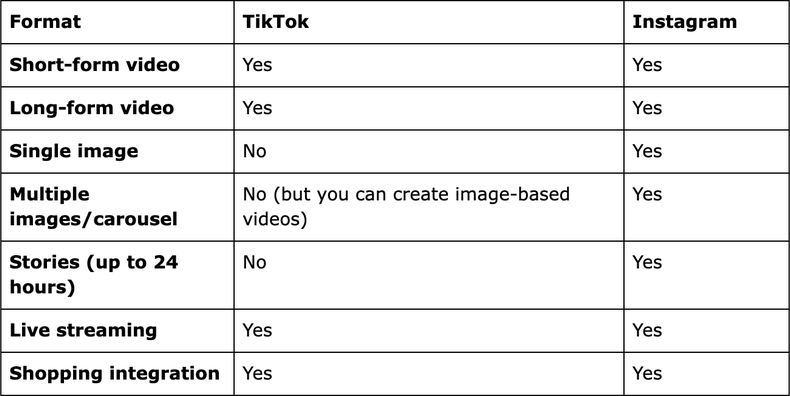
TikTok is all about short, vertical videos, usually 15 seconds to three minutes long (though we’re beginning to see longer videos find success on the platform, like pirated Disney movies in their entirety). The app has a ton of editing tools, filters, effects, and trending sounds. Its “For You Page” (FYP) algorithm is arguably the best in the business, showing you personalized content that feels uniquely tailored to your interests.
You can also go live, duet or stitch with other users, and jump on to hashtag bandwagons. What you won’t find on TikTok are regular photo posts or disappearing content. Think of dance challenges, comedy skits, product demos, quick tutorials, behind-the-scenes peeks, and miniseries on food, fashion, or travel—that’s the TikTok vibe.
Instagram, on the other hand, is a multifaceted platform. You’ve got Reels for short videos (up to three minutes), posts for single photos, photo carousels (up to 20 images), and videos (up to 60 minutes). Then there are Stories, which are 24-hour disappearing acts that can include photos, videos, polls, and Q&As. You’re also able to go live, use Broadcast Channels for one-way messages, and add quick text updates with Notes.
Instagram really shines with its deep analytics for creators, shopping features that include product tags, Explore Page for discovery, and AI-powered recommendations and editing tools. On Instagram, you’ll see lots of visual storytelling through carousels, quick tips and how-tos in Reels, interactive Stories, product launches, live interviews, and Broadcast Channels for connecting with fans.
TikTok and Instagram both have a huge global reach, with about two billion active users every month. TikTok’s biggest age group is 18–24, but it’s also super popular with users aged 25–34; the platform leans slightly more male (54%) than female. Exploding Topics reports users spend a lot of time on TikTok, too—an average of 55 minutes per day—making it the most engaging platform. You can find TikTok in over 150 countries, and it has 170 million users in the U.S. alone.
According to Metricool, most Instagram users are 18–34, and its gender split is more even with 50.6% male users. Even though people spend a bit less time on Instagram daily compared to TikTok, it’s available in over 170 countries and has 158 million U.S. users.
Basically, both platforms reach a massive audience worldwide. TikTok leans a bit younger and more male, but that’s changing as more older millennials and Gen Z hop on board; Instagram’s audience is a bit broader.
Kaspars Grinvalds/Shutterstock
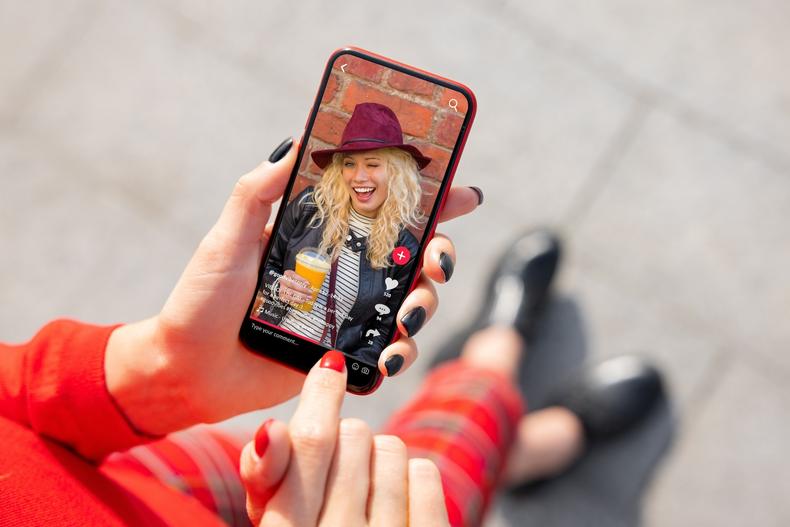
TikTok is known for the power of its FYP, which often surfaces new creators, making it possible to go viral with a single video with any follower count. Users can also incorporate emerging trends to be discovered by a new audience. Plus, there’s a ton of engagement, even in the early stages, and especially for raw, authentic, and otherwise unpolished content.
But the same things that make TikTok so powerful can also mean that growth is unpredictable. With anyone being able to rise to the top, it means that you have to be posting a ton of content to build a loyal following.
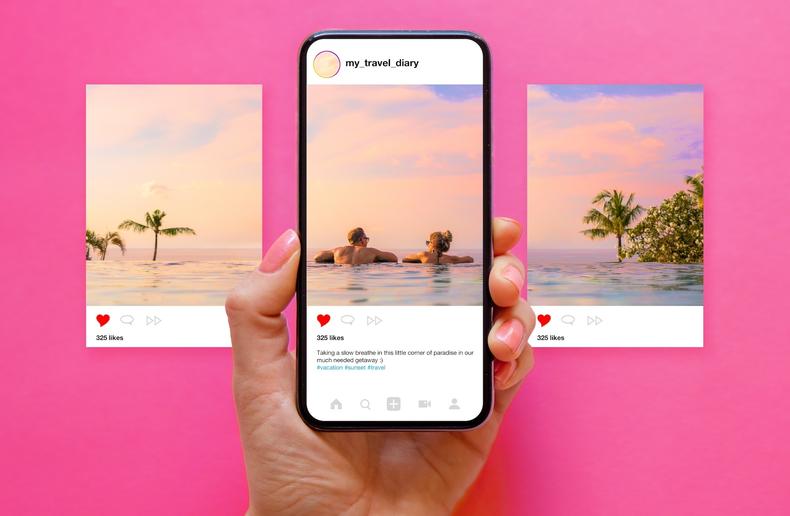
On Instagram, Reels offer the potential for going viral in a more traditional sense, but posts, Stories, and livestreams don’t tend to hit the same level as Reels. That said, those features do allow you to go deeper, and build broader and more loyal relationships with your audience. Algorithmic reach is also narrower on Instagram than on TikTok; hashtags can aid in discovery, but it’s harder to find new creators rising to the top.
In comparing the two, it’s fair to say that Instagram offers a “slow and steady wins the race” approach to building a career in content creation; TikTok’s fast-hitting viral potential means it might be hard to make a living long-term, but easy to make a killing in the short-term.
Credit: Kaspars Grinvalds/Shutterstock
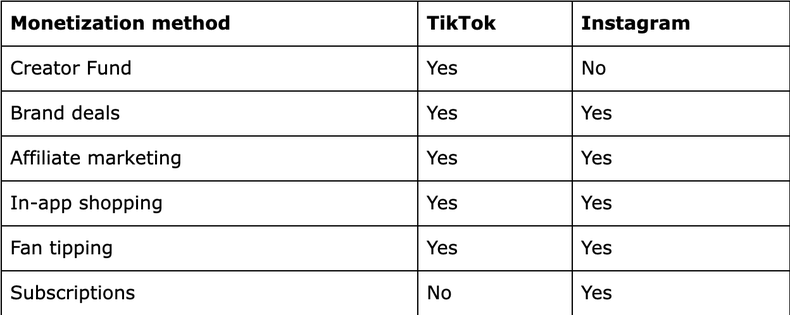
So, how can you actually make money on TikTok? Well, there’s the Creator Fund, which honestly doesn’t pay much for most people, but does reward videos that do really well. Brand deals can give you a big boost because TikTok is great for going viral. Fans can send gifts during livestreams, which you can convert into cash. And don’t forget affiliate marketing, which lets you earn money by adding product links and codes in your bio or captions. TikTok Shop is growing, but it’s not quite as strong as Instagram for selling merchandise or getting people to buy things off the platform.
Now, Instagram has its own ways to earn. Its Creator Marketplace is a built-in platform that helps brands discover and connect with creators; these brand partnerships usually pay out more per sponsored post compared to TikTok. The platform also makes it easy to do affiliate sales with its built-in shopping and affiliate programs. Plus, you can offer exclusive content to subscribers with Instagram Subscriptions.
Its in-app shopping game is super strong, too, with product tags you can utilize in Reels, Stories, and regular posts. Fans also have the ability to tip creators during livestreams using Badges. And as an added bonus, Instagram offers much more detailed analytics for creators, which really helps when you’re pitching to brands and trying to make your content even better.
Having a presence on both TikTok and Instagram (an omniplatform strategy) offers a lot of perks. Most importantly, it spreads out your risk. If one platform changes its algorithm or just isn’t as popular anymore, your reach won’t completely disappear. This is particularly important to consider when TikTok’s longevity in the U.S. is in question. It also helps you connect with more people and get the most out of your content, like posting the same Reels on both apps.
But managing both platforms takes a lot of time because each one has its own trends, formats, and audience vibes. Creators might feel a lot of pressure and get burnt out trying to keep up with both algorithms and trends. This can sometimes lead to content that’s not as good.
Deciding whether to go all-in on Instagram or TikTok really depends on your content and what you’re trying to achieve. Instagram might be a better fit if you’re creating really polished visual content and want to build a brand with shopping features, as the app tends to be more stable and offer more ways to make money.
Ultimately, what platform you focus on should be about where your passion lies, and where you prefer to do your scrolling on. For newer creators, TikTok can be a path to fast growth, ideal for those who embrace pivots and can quickly adapt. Instagram might be the better choice for established creators who are looking to cultivate a strong presence and a deep connection to an audience.
Regardless of your creator status, it’s vital that you don’t spread yourself too thin. A solid social media strategy is one that you can realistically sustain, and the best strategy is one that actually sounds like fun.