
In this era of small-screen abundance, it means something when audiences stick with a show from beginning to end. There’s also a lot to be said for a series that knows to leave the party before the lights come up. Here are nine greats that went out on a high note this year.
“Atlanta”
It seems fitting that, following a four-year hiatus, Donald Glover’s singular FX series finished its run with nearly back-to-back seasons in 2022. After all, “Atlanta” never followed any rhythm but its own. But he couldn’t have been so formally daring and playful without a game ensemble to anchor the show’s surreal odysseys. Alongside Glover, who starred as hip-hop manager Earn, Brian Tyree Henry, LaKeith Stanfield, and Zazie Beetz all saw their careers blossom over the course of the series’ run. As introspective rapper Paper Boi, tag-along space cadet Darius, and Earn’s estranged ex Van respectively, these actors’ grounding presences helped “Atlanta” buck convention all the way to the finale.
“Better Call Saul”
Following the smashing success of “Breaking Bad,” Vince Gilligan and Peter Gould took stock of their options and made a risky gambit: launching a prequel spinoff centered on comic-relief player Saul Goodman. It paid off. On AMC’s “Better Call Saul,” Bob Odenkirk brilliantly tracked his character’s gradual transformation from the shifty but fundamentally decent Jimmy McGill to the amoral strip-mall lawyer we first met on “Breaking Bad.” At the core of this journey was Jimmy’s relationship with the clear-eyed, hypercompetent Kim Wexler, indelibly portrayed by Rhea Seehorn. Key supporting players reprised their “Breaking Bad” roles to flesh out the Albuquerque criminal underworld. The show’s August finale closed out a monumental achievement in storytelling, anchored by a formidable company of actors.
RELATED: Michael Mando on the ‘Unbelievable Challenge’ of His ‘Better Call Saul’ Role
“Better Things”
Pamela Adlon was a TV veteran long before the 2016 premiere of “Better Things,” even if many viewers may not have recognized her back then. That’s because she was primarily a voice actor, best known for her work on shows including “King of the Hill,” “Bob’s Burgers,” and “Recess.” Adlon mined her own life experience to create her “Better Things” character Sam Fox, a working actor and single mother. Mikey Madison, Hannah Riley, and Olivia Edward played Sam’s daughters, each distinctly sketched and thoughtfully portrayed. As the series’ co-creator, director, and star, Adlon took on the tribulations of Hollywood and single motherhood with poignancy and hilarity.
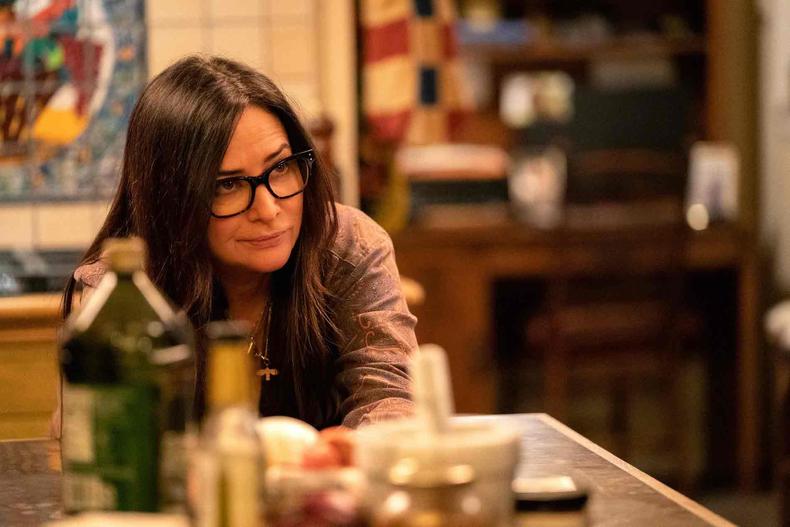 Credit: Suzanne Tenner/FX
“Black-ish”
The streaming revolution has scuttled the dominance of network TV, but Kenya Barris’ hit ABC comedy was a notable holdout. Across eight seasons, “Black-ish” both employed and subverted sitcom tropes in its thoughtful take on Black family life in contemporary America. Anthony Anderson and Tracee Ellis Ross played Andre and Bow Johnson with charm and sincerity as the show explored thorny subjects like colorism and police brutality. The twice-SAG Award–nominated ensemble featured both veteran actors (Laurence Fishburne, Deon Cole, and Jenifer Lewis) and newcomers (Yara Shahidi, Marcus Scribner, Miles Brown, and Marsai Martin), making for a talented multigenerational cast. “Black-ish” will surely influence TV creatives for years to come.
“Grace and Frankie”
At a career juncture when many actors are content to call it quits, industry stalwarts Jane Fonda and Lily Tomlin were just getting started on Netflix’s “Grace and Frankie.” The two legends starred as 70-something frenemies who became actual friends after their husbands came out of the closet and announced they were getting married to each other. Over seven seasons, “Grace and Frankie” explored something rare for the small screen: a complex relationship between two older women. Fonda and Tomlin brought their considerable experience to the table; they’re both nimble performers who can turn on a dime from daffy to heartfelt. They were backed by a pedigreed supporting cast that included Martin Sheen, Sam Waterston, June Diane Raphael, Brooklyn Decker, Ethan Embry, and Baron Vaughn.
 How Jason Bateman Convinced Laura Linney to Make Her Directing Debut on ‘Ozark’
“Ozark”
Bill Dubuque and Mark Williams’ Netflix crime drama was a fish-out-of-water epic that tossed the well-to-do suburban Byrde family into the seedy underbelly of rural Missouri. As cartel money man Marty and his cunning wife Wendy, Jason Bateman and Laura Linney led an ensemble that lent texture, authenticity, and nuance to a story that often relied on established genre beats. Series breakout Julia Garner was the MVP of the extended cast as the fiery, resourceful Ruth Langmore; Tom Pelphrey, Charlie Tahan, Lisa Emery, Felix Solis, and Janet McTeer also gave key supporting turns. As the series expanded its scope to Chicago and Mexico, continually introducing new characters along the way, “Ozark” relied on its expert performers to keep viewers white-knuckling all the way to the finale.
“Killing Eve”
BBC America’s slick British spy thriller first hit screens in 2018 with “Fleabag” Emmy winner Phoebe Waller-Bridge as showrunner; a new female writer took over the role on each subsequent season—“Promising Young Woman” Oscar winner Emerald Fennell among them. Jodie Comer gave us an unforgettable villain in gleeful psychopath Villanelle, a wry assassin whose mutual obsession with Sandra Oh’s titular MI6 agent went well beyond a toxic relationship. The star-crossed nemeses’ paths closely intertwined throughout the series, putting their dynamic somewhere between cat-and-mouse and snake eating its own tail. The excellent supporting cast included Kim Bodnia as Villanelle’s beleaguered handler, Konstantin, and Fiona Shaw as Eve’s no-nonsense boss, Carolyn Martens (who’s reportedly getting her own spinoff).
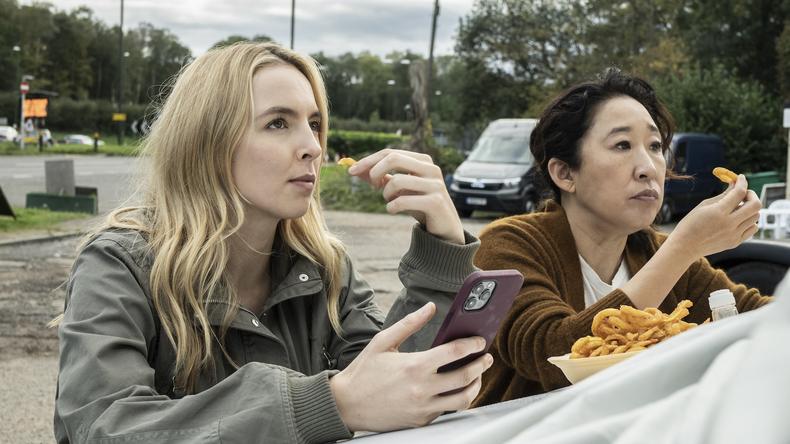 Credit: David Emery/BBCA
“Queen Sugar”
This OWN adaptation of Natalie Baszile’s 2014 novel depicted the interwoven fates of a trio of adult siblings after they inherited their family’s Louisiana sugarcane farm. From this fertile narrative soil, Emmy-winning creator Ava DuVernay cultivated a thoughtful exploration of the Black experience, folding historical awareness into its contemporary subject matter. Intimate performances from Rutina Wesley, Kofi Siriboe, and Dawn-Lyen Gardner as the Bordelon siblings (along with supporting turns from Tina Lifford, Omar J. Dorsey, and Bianca Lawson) took viewers through the kind of slow-burn American journey that’s seldom seen on television from a Black, female point of view.
“This Is Us”
Grab the tissues! NBC’s megahit melodrama concluded its six-season run in May, bringing the multigenerational saga of the Pearson family to a close. The success of Dan Fogelman’s series came at a dire time for network TV, lifting hopes that non-procedural scripted programming could still find a mainstream foothold. “This Is Us” jumped back and forth between eras—a narrative strategy that added dimension and depth to its characters. It also required several actors to portray single roles across time periods. The SAG Award–winning ensemble—Mandy Moore, Milo Ventimiglia, Chrissy Metz, Sterling K. Brown, Justin Hartley, Ron Cephas Jones, and Chris Sullivan among them—captured viewers’ hearts and earned the show a devoted fan base.
“The Walking Dead”
After 11 seasons, AMC’s zombie apocalypse drama made its final outing in November. The show changed not just the Atlanta production scene, but also the horror genre at large. It became a full-on pop culture phenomenon and launched the careers of talents including Jon Bernthal, Andrew Lincoln, Steven Yeun, and Danai Gurira. And even though the OG series has come to a close, it’s spawned three spinoffs—“Fear the Walking Dead,” “Tales of the Walking Dead,” and “The Walking Dead: World Beyond”—with three more on the horizon.