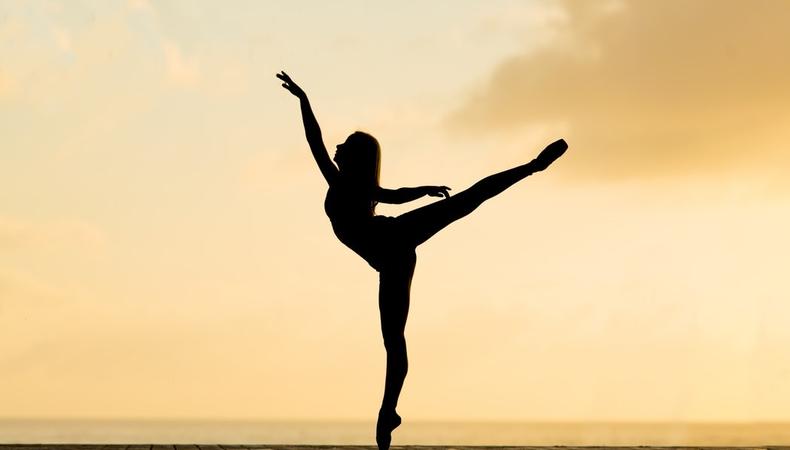
Whether you’re an actor who moves, a mover who acts, a dancer who sings, or some multi-threat combination of ‘em all, every performer can benefit from the basic principles of dance. In fact, from breathing, to auditioning, to relaying a story, acting and dancing have much more in common than you may think, just ask industry and Backstage Experts, who sound off on the subject below.
Breath control is paramount—but different—for both.
“As a dancer, I always breathed from my chest rather than my diaphragm. It helped me access my breath quickly when performing and also kept my belly from expanding and looking bloated. When I transitioned to acting, this became an issue—I needed fuller breaths from my diaphragm to support a strong voice and to be able to relax on stage (or on camera).
“While breathing seems like it should be easy, it’s one of the most important tools as an actor. I’ve found (and been told by professionals) that daily breathing exercises are needed, especially at the beginning of your training.” —Jessica Davis, dancer, actor, and Backstage Expert
What links dance and acting: storytelling.
“In any kind of performance, I'm always looking for more than just steps. You can have all the technique in the world, but if you're just a robot and you aren't connecting with the reasons or the emotions of the piece, then you're really not connecting with your audience.
“It's all about storytelling and communicating with your audience. How can you touch someone without a sense of communication? The bridge between the dance and the audience is the acting. And if it truly comes from your soul, like the best actors in the world, then your audience will feel what you feel. Your message will be heard and your audience will see a true performer and thus be entertained.” —Charles “Chucky” Klapow, dancer
Dance can help actors find character physicality.
“A lot of times, actors are so involved with the characters that they neglect their physical fitness. One should not ignore the simple physical benefits of dancing.
“[Dancers] learn how to take different stances through body language and gesture: ‘Am I proud? Downtrodden?’ Simply the posture can reflect those feelings.” [Gesture is] acting, completely without dialogue.” —Susan Perlis, dance instructor at Louisiana State University
It’s all about making it look easy.
“As an actor, mastering your instrument means controlling how your body moves, how your voice sounds, and how you physically interact with others on the stage. Being able to regulate your breath is another component of mastering your instrument and is of particular importance for singers and voiceover artists. What strikes me most about [ballet] is how the most calculated movements can come across as being entirely natural. A technically challenging sequence can appear effortless for a ballerina if she has complete control over her instrument.” —Stephanie Ciccarelli, co-founder of Voices.com, and Backstage Expert
Dance, like acting, is about breaking down barriers.
“You have to risk looking like an idiot in all sorts of different areas. In dance, there’s this idea you have to be slick all the time, and dance theater is about being so exposed, and destroying and rebuilding and digging into areas in your craft or psyche that haven’t been touched in a long time, if ever. You have to be committed to the medium being your life, which is a very different process to showing up, clocking in, and feeling fantastic every day. It’s a terrifying process so I encourage a different timeline because if you don’t play the long game, I don’t know what game you’re playing.” —Shannon Gillen, contemporary dance choreographer and teacher
You don’t need experience to get moving.
“It’s just the idea of getting on your feet and off the couch. Putting down the social media and the iPhones, tablets, computers—don’t get me wrong, I love it—and being active. If you’re just starting out, a hip-hop class is really fun. A jazz or ballet class, too. Certainly you’re not going to hurt yourself standing at a ballet barre doing a couple of tendus and dégagés!” —Matthew Shaffer, author of “So You Want to Be a Dancer?”
Auditions don’t change from dancing to acting.
“Arrive at auditions prepared to work. Yes, you will see friends and want to chat and gossip. Try to stay focused. Get in and sign in. Get grounded in your space. Be present, quiet, and listen for instructions. Stretch, warm up, have your great headshots and barcode ready and get to work. Good eye contact is a plus. Try not to stare at yourself in the mirrors. Be aware of the tone, feel, and vibe of the project. Be Pleasant! Smile. Be personable! Listen. And please be clear and concise when answering questions.” —Tracy “Twinkie” Byrd, casting director and Backstage Expert
Check out Backstage’s audition listings!