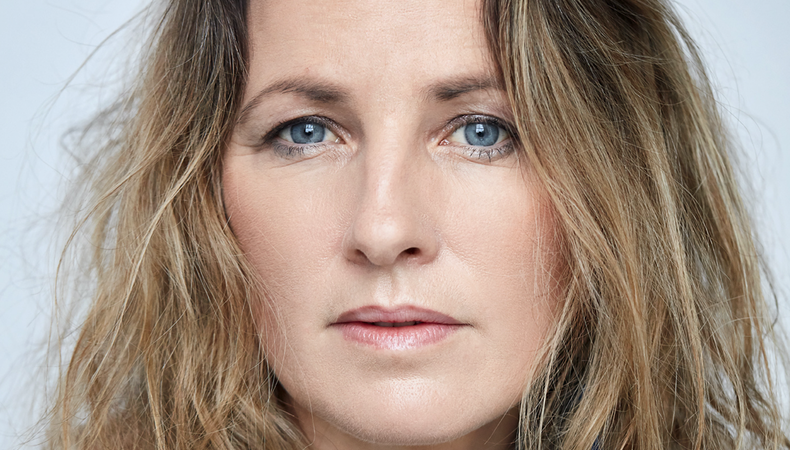
In less than a decade, Helen Behan went from a nurse harbouring ambitions to perform to BAFTA-nominated actor, starring alongside Stephen Graham in The Virtues and Glenda Jackson in Elizabeth Is Missing. To bring things full circle, during the pandemic she went back into nursing as part of Ireland’s effort to fight Covid-19. After finishing shoots on Soulmates, her latest TV role, we caught up with Helen to discover how a chance meeting with an acclaimed director kickstarted her career and how a change of attitude sustained it.
What was your journey to acting?
I was always a massive show-off. As a five-year-old, I either wanted to be a Hollywood actor or a nurse. Now I’m kinda both! But growing up in the 80s, there was no drama where I lived and no outlet for my showing off apart from in school plays. So, I became a nurse because that was within my grasp. I had a family, and I was busy working and being a mum, but I always thought I’d get round to acting one day.
Then 10 years ago, Shane Meadows was in my town on holiday and in my local pub one night. I knew Dead Man’s Shoes, I loved This Is England, and it was just mad that here he was in a tiny pub where no superstar director had ever been – I thought it was a sign. I’d had a few drinks and went to talk to him. He was brilliant – down to earth and willing to let me blether away at him. At the end of the night, I said: “You’re never going to come here again. I have to ask: how do I get involved? And can you give me a job?”
I wrote my number and “Give me an in” on a receipt and gave it to him. He put it in his wallet and waved goodbye. After that, every time the phone rang I thought: “This is it.” And one day a production company actually called about auditioning for This Is England 88. Immediately, I was sick as a pig – I was just so nervous. But I went, we chatted, and Shane left me in the very capable hands of Vicky McClure. We did an improv session and he gave me the job. And my head has been in a spin ever since.
 6 London TV Agents All Working Actors Need to Know
 What was it like working with Shane Meadows as a first job?
I didn’t have a clue what I was doing on This Is England 88. I didn’t know the language they were using on set. But the cast and crew were like a family – they took me in because they knew I was so nervous. And when you speak to Shane, he really listens. He takes everything you tell him and all your little intricacies and puts them into the character. And of course, Jack Thorne is such a great writer. The way Shane gets the best out of his actors is to let the script and structure be there, but if something doesn’t feel right, he’ll ask: “What’s your take,” or: “How would you say this?” Immediately, you’re more comfortable with the character; you feel and sound more like you, you’re more natural. I had no training, so he took little bits of me and made that the character, which made it easier. He also put me at ease by saying: “Just try it, you’ve got 100 takes, whatever.” That set was my schooling.
What happened after that first job?
I thought: “I’ve had my first job with Shane Meadows – that’s it, I’m going to Hollywood.” But of course, life for an actor isn’t like that at all. There was a year of emails saying: “No thanks,” and I wasn’t equipped for it. I thought: “I’m obviously no good at this,” and I was very hard on myself because I thought it was all about me. But I had a talking to from my very smart husband who said: “It isn’t you. You’re doing your best but you need to toughen up if you’re going to stay acting.”
Then trying to get work in Ireland was so slow-moving, I was losing heart. Thankfully, Shane got in touch again for This Is England 90, and by that point I was slowly building my confidence. It wasn’t until after we had a screening for The Virtues three years ago that I signed with Independent. And that has been a game-changer. It’s taken me a few years to work out that it’s both luck and hard work. But even now, because my route into acting was so unorthodox, I still struggle with feeling like an imposter. But I’m trying to stop that narrative in my head and just go with it.
 How ‘His Dark Materials’ Star Jade Anouka Shot a BBC Film on Her iPhone
 Is there anything from your nursing career you bring to acting?
When you’re a nurse you see everything, all types of people and characters from all walks of life. It’s a great opportunity to character study. And you see people at their most vulnerable. I meet actors who say they’re “just working in a coffee shop” or are “between jobs,” but I think we’re never between jobs. If you’re always watching and absorbing what’s going on around you, that helps you read a character and lift it off the page. I’ve had plenty of life experience. I’ve had 13-hour shifts, I’ve seen tough things on oncology wards, and had tough times during Covid. But it’s not just about that – you don’t have to have lived a life to give a performance. There are emotionally intelligent 18 or 19-year-olds out there. I think you just have to be awake when you’re out in the world and absorb those things, those stories. And working as an actor has made me appreciate what a joy it is to tell stories for a living.
More industry advice for UK actors? Click here.