I’m not a big fan of generic monologue books. Every now and then I’ll run across a piece that is well-written and works nicely, but most of the time they’re trite and obvious. Instead, I look for monologues from plays, movies, and even novels, which contain conflict and good character work. These can be hard to come by for kids under age 12, though.
How do you find good monologues for kids? Here are four dramatic monologues that are sure to push your child to improve their acting skills.
1. “A Little Princess”
SARA: I don’t have a mother either… she’s in heaven with my baby sister… But that doesn’t mean I can’t talk to her, I talk to her all the time… I tell her everything and I know she hears me because… because that’s what angels do. My mom is an angel and yours is too. With beautiful satin wings, a silk dress, and a crown of baby rosebuds, and they all live together in a castle. And do you know what it’s made out of? Sunflowers. Hundreds of them, so bright they shine like the sun. And when they want to go anywhere they just whistle, like this…(whistles) and a cloud swoops down to the front gate and picks them up and as they ride through the air, over the moon and through the stars… until they are hovering right above us, that’s how they can look down and make sure we’re alright. And sometimes they even send messages. Of course you can’t hear them with all the noise you were making… but don’t worry they’ll always try again… just in case you missed them.
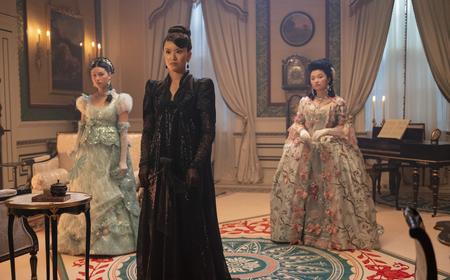
This whimsical book-turned-movie-turned-musical follows Sara Crewe, an imaginative 11-year-old who is forced to move into a boarding school after her father dies in combat during World War I. In one scene, she assures her fellow students that their loved ones watch over them in heaven even when they can’t be seen.
I love this monologue because of its sincerity. Sara’s optimism, cheerfulness, and genuine heart shine through in every word, and those are qualities that many young girls already possess and celebrate. Beyond its surface-level charm, it offers a multi-layered character to develop. Sara’s description of heaven is detailed and unique, enough so to reveal why she maintains such a cheerful attitude without fully dismissing the effect her mother’s death has had on her. It highlights Sara’s naivete without being condescending, making it a perfect monologue for naive children to relate to.
 The Actor’s Guide to Performing a Monologue
 2. “The Member of the Wedding”
FRANKIE: I told Bernice that I was leaving town for good and she did not believe me. Sometimes I honestly think she is the biggest fool that ever drew breath. You try to impress something on a big fool like that, and it’s just like talking to a block of cement. I kept on telling and telling and telling her. I told her I had to leave this town for good because it is inevitable. Inevitable. (Looking at her suitcase) That’s my suitcase I packed. If you think it’s all over, that only shows how little you know. If I can’t go with the bride and my brother as I was meant to leave this town, I’m going anyway. Somehow, anyhow, I’m leaving town. I can’t stand this existence – this kitchen – this town – any longer! I will hop a train and go to New York. Or hitch rides to Hollywood, and get a job there. Somehow, anyhow, I’m running away.
This coming-of-age story follows 12-year-old Frankie as she follows her older brother on his honeymoon. In her monologue, Frankie explains her awe in realizing the extreme loneliness she felt before understanding what it meant to “belong to a ‘we.’ ” This monologue is perfect for auditions because of the distinct changes Frankie undergoes throughout. While the piece climaxes when she decides to follow her brother to Winter Hill, there’s no shortage of personal realizations and emotional beats as she comes to that understanding. Frankie’s universally shared desire to find her place makes the monologue both relatable and entertaining as she comes to terms with her desires in unique, childish ways. Additionally, the character herself is more spunky than Sara Crewe, making it good for more spirited girls who may have a hard time connecting to Sara.
3. “Irreconcilable Differences”
CASEY: I’m just a kid, and I don’t know what I'm doing sometimes. But I think you should know better when you’re all grown up. I think you should know how to act, and how to treat people. And I think if you once loved someone enough to marry them, you should at least be nice to them, even if you don't love ’em any more. And I think if you have a child, you should treat that child like a human being and not like a pet. Not like you treat your dog or somethin’. You know, when you have a dog sometimes you forget he’s there, and then when you get lonely suddenly you remember him, and you remember how cute he is and stuff, and you kiss him a lot, but then the next day when you're busy again you don't notice him. That’s how I’ve been treated for the past four years, and you don’t treat your kid like your dog. It’s not right.
This film monologue expertly tackles mature themes such as neglect and emotional abuse while still highlighting the innocence of its protagonist, Casey. In it Casey argues for legal emancipation from her absent parents, explaining the decency she feels adults owe to one another and the obligation they have to care for their children. Casey’s simplified view of right and wrong is blunt and honest. This is why her monologue is good for kids; it bridges the divide between youthful innocence and adult maturity through the eyes of a child. The monologue is essentially a plea for attention, respect, and understanding, and that’s something kids can understand in a world where their voices are often overlooked. Casey must articulate her desire for independence to a room full of adults who still see her as naive and incapable, and that’s a conflict young girls can understand.
 21 Monologues for Kids
 4. “Runaways”
IGGY: My mother’s dead. I don’t know what of. But she’s dead. And my father, who bossed her around, drank all the time and had other girlfriends, cried a lot and said that life was cruel. And that was it. The other night after my mother’s funeral, I went into her dresser drawers and started sorting through her underwear, her socks and her blouses. I could smell her powder, her skin, and her breath. I felt like number one in the world. I mean, she got herself into one of those strange coffins, got lowered into the ground and was never, ever, ever seen on the face of the earth again. It was all so mysterious, and it gave me a kind of medal to show off. Teachers would be kinder. My friends wouldn’t say I was bad in sports and I didn’t have to worry about pimples, but then it began to wear off, and I’d hold up the clothes and there’d be no body inside of them, and I kept seeing the shape of her arms or the way she’d paint her toenails. And my brain would start screaming. I mean how can a person just completely disappear? I don’t understand it.
The musical “Runaways” features a cast of about 20 teens and children, each one having a song, scene, or monologue about why they ran away from home. It’s a great source of material because of its dynamic writing. Each monologue has a unique voice, yet they all have the same lingering sense of uncertainty that’ll have the audience on the edge of their seats. Some of my favorites are AJ’s monologue when they explain why they had no choice but to leave their unstable home, when Eddie asserts that they believe there is a problem with the world while begging that their teacher doesn’t flunk them for their criticism, and Lazar’s monologue, in which the child explains why superheroes can only be found in comic books. Most of the monologues will work for kids of any gender, and while many were written for teens, they’re still great material for younger actors.
All these dramatic monologues will help your child ace their audition and showcase their skills, but there are plenty of other plays, TV shows, and books out there with dynamic monologues for young actors. As long as the conflict is good, the tactics used to overcome the conflict change, and your child can relate to the material, there will be nothing keeping them from reaching their full acting potential.
Monologue ready? Looking for remote work? Backstage has got you covered! Click here for auditions you can do from home!
The views expressed in this article are solely that of the individual(s) providing them,
and do not necessarily reflect the opinions of Backstage or its staff.