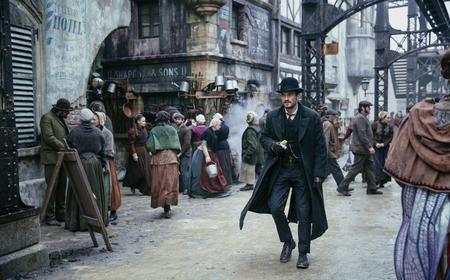
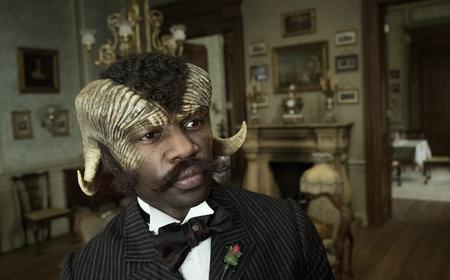
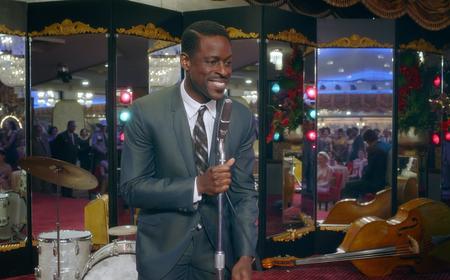
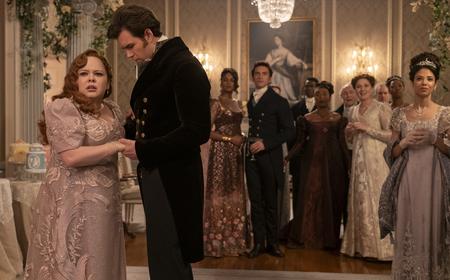
For Emile Mosseri, music has always contained endless creative possibilities. As a musician and composer who has navigated both touring in a band, and writing and scoring music for TV and feature films (“Random Acts of Flyness,” “The Last Black Man in San Francisco,” “Kajillionaire,”), Mosseri has worked in and with music for his entire career.
Speaking to Backstage, Mosseri shares why it is vital for aspiring composers to invest in relationships with artists they believe in before they achieve mainstream or critical acclaim and why the process of putting together a film score is never the same twice.
 Crew 101: Everything You Need to Know About Getting Your First Job On Set
 What does a film composer do?
A film composer essentially creates dramatic music that’s used to help tell the story emotionally. My job is to generate themes that connect to certain characters or different thematic material in the film. Most films have music that helps the audience understand the arc of a story and create the emotional fabric. Music plays a huge role in that. The marriage of a great visual with a great piece of music is a really magical thing. It’s like you hit some higher frequency when those two things are really clicking, it can be really powerful.
How did you get into composing?
I became aware that it was a job in high school and I studied it in college. Then I left school and was playing in bands and making records, which I’m still doing. I re-entered the industry two years ago when I moved out to Los Angeles. I had been writing music for a TV show on HBO called “Random Acts of Flyness” from a filmmaker named Terence Nance. I had worked with Terence on his first film—“An Oversimplification of Her Beauty”—and he’d made a music video for my band. Having the opportunity to work for somebody as brilliant as Terence opened up the door for me to get used to scoring films for companies that are making such great films.
How do you find out about new projects?
The first and most important part of that process is finding visual artists you want to collaborate with and that you have a creative connection with: scoring films for free or cheap if you believe in the work, placing your bets on projects before there’s money or prestige involved. That was the path that worked for me. I’ve heard other composers break into the industry by working as an assistant to a more established composer. They’ll delegate work and [aspiring] composers can start to get credits [by] contributing additional music to a film.
A lot of composers I know are in bands so if a friend of yours is making a music video and may also be making a short film, score their short film. Once you’re to the point where you have an agent, their job is to keep their eye out for jobs and negotiate on your behalf, but I find the most valuable thing is making connections with directors. If you do a good job, they’ll hire you again and you’ll ideally have a lifelong creative companion.
At what point do you become involved in a project?
I’ve scored three films and one TV show, and each one has been different. The first film I scored [was] “The Last Black Man in San Francisco” and the film had been shot when I got brought onboard but it hadn’t been fully edited—they were editing the film as I was composing. That was an exciting challenge but it was fun because the director was able to also extend certain scenes to fit my music. The second film I scored was for Miranda July’s “Kajillionaire” and that was a completely locked cut. I showed up and the film was completely done, save the music and visual effects. That was a completely different experience. And then [for] “Homecoming” and “Minari,” I started writing music before they’d started shooting, which is my favorite way to work. I had written music to the script and then they ended up editing chunks of the film to my music, so the music became baked into the batter of the film itself.
There’s something called temp music that editors and directors use before they have original music. To build the edit, they use music from other films or other pre-recorded music that was not made for the film that they don’t have the rights to. In one sense [that] can be helpful for a composer because I can use it as sort of a roadmap but it can also be challenging because now you have a director who’s become emotionally attached to a piece of music that they don’t have the rights to. [For] “Homecoming” and “Minari,” they were temping with my sketches so I didn’t have to compete with Philip Glass or some incredible composer to get into the director’s ear. Once a director gets music in their ear, they get attached to it and that can be super challenging to knock a piece of music off the mountain.
Looking for work as a composer? Check out available jobs now!
How do composers make a living?
A lot of composers play in bands first, then a director was a fan of their band and gave them a shot at scoring. But as far as making a living, the spectrum is vast in terms of how successful a band or a composer is. I find it’s harder to make a living being in a band than it is to score films. Playing music, performing music, and selling records is one of the hardest ways to make a living. Oftentimes musicians will find other avenues to make a living, whether it be through teaching, writing music for commercials, doing things that have nothing to do with music. I worked in cafes while I was in bands and [had] jobs that were flexible [so] I could go on tour and still come back and pick up some shifts.
What advice would you give aspiring composers?
Create, make stuff, constantly be writing, constantly be creating, jump into the pool and do it. As far as specific programs, I use Logic and a lot of sample libraries from a company called Spitfire that has high-quality orchestral samples that oftentimes can be used to score films. There’s no one real way to do it. Not every film calls for an orchestral score. What a film score is is completely wide open. It can be completely electronic, it can be just one person playing an acoustic guitar, it can be anything you want it to be, it’s really whatever the film calls for. So there’s no required equipment to do it other than a microphone and an instrument, whatever that may be. The most important thing is to create, to not wait for the opportunity to present itself but to make your own stuff. If you’re constantly writing, when an opportunity does arise to score a film, you have your own library of music that you’ve generated over the years that you can draw from.
What are some moments of great film composing that have inspired you in your career?
I loved Anna Meredith’s score for “Eighth Grade.” I thought that was one of the most exciting and unexpected and colorful scores I’d heard in a long time. I love the old Italian composers: Nino Rota [and] Ennio Morricone. Carter Burwell’s score for “Fargo” is one of my favorites. I think the first one for me that got me excited about film scoring was Danny Elfman’s score [for] “Edward Scissorhands.” It’s such a romantic film and score and such an imaginative thing, you can’t imagine the movie without the score or vice versa.
For more on how to get work on a film crew, visit Backstage’s crew hub!