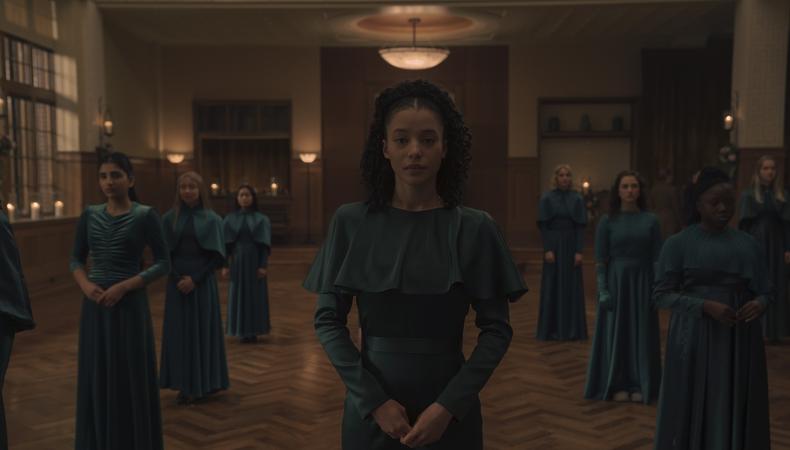
Following the epic six-season conclusion of Hulu’s “The Handmaid’s Tale,” the streaming giant wasted no time expanding Margaret Atwood’s dystopian universe. The sequel series, “The Testaments,” which debuted in April 2026, fast-forwards Gilead’s dark timeline by more than a decade and continues to lean heavily into the themes of indoctrination, absolute power, and fierce resistance.
“The Handmaid’s Tale” creator Bruce Miller returned to helm the follow-up series, which stars “One Battle After Another” breakout Chase Infiniti alongside Emmy winner Ann Dowd, who reprises her iconic role as Aunt Lydia.
As fans eagerly await news of the show’s renewal, you might be wondering if you have what it takes to bring Gilead to its knees—onscreen, of course. This guide to auditioning gives you an inside look at “The Testaments,” complete with exclusive industry insights from the casting directors who populated both hit series.
JUMP TO
- What is “The Testaments” about?
- Who is in the cast of “The Testaments”?
- Who is the casting director for “The Testaments”?
- How does the casting process work for “The Testaments”?
- Where can you find “The Testaments” casting calls and auditions?
- What are the best audition tips for landing a role on “The Testaments”?
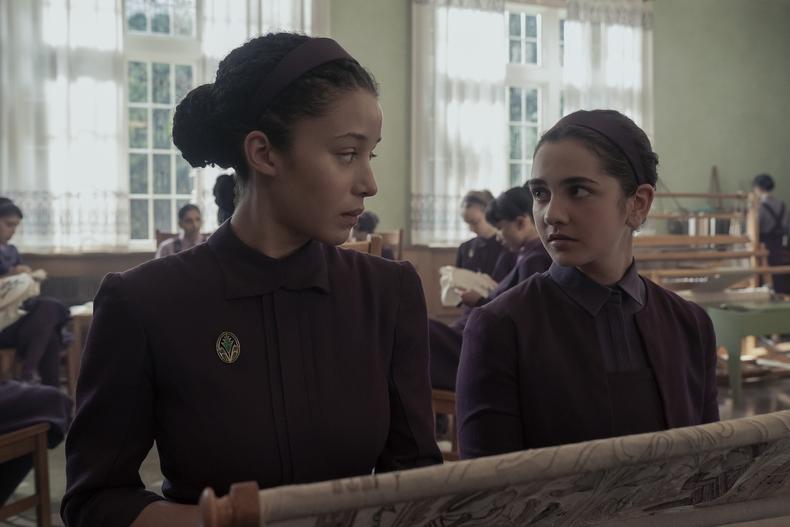
Adapted from Atwood’s 2019 novel, “The Testaments” continues the story introduced in her 1985 novel, “The Handmaid’s Tale.” Set 15 years after the events in the original TV series, this story follows three women—Aunt Lydia, Agnes, and Daisy—as a new generation of Gilead women grapple with the future laid before them. Displeased with the Republic’s bleak norm, the young women of the elite preparatory school begin to concoct a plan that would upend Gilead entirely, bringing down the system from within.
Season 1 of “The Testaments” featured:
- Chase Infiniti as Agnes MacKenzie
- Lucy Halliday as Daisy (Marguerite)
- Mabel Li as Aunt Vidala
- Brad Alexander as Garth Chapin
- Isolde Ardies as Hulda Marie Edwardson
- Rowan Blanchard as Shunammite Hayes
- Mattea Conforti as Rebecka “Becka” Grove
- Zarrin Darnell-Martin as Aunt Gabbana
- Eva Foote as Aunt Estee
- Kira Guloien as Rosa
- Shechinah Mpumlwana as Jehosheba Yardarm
- Birva Pandya as Miriam Dawson
- Amy Seimetz as Paula MacKenzie
- Ann Dowd as Aunt Lydia Clements
Elisabeth Moss, who led “The Handmaid’s Tale,” also returned in her role as June, while Stephen Colbert made a cameo appearance as the voice of Radio Free Boston.
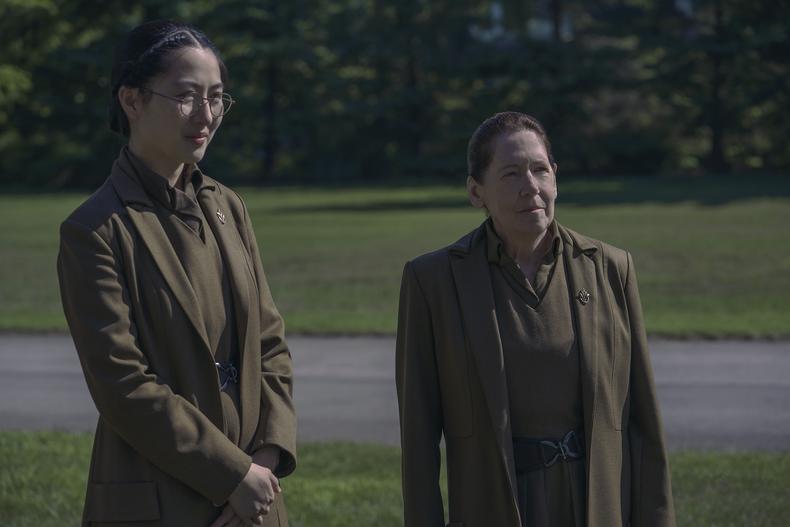
Russell Scott and Sharon Bialy of Bialy/Thomas & Associates, who both worked as the casting directors for “The Handmaid’s Tale,” returned for “The Testaments.”
The show’s crew includes several other alums, such as Mike Barker, director and executive producer; Warren Littlefield, executive producer; Steve Stark, executive producer; Wendy Hallam Martin, editor; Ana Yavari, editor; and Martha Sparrow, production designer.
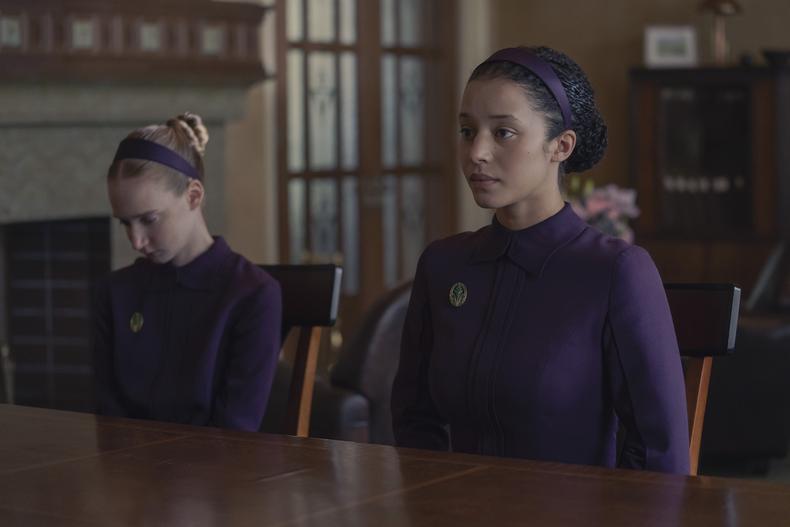
Having starred as the feisty lead opposite Leonardo DiCaprio and Sean Penn in the Oscar-winning best picture of 2026, “One Battle After Another,” it’s no surprise Infiniti was tapped to lead the next installment of this topical tale—and creator Miller agrees. “She has the vibe of her generation,” Miller told Variety of Infiniti’s casting. “She’s a very intelligent woman, very mindful of who she is and what she’s doing. She’s also a bit older. She’s a little more confident. Some of our cast members are 18, 19 years old,” he added. “She’s 25, and it’s different in terms of her being ready for her moment. I think she thinks of the younger girls as a different generation. She’s special.”
As for the show’s radio DJ, Miller noted there was never any question about who to cast. “I think Stephen Colbert, because of who he is—they’ve hired Stephen Colbert to be the voice of Radio Free Boston,” he shared, while explaining that he believed Colbert was portraying his true self. “I think he’s a good choice as a voice of American freedom for a lot of reasons—we had a list that was one person long.”
But for those who don’t come to the table with the immediate name recognition, what does it take to stand out in the audition room? “Their talent, their commitment, and their ability to dive into the role without their ego,” Bialy told us. “We’re all in this because we love to tell stories, so what makes me remember an actor is an actor who went in to tell the story, not the actor who is in there because of the ego. A lot of times, actors are told, ‘This is your time in the room,’ and that’s not my feeling. It’s not their time; it’s the time for the story. It’s their time to bring the story to life. It’s not all about them.… We remember an actor when you start paying attention again to what the story is, and you’re moved by it.”
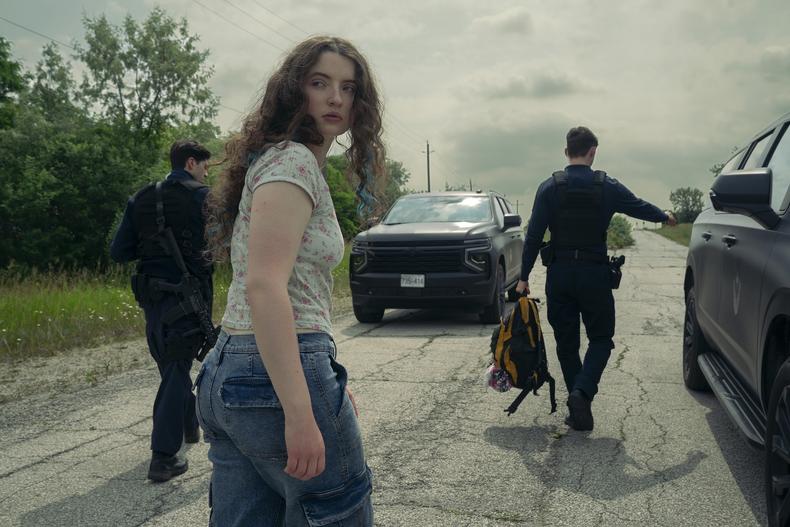
“The Testaments” hasn’t yet been renewed for Season 2. Until we know more about the series’ future, we recommend checking out our roundup of gigs casting in Canada right now. You’ll also want to bookmark our main casting page for updates on the latest listings as they become available. You might also find our guide on how to audition for Hulu helpful. Because this show has a big legacy behind it, you may want to secure representation if you haven’t done so already. Here’s how to get an acting agent for those who are not sure where to start.
When it comes to the audition process, no one has better advice than those who are casting the show. In this case, we are talking about the CDs from Bialy/Thomas & Associates, who cast both Hulu adaptations of Atwood’s work. Here’s what Bialy, Scott, and Sherry Thomas want you to know about the experience:
On listening: In the audition room, Thomas pays special attention to whether or not the actor is listening to directions given. “Are [actors] listening? Are they listening not just in the scene but to the direction, to the notes? As we start to read a role, we discover actors falling into the same trap over and over,” Thomas shared with Backstage. “If somebody walks in, and you give them a note, sometimes they can’t quite get out of their brain because they’ve prepared so diligently in their own way,” she continued. “I wonder if they’re really listening to what I’m saying. Also, you have to be a good person. It goes a really long way.”
She added, in a later interview, that an actor’s ego can get in the way of their ability to be receptive. “We don’t just have an actor come in, do a scene, and walk out the door. We take time and we more than likely give direction to see what really can be under the surface as an actor. If it is just about them and their ego and they don’t want to engage in that, I’ll remember,” she noted. “I can’t tell you how many times we’ve heard, ‘Well, that’s not how I prepared it.’ OK, well, can we try it this other way? There’s a resistance to being open to working in the room. That’s what the process is about. It doesn’t happen a lot, but sometimes it does and it stays in my memory.”
On rejection: No matter how good your audition goes, sometimes you’re just not right for the given role. But it’s how you deal with said rejection that makes the biggest impact on future opportunities. “We look at people as professionals, and if you keep working hard, the cream rises to the top. It’s not how you are when you’re successful, it’s how you are when you take rejection,” Bialy said. “As actors know, you can come in and do an amazing audition and for a variety of reasons, you won’t get the job. [You just have to] keep going and believe in yourself and eventually it will happen.”
“It’s not about going in and getting this job. Just do good work. That’s how we’re going to remember and acknowledge that and keep bringing you in if we feel there’s something there,” Thomas added. “It should be about the work. When you come in, we do our preparation, and we expect you to do yours. Do your job, do the best you can, and leave it at the door because there are things you can’t control. You can only control yourself—not the surroundings or the producers. Focus on yourself and don’t worry about what other people are doing.”
On self-tapes: Now that self-tapes are the norm, it’s important to understand what CDs hope to see when they press play. “For me, the basics are you want to shoot from right about under your chest up and be framed in nicely, you don’t want the reader to overpower. If you can have a good reader, that’s great, and they don’t need to act, they can just facilitate what you’re doing. Make sure the lighting is good, make sure you have a plain background. I think even more so with self-tapes, you should always do one normal and then one throw-it-away and speed it up because what tends to happen with self-tapes is there’s nobody in the room to do that, so keep it moving. Watch it back from different perspectives. Don’t watch it back from your ego, watch it back from, ‘Are they going to watch the whole thing?’ ” Thomas said.
“You shouldn’t send in three or four takes of a scene, don’t do that. [When] you get one that you like, send that one,” Scott added. “But a lot of times, when people are self-taping, the tendency is to do too much so then just do another take, so there’s two takes total, where you’re just very simple, you feel like you’re not doing anything.”