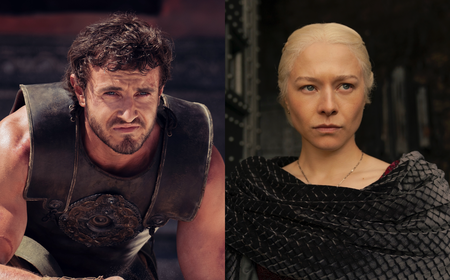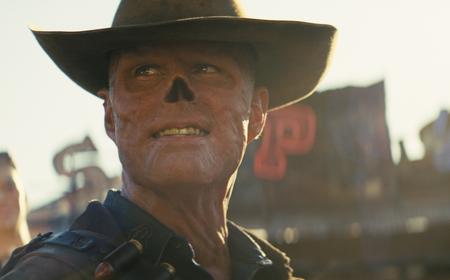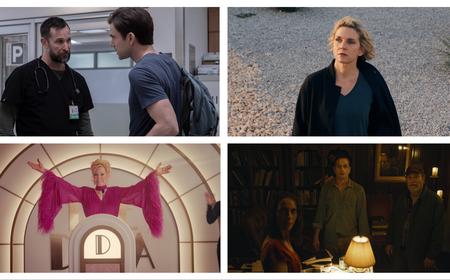
John Papsidera’s 2026 TV lineup shows a veteran casting director comfortable in any genre, whether it’s neo-Western, video-game-inspired dystopia, or Gothic black comedy. The acclaimed CD helped build the casts for some of the year’s top Emmy contenders, from Taylor Sheridan’s rugged Paramount hits “Landman” and “The Madison” to the imaginative worlds of Prime Video’s “Fallout” and Netflix’s “Wednesday.” And that’s not all he is working on, either. His influence extends just as powerfully to the big screen, with massive projects like Christopher Nolan’s upcoming epic “The Odyssey.”
We caught up with the industry’s favorite star-maker to crack the code on how he builds today’s most varied ensembles. He shares the special qualities he looks for when casting specific projects and what makes him want to give an actor another callback.
Between the grit of “Landman” and “The Madison” and the surrealism of “Fallout” and “Wednesday,” how do you keep all of these worlds straight?
A lot of it has to do with visualization and channeling what the showrunners want to see. Trying to mold those worlds into something that’s really tangible. Luckily, we get to use actors’ souls as the paint with which we try to create these worlds.
Does your gut feeling for what good acting looks like change when casting different projects?
No. I think it only changes in the sense of the demands of the character. You want people to be realistic. You want them to be truthful to the moment. But not every role demands, you know, Hamlet or Lady Macbeth. It differs from projects and creators and directors, but you’re always looking for the right piece to fit into the jigsaw puzzle.
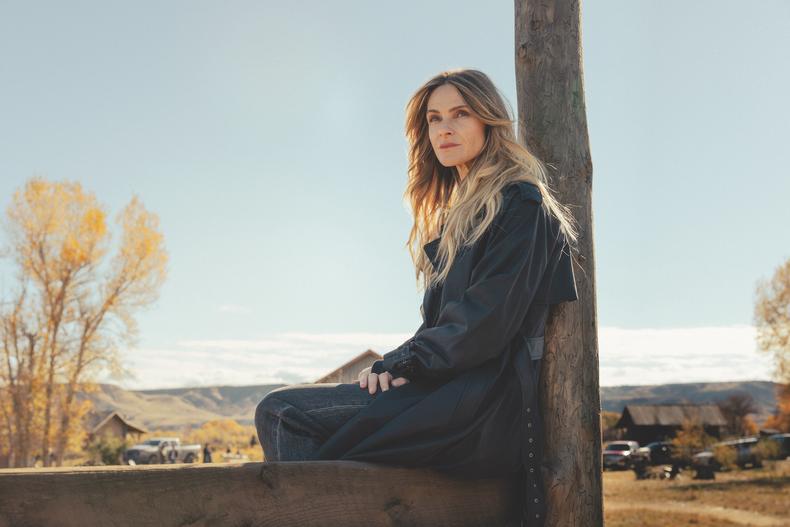
Beau Garrett on “The Madison” Credit: Emerson Miller/Paramount
When you’re casting a Taylor Sheridan project, is there a specific quality you look for?
There is a rawness to it. An ease of masculinity. You’re looking for somebody to be Steve McQueen or Paul Newman, somebody that they don’t quite make anymore. But life experiences really help create those worlds. We venture outside the lines and look at guys who are stunt people, actors who have other careers, and guys who actually work on ranches. We look in a lot of different places. I’m a big believer in, not reality casting, but in casting actors with the skills to portray that [role] and find it within themselves.
Beau Garrett, who plays eldest daughter Abigail Reese on “The Madison,” mentioned that you gave her a second shot at her audition after her first tape didn’t land. What signals that an actor deserves a redo?
I cast Beau in a pilot, I can’t tell you how many years ago, and so I’ve known her and her work for a long time. And when you know an actor, it’s what we do every day. We fight for actors, we campaign for actors. We convince creators why they should use that actor. So when you’re familiar with somebody, it’s an honor to go to battle for them. Truly, it’s an honor to say I know that person can do more, or I think they just got off on the wrong foot. It’s not an exact science. It’s trying to breathe life into these roles and into another person’s words, and so I think that moment with Beau, it was like, we talked for a bit, and we said, “Let’s do it again.” And, I can’t tell you how thrilled I am with how well she has stood up to the challenge and kind of blossomed in it.
For a show as raw as “Landman,” how do you find actors who have enough grit not to get swallowed up by the Texas landscape or acting alongside a star like Billy Bob Thornton?
It can be challenging. Years ago, I said something about the fact that America stopped making leading men, and it made us look in other countries. I think it’s always about finding new people and new regions. It’s hard to find guys that are gritty enough to fill that world, and you want people to be truthful to it. So I think it is about seeing a lot of people, the quality of an actor, and what they portray. It’s about looking long and hard to find people who fill what Taylor writes. It’s a real world. It’s a world that he lives in. But those people, in an actor form, are not always made.
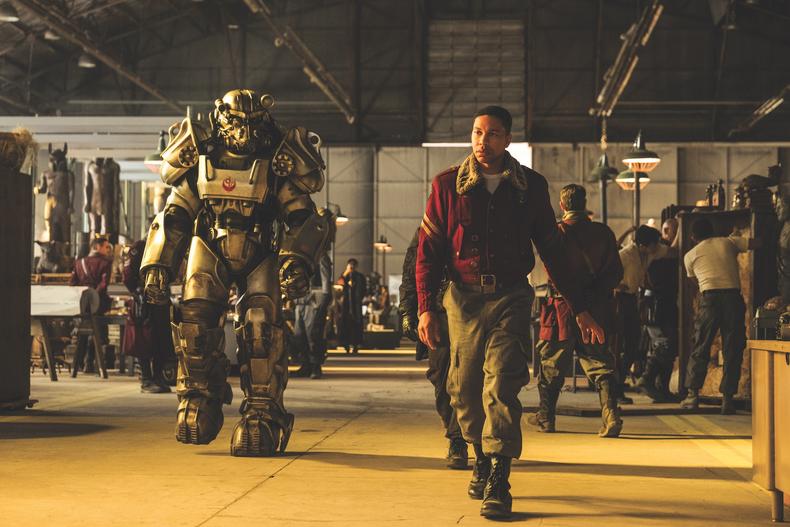
Aaron Moten on “Fallout” Credit: Lorenzo Sisti/Prime
That same eye for grit is just as important when you’re casting a famous video game adaptation like “Fallout.” When a video game has been around for decades, how do you find talent that can live up to the lore and expectations?
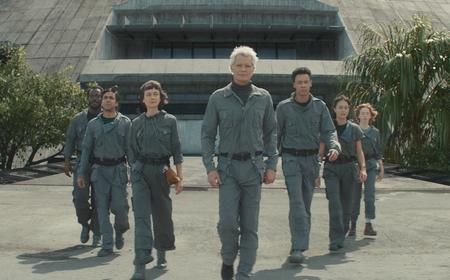
It’s a challenge in that I’m not schooled in video [game] lore. So it’s a real collaboration with the showrunners and creators [Graham Wagner and Geneva Robertson-Dworet], mining their knowledge of those characters and how we can bring them to life. It’s a long process that we go through with everybody involved in “Fallout,” to find the right notes to fill that [post-apocalyptic] landscape with—whether [it’s inside the fallout bunkers known as the Vaults or the wastelands outside the bunkers]. It’s a real back and forth of trying to fill those roles, because [Wagner and Robertson-Dworet, along with “Fallout” game designer and producer Todd Howard] know the world and the history of “Fallout” much better than we do.
You’ve also been instrumental in shaping the world of “Wednesday.” How do you and Tim Burton, along with showrunners Alfred Gough and Miles Millar, ensure stars like Winona Ryder integrate into the ensemble without overshadowing the younger cast?
It’s about knowing Tim’s taste and the kind of actors he responds to. It’s also about servicing the story and servicing the needs of Netflix. It’s a little bit of an advantage that Jenna [Ortega] and Catherine [Zeta-Jones] are such stars, that we have a huge canvas to work with in “Wednesday.” I don’t think that we can outshine what we’ve already established. So there were no real concerns when we get to bring in Noah Taylor to the world, or Winona, or any of the people that are [going to be in] Season 3. It just gets a little bit more delicious that there’s all these individualistic characters that get to play off of one another.
Is there anything you can share about “Wednesday” Season 3 that you’re excited about?
There are some big storylines that are fantastic in Season 3. The fact that we went to France is a real fun thing, and to have Wednesday explore another world. I am really excited about Winona, Noah, and Lena Headey. That world just keeps growing in a different way. “Fallout” grows in a certain kind of anonymous way, because the characters are front and center. “Wednesday” grows in this kind of population of delicious characters.
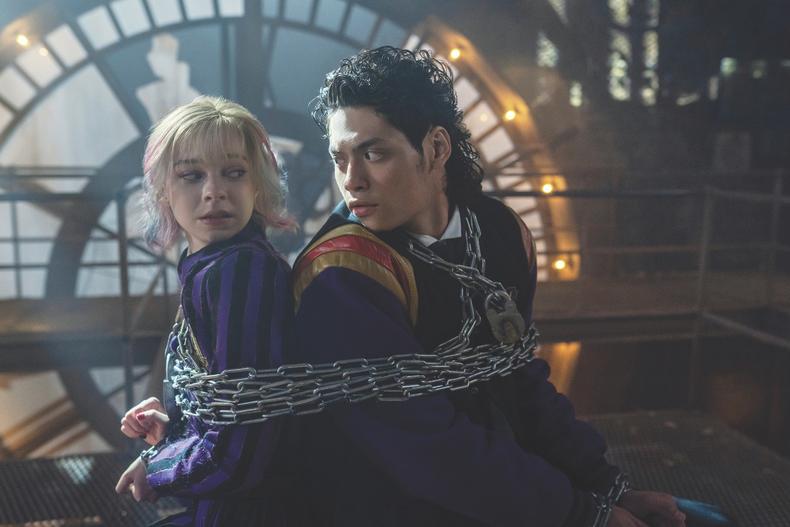
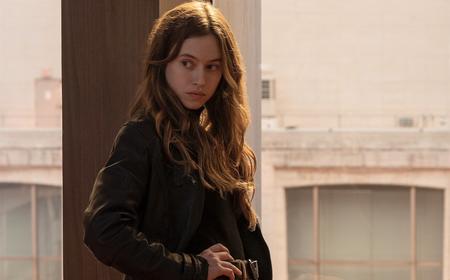
(L to R) Emma Myers and Noah B. Taylor on “Wednesday.” Credit: Jonathan Hession/Netflix
What can an actor do, beyond giving a great reading, to make your life as a casting director easier?
I think it’s the choices they make and the ability to adjust. That’s a huge thing when a director, or myself, [wants] an adjustment, to see somebody be able to take that and fly with it. [It’s] what we really want. Because if [an actor] can do that on a set, they can do that with another director. You might never get there, but if you do get there and are prepared, it’s an impressive move.
To see somebody shift from one mindset that maybe they walked in with to an entirely different one. As subtle as it may be on an adjustment, those are the moments where you go, “Wow.” And that sticks with [me].
Have you ever had an actor audition who wasn’t right for that specific part but left such an impression that you cast them in a later project?
Oh, I’m sure there’s 10,000; just trying to think of somebody that sticks out in my mind that wasn’t right for something, but then they fell into something else. I’m also in the process of doing Netflix’s live-action “Scooby Doo,” and so there were a lot of actors that weren’t necessarily right for Shaggy but could have been right for Fred. So we moved them from one character to the other, going, “Well, he’s not that, but maybe he’s that.” I remember when we were doing “The Prestige,” Chris Nolan and I were looking for a character, and I finally got a tape of Rebecca Hall before Rebecca had really done anything. And I called Chris immediately and said, “OK, I found her.” And it turned out that Rebecca was brilliant in [the role of Sarah Borden] and a brilliant actress. There are so many of those people that I look back on and go, I was lucky to be in the right moment at the right time and recognize their specialness.
Are there any deal-breakers or red flags that would make you hesitate to bring an actor back, even if they were talented?
Unprofessionalism, sure. Horrible behavior, yeah. I do think it’s part of my job to protect directors, producers, and productions by being responsible about that. And believe me, it’s few and far between that that’s ever happened. I am, knock on wood, very lucky to have had a career at a certain level that I don’t have to deal with a lot of that. You want productions to go well, people who will get along with others, and who will bring their best to a project.
This interview has been edited for clarity and length.
This story originally appeared in the June 15 issue of Backstage Magazine.