More than a year after HBO premiered “The Last of Us,” Amazon Prime Video entered the post-apocalyptic video game adaptation market with “Fallout.” However, unlike its bleak counterpart, the “Fallout” showrunners honor the video game’s core humor and optimism, making it a standout in the genre. And now, with Season 2 having premiered on Dec. 16, 2025—and a Season 3 renewal announced mere hours ahead of its debut—it’s clear the show’s a hit with its devoted audience.
But do you have what it takes to stand out in the audition room? In our guide, we’ll explore the casting process for “Fallout," so you’ll be prepared when the series starts looking for talent.
JUMP TO
- What is “Fallout” about?
- Who is in the cast of ‘Fallout’?
- Who is the casting director for ‘Fallout’?
- How does the casting process work for ‘Fallout’?
- When does filming for ‘Fallout’ Season 2 start?
- Where can you find ‘Fallout’ casting calls and auditions?
- What are the best audition tips for landing a role on ‘Fallout’?
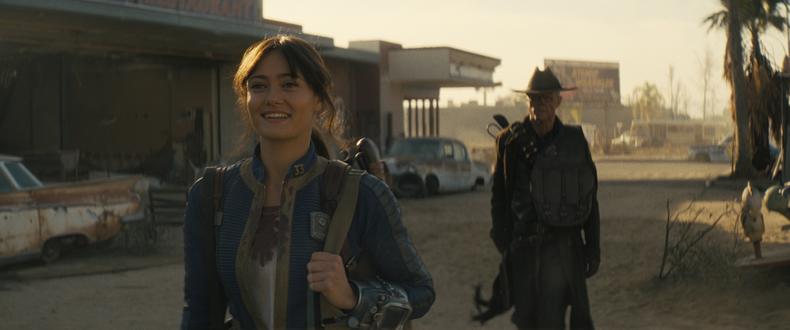
“Fallout” Season 1 follows its three main characters (Lucy, Maximus, and the Ghoul) as they navigate the postapocalyptic world that was decimated by the Great War, a nuclear event that ended life as we know it in 2077. Survivors escaped the horror of the hellish landscape by locking themselves away in Vaults, or luxury bunkers. Lucy chooses to emerge from her family’s hideaway only to confront the violent world that awaits her. Meanwhile, we get an inside look at the Brotherhood of Steel, of which Maximus is a member, an organization that aims to preserve advanced technology. We also dive deep into the Ghoul’s past and present. Alive when the initial blasts ravaged the planet, the Ghoul mutated due to radiation, allowing him to live more than 200 years and hardening him against the harsh reality in which they must all exist.
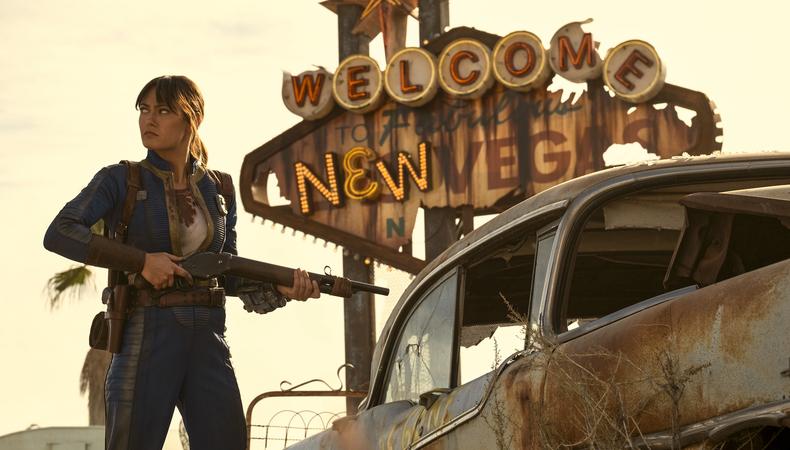
Season 2 picks up where the former left off, with Lucy and the Ghoul making the trek to New Vegas—the ruins of Las Vegas—as Lucy seeks the truth about her father, Hank, and details about the mysterious Mr. House.
Season 1 of Amazon’s postapocalyptic drama featured:
- Ella Purnell as Lucy MacLean
- Aaron Moten as Maximus
- Walton Goggins as the Ghoul/Cooper Howard
- Kyle MacLachlan as Overseer Hank MacLean
- Xelia Mendes-Jones as Dane
- Moises Arias as Norm MacLean
- Frances Turner as Barb Howard
- Leslie Uggams as Betty Pearson
- Sarita Choudhury as Lee Moldaver
- Johnny Pemberton as Thaddeus
- Zach Cherry as Woody Thomas
- Leer Leary as Davey
- Elle Vertes as young Rose MacLean
- Teagan Meredith as Janey Howard
- Dave Register as Chet
- Rodrigo Luzzi as Reg McPhee
- Annabel O’Hagan as Stephanie Harper
- Michael Cristofer as Elder Cleric Quintus
Season 2 will also welcome Macaulay Culkin and Kumail Nanjiani in undisclosed roles, as well as Justin Theroux as Mr. House.
John Papsidera (“Yellowstone,” “Oppenheimer”) of Automatic Sweat served as the main CD on “Fallout” Seasons 1 and 2 alongside casting associate Kim Winther.
As someone who has cast both TV’s and film’s biggest titles, Papsidera knows precisely what will make an actor stand out amid the competition: confidence. “If I could give anything to every actor that walked in a room, it would be confidence,” Papsidera shared with Backstage. “It’s something that stands out and is unique and attractive to other people. Yes, you have to have so many pieces: luck, timing, talent, a certain energy. But confidence is a common denominator among people who succeed in the business.”
Papsidera emphasized that actors might benefit from studying psychology just as much, if not more so, than technique alone, as getting to know oneself ultimately translates on-camera. “Directors also want to trust that this person can do what they need them to do, and that comes back to confidence,” he said.
Papsidera addressed the topic in another conversation, adding: “An actor who approaches [the audition] with a certain amount of confidence, and they do something that is not even bold or outrageous as a choice, but they have a confidence is what makes it work.”
He continued, “It’s a very hard thing to put my finger on because it’s in the performance of it and in the dialogue of how you present it. It’s a vibe of somebody going, ‘I’m going to take you on this journey,’ and as an auditioner, a CD, a director participating in that, there’s a certain amount of confidence you need to take us with you. That doesn’t come in a weakness, it comes in a strength of purpose and individuality. I go, ‘Yes, that person can do it.’ I think on some very base level it’s about confidence and how that transfers from the actor to the dialogue you ultimately buy into.”

Papsidera has cast some of Hollywood’s biggest names in their breakout roles—Guy Pearce in “Memento” comes to mind—but his casting process isn’t what one would define as strict. “I’m not one for a lot of rules. I’m not a big ‘don’t’ guy. It’s more about being present, making smart choices, being prepared. Those are things that impress me and that make a difference and separate actors from one another,” he told us.
“If an actor makes a smart choice or an unpredictable choice in some way, the person who really thinks about the material and tries to come at it creatively rather than just saying lines is nine times out of 10 the person that you’re going to think made a great choice,” Papsidera added, noting this approach helps actors stand out from the rest of the crowd. He doesn’t want to see auditioners making random choices; he wants to see auditioners interpret the material and characters in ways others have not thought of yet. “Fear gets in the way of making smart choices, being present, and allowing the camera and the process to happen,” he said. “It’s less about doing sometimes and more about being.”
Fear simply is not part of Papsidera’s strategy, as he wants everyone to feel comfortable in his room. “I hope [actors] feel like they have a space and a moment to share a bit of their soul. I think that is what my job is,” he explained. “Everybody who works with me tries to create a space where that can happen. We really respect actors, and we want them to be able to feel like when they walk into the audition room, they have the freedom to do the best work they can. That’s always the goal. We do that by making it a safe space and by being helpful, collaborative, and present.”
Purnell first learned of the project from her U.S. agency, which connected her with the “Fallout” creative team via Zoom. “I think ‘Yellowjackets’ had just come out a couple months prior. They wanted to talk to me and meet me before they sent me the script and they wanted to explain the tone. I’m glad that they did because if I had just done a cold reading, I probably would not have got the part,” she told Spotlight.
“It’s very, very specific—Lucy especially. They described her to me as Ned Flanders meets [Leslie] Knope but in the apocalypse—also she could kill you! I felt like I had a really deep understanding of her,” Purnell explained. “Then we did an audition on Zoom, which is always a horrible experience because you’re trying to balance your laptop on 12 stacks of books. I would always prefer an audition over self-taping and recommend getting your friend to help you with your auditions. Somehow, I got the part and here we are.”
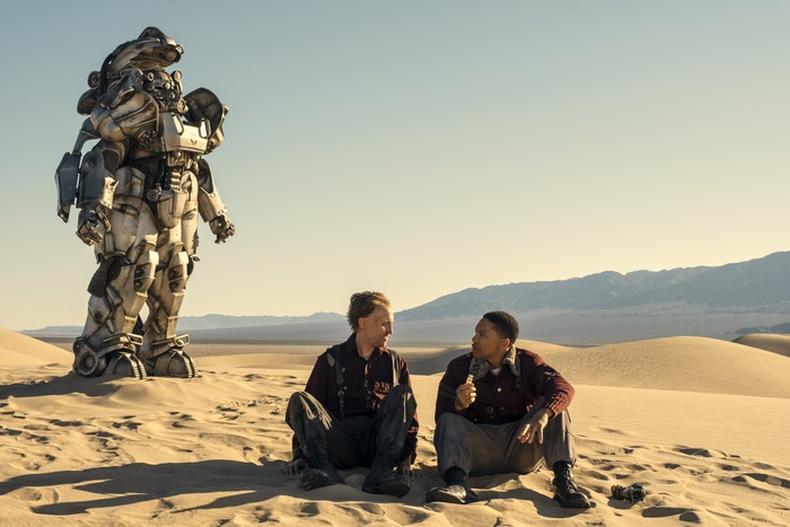
Hours before the first episode of “Fallout” Season 2 dropped on Prime Video, the team revealed it is already hard at work writing Season 3. So, the next “Fallout” chapter remains in the earliest stages of development. Filming will reportedly begin in summer 2026. Stay tuned to this page for additional updates as production gets underway.
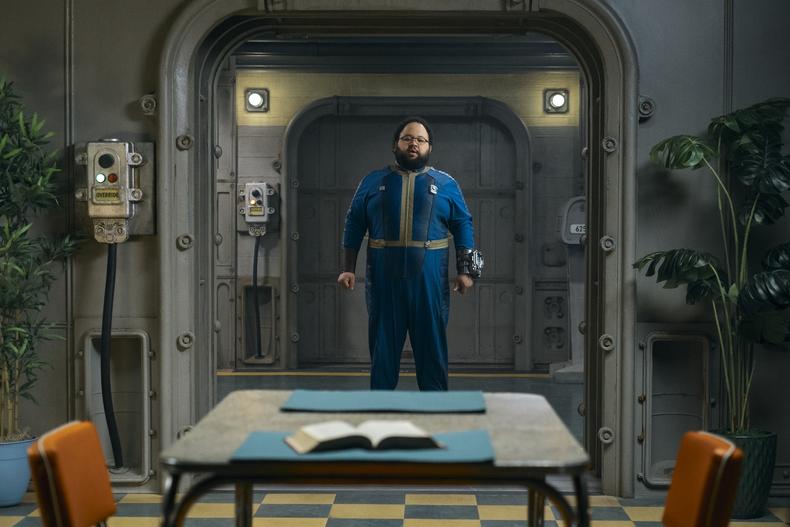
Currently, there are no active casting calls for “Fallout,” but the show has cast with Backstage in the past. In 2022, Amazon called for background actors, aged 18–55, to portray raiders of underground bunkers. As we await more news on Season 3’s production schedule, check out our guide on how to audition for Amazon Prime Video and bookmark our main casting page for the latest opportunities.

Adopt a positive mindset: MacLachlan became an industry icon thanks to his turn in “Twin Peaks,” but he wasn’t always a Hollywood staple. And as he noted, auditioning can be “really tricky.”
“So much about it has to do with your attitude going in as an actor. You have to believe that you are the person for the role, that what you’re doing is your interpretation of what’s happening, right or wrong,” he told Backstage. “Have a strong point of view. If they don’t get you, well, that’s their problem. Really strongly believe in yourself as much as you can.”
MacLachlan also emphasized that the audition begins the moment you walk through the door, so be sure you have that positive mindset in place. “They’ll remember you for simple things like being on time and having everything in your brain and being flexible and open in the audition process,” he told us. “But also just be pleasant when you come in, and realize that when you do the audition, from the moment that you walk through the door and they see you, you’re auditioning. You have to carry that ‘character’ with you—at least a little part of it. Just give them something interesting to look at.”
Advocate for yourself: When Goggins was 21, he auditioned for the “bad guy” role in “The Next Karate Kid.” He left the room thinking he’d aced the audition, but the role went to someone else. Yet even though he went back to his daily life, Goggins was not satisfied. He did not need to land the biggest role; he simply wanted to be present so he could learn.
“[I] go back to my boot-selling job on Pico,” he told Vulture in 2016. “I’m helping somebody find a size 10 and I’m like, ‘You know what, man? Fuck this!’ I pick up the phone and call Warner Brothers and say, ‘I need [late producer] Jerry Weintraub’s office.’ The director Chris Cain picks up the phone and I tell him, ‘I understand why I didn’t get the part. But the character has a best friend. I’m calling to see if I could audition for that part. I just want to learn from you.’ He says, ‘Hold on a second. Jerry!’ He comes back and says, ‘Okay, the job’s yours.’ ” Had Goggins not persisted, he might not have the career he has today.
Work as much as possible: MacLachlan said he often tells young actors to “get work where you get it” and “work as much as you can” to gain every ounce of experience possible. Even the smallest of roles is essential to your growth. “Try not to be too selective, just go do stuff and more often than not, the people you’re going to be doing stuff with, you’re going to see again,” MacLachlan said. “So keep those relationships, because you never really know where they will lead.... There are opportunities all around that you have to take advantage of.”
He added, “I would say just work as much as you can and be more available and involved in that community of actors. You see the same people again and again, probably—get involved in that because you’ll find opportunities will come from those relationships. That’s certainly been the case for me where one thing sort of led to another. You’ve gotta be out in it trying to get work or auditioning or going to see things. If something really moves you, saying, ‘Thank you so much for that performance,’ or maybe writing a note to the director—just anything to stay in the community.”