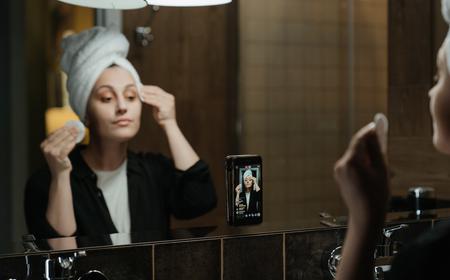
Scroll TikTok for five minutes and the sponsored posts tend to blur into one long loop of another GRWM, another glowing serum review, another try-on haul. That monotony should be a red flag for anyone entering the user-generated content game: Thousands of creators are crowding into the same handful of niches, pitching the same brands, and wondering why their rates keep shrinking. Let’s dive into the biggest UGC niches, what performs well in each, which tends to pay the most, and whether it’s smarter to specialize or stay flexible.
JUMP TO
A UGC niche is the product or industry category a creator consistently makes content for. Because it usually lives on a brand’s feed rather than the creator’s, a UGC niche differs from an influencer’s audience-based one. Finding your own niche as a creator means weighing what you actually want to make against what that work pays.
Overall, typical UGC rates run $50 to $500 per video; Influencer Marketing Hub’s 2026 survey found that roughly 80% of UGC creator cost ranges fall under $500. Each niche pays differently, so we broke down the biggest UGC sectors, with typical pay and examples of popular content within each. The rates below come from Launchpoint’s 2026 rate guides, which price UGC creators per finished video asset.
Beauty: $150 to $500. GRWM videos, before-and-afters, product reviews, and skincare routines all perform well, and each can give paid creative the look and feel of an organic post. The trade-off is competition: Beauty is one of the most crowded categories on social media, and the ceiling stays low. A standard 15- to 30-second beauty spot runs $150 to $300 before usage rights.
Fashion and apparel: $150 to $500. Fit checks and styling videos work because creators are already them on their own. Viewers clock the fit and want it for themselves, making UGC a productive channel for apparel brands. But since the space is oversaturated, labels often offer gifted collaborations; paid work can be hard to break into.
Food and beverage: $150 to $600. Food brands, grocery stores, restaurants, and meal-kit companies team up with UGC creators to promote their products and services through trending recipe integrations, reviews, cooking tutorials, and restock videos. Raw B-roll bundles—unedited pours, pulls, and unwrappings that brands cut into dozens of ads—sit at the top of the range.
Finance and fintech: $200 to $800. Brands are paying creators to make myth-busting explainers, investing hacks, and app walkthroughs, and they’re paying big—especially since finance is a highly regulated advertising category. Brokerages must preapprove and archive creator content under FINRA rules, so companies in this space hire only creators who can work within a compliance-heavy brief.
Health, wellness, and fitness: $250 to $900. Workout routines, healthy recipe tutorials, and supplement reviews all work a sales pitch into useful content. And since supplements and wellness products are also heavily regulated by the FTC and FDA, claims-safe creators—those who can make something compelling inside those limits—are genuinely scarce and correspondingly valuable. That premium is visible in the rate, with health and wellness paying roughly twice what beauty does at the low end.
Tech, apps, and SaaS: $300 to $1,500. The companies behind software programs, your favorite app, and the latest buzzy tech product have also boarded the UGC train by teaming up with creators to make how-to videos, reviews, and testimonials. Since far more creators are equipped to shoot a fit check than to explain what a piece of software does, this niche has less competition than many others—and the highest floor of any major vertical.
The “blue ocean” niches: varies by vertical. A blue ocean niche is the Wild West of the UGC ecosystem: a newly formed realm with high demand for creators and high pay for their content. Blue ocean creators might delve into unglamorous but interesting subjects (pest control), focus on a hyper-specific subculture or skilled trade (Sovietwave music, welding), approach an already-existing product or service in a new way (Excel speedruns), be at the forefront of a novel subject (AI therapy), or simply have training that other creators do not (Pharmaceutical GMP Professional accreditation). Because this is a strategy rather than a single vertical, pay swings widely: real estate UGC runs $150 to $800, automotive $150 to $1,200. What the categories share is an audience of high-intent users acting on a specific problem or seeking to learn something new.
The short answer: tech, health, and finance command the highest rates per video, while beauty offers the most jobs at the lowest ceiling, per Launchpoint.
- Highest rates overall: tech and SaaS. Software walkthroughs pay $300 to $1,500 per video—the highest floor and ceiling of any major vertical—because screen recording and technical scripting shrink the pool of creators who can deliver.
- Highest premium for compliance: health and finance. Health and wellness runs $250 to $900, and finance and fintech $200 to $800. Brands pay for creators who can stay inside FDA, FTC, and FINRA limits without sounding like a legal disclaimer.
- Highest volume, lowest ceiling: beauty and fashion. Both cap around $500 per video. Beauty takes the lead on sheer number of gigs, but it is also one of the cheapest niches for brands.

Credit: EL Muzaki/Shutterstock
The market is expanding across all niches. Many marketers plan to increase their use of UGC creators or start working with them, and U.S. creator ad spend is forecast to hit $44 billion in 2026, per the IAB. That growth can give content creators room to develop both specialized niches and more general ones.
Try starting with one category and building a portfolio of three to five paid collaborations that speak directly to brand buyers. That gives you momentum and a body of work in a single lane.
Once the momentum is there, add a second, better-paying lane. Creators with a specialized focus risk running out of gig opportunities, so it’s wise to add a small second portfolio so you’re no longer dependent on just one.
Once you’re established in two niches, follow the ad spend. A varied portfolio and real experience let you move into new categories and go looking for the next blue ocean.