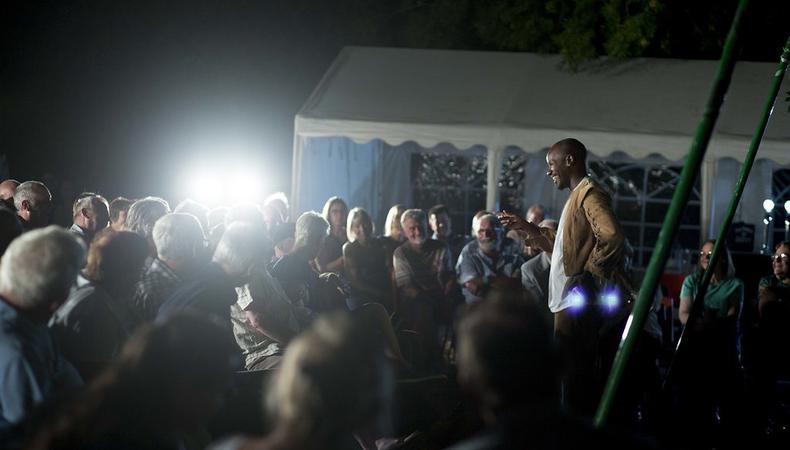
To say coronavirus has challenged the UK’s theatre scene would be a savage understatement. Venues have been closed since March – they were meant to reopen on 1 August but have been postponed due to a Covid-19 spike. As a result, outdoor theatre is experiencing a surge of interest, as it’s been legal to stage open-air shows since July.
And with the brakes being put on the reopening of indoor theatre, it makes sense that companies who have never considered outdoor theatre are starting to eye up the great outdoors. Open-air performances are allowed to run, with a few social distancing caveats which include online-only ticket purchases, social distancing between cast members, and reduced seating to ensure audience safety.
It’s a different beast from what many actors are used to, but with the right information and experience, it can be manageable – and fun, even for those who haven’t acted, directed, or produced outside before.
The Maltings Open Air Theatre Festival runs 14–31 August in St Albans, at an archaeological site among the remains of a Roman theatre. Matthew Parker, who is directing Henry V at the festival, tells us: “I’ve performed quite a lot of outdoor theatre and there is a real difference. The audience feels more relaxed and are often more willing to engage vocally with the show – and that’s what we are all after, right? That connection between audience and performer. Especially this year.”
There are benefits to staging a show outdoors, but also plenty of challenges, including unexpected elements, stage visitors, and ensuring actors are prepared to deal with last minute changes. Parker says: “Wind is the enemy of outdoor theatre. You’d think it’d be rain, but wind can really muck up sound and how voices carry – or don’t. So, we mic the cast.”
 UK Theatre + Arts Given £1.57bn Lifeline to Avoid ‘Cultural Catastrophe’
 What’s open-air theatre like for actors?
Not knowing what’s going to happen is all part of the joy of open-air theatre. It can rain, feral animals can wander onstage, or an audience’s picnic can blow away. Rose Reade is an actor toured for several years with Three Inch Fools company, including many months in outdoor venues.
“Outdoor theatre can get a bad reputation,” she says, “because people think it has to be pantomime-style. Physicality is important, and movements have to be big, but nuance is possible. If you’re acting indoors, you do a lot of character work, use the Meisner technique, and it’s very much about acting with the person opposite you. In outdoor theatre, the audience becomes your partner. When we did Hamlet, you think Hamlet is an introverted character, but we realised this quietness didn’t work outdoors. He becomes a character desperate for connection, so all of his connections became about engaging and connecting with the audience. You have to react to the audience a lot more, physically too: if you turn too much to the left or right the audience won’t be able to hear you.”
For actors, the key difference between acting inside and out is that outside, everything can change in a split second. Reade says: “People have picnics, they have dogs and children, and you have to work really hard to power through that. You have to acknowledge it, so an actor might say: “Oh, here we go!” when it starts raining. Likewise, when we’re setting the stage up, we have to think where we want the sun to shine – in our eyes or in the audience’s eyes?”
Lucy Aarden, who is playing Will Shakespeare in Will & Co’s latest one-woman show Bard in The Yard at New Normal Fest, recommends putting a lot of focus on voice care. She uses a steam inhaler both morning and night (Dr Nelson’s, if you’re asking); and hard as it can be at times, recommends avoiding alcohol and loud social areas between shows. Gentle vocal warm-ups in the morning, before you start talking, is another tip, and lots of gentle humming to cool down the voice post-show – “The concept of cooling down the vocal muscles is the bit people often forget!”
 How Will UK Drama Schools Survive the Pandemic?
 The set is already there
Adam Nichols is the artistic director of the Maltings Theatre, where Parker will be directing Henry V this August. He says this about outdoor theatre: “It takes us back to theatre’s origins and fundamentals – from ancient civilisations telling stories around the fire, to the Greeks and the Romans, and right through to our own Elizabethan playhouses.”
After many years in the job, he has a strong sense of what makes great outdoor theatre: “Generally, the style of performance needs to be much ‘bigger.’ This is partly a consequence of the audience being more spread out and situated further from the stage – more intimate and detailed acting and stagecraft would be lost. And then there are the unexpected environmental factors – the police siren, the helicopter flying past, the church bells, the bird that lands in the middle of the stage. Experienced open-air actors will anticipate these moments and integrate them into the performance, which always delights an audience.”
Nichols welcomes the fact that theatre makers are being required to adapt their practice to the simpler and more immediate style of performance required outdoors. “The expensive trappings of modern theatre – the beautiful sets, complex lighting, and sumptuous costumes – can mask theatre’s true purpose and power. So, I hope the challenging circumstances in which we find ourselves will cause us to reappraise how we go about bringing the stories we tell to life and engaging with audiences.
“There is also no doubt that it is much easier to create work safely outdoors in the context of coronavirus, so I do believe this type of performance is here to stay for some time to come.”
Key things newcomers need to know
For this reason, it’s no surprise that younger companies are looking at breaking into outdoor theatre. Morag Davies and Michelle Payne came up with the idea of transforming a show they’d been working on for a year – Squad Goals – into an immersive, outdoor performance. “We were so invested in the project we couldn’t bear to wait for traditional indoor venues to open again before we could start sharing this story with an audience. My career has been mostly indoor work, with some digital theatre experience, so this was totally new for me.”
Squad Goals will be held in Dagenham and Redbridge’s football stadium. Davies explains: “For squad goals, we not only have the surprises of setting up an outdoor production, but also the fact that it is site-specific, using an unconventional theatre space. For some productions using established outdoor venues, some of these things wouldn’t be an issue. For example, for an outdoor production, you obviously have to consider that daylight will impact your lighting design, and affect what equipment will be required or will work in the space. We’ve started looking into using film lights, not only to cut through the daylight but also the floodlights that we will have on the pitch.”
Davies has this advice for anyone putting on their own show: “Surround yourself with people who you can ask questions and bounce ideas around. The most valuable thing is to think of all the things that could go wrong (and there are an awful lot more of those with outdoor productions) and think how you would solve them, what budget needs to be allotted for that, and who will be responsible for ensuring that that thing doesn’t go wrong!”
 6 Musical Theatre Agencies UK Actors Should Know
 Make your environment work for you
Nicky Diss and Vicky Gaskin set up Open Bar theatre, and they take shows to pub beer gardens. This year they’re doing The Tempest. Their biggest pieces of advice for any newbie producers is that “you need actors with big voices, and I’d also design your show around the space you have – don’t fight it too hard. Make your environment work for you.”
Gaskin adds: “It’s very freeing having a totally empty space and it gives you the opportunity to create something from scratch. I’m an aerialist, and this year’s show will be using an aerial rig. There aren’t many theatres that could accommodate that for a tour so we’re very lucky.”
As for setting up in the pandemic, Diss and Gaskin concede that there’s a lot more to do, now. “This year, we’re giving everyone their own backstage tent, which look a bit like individual sci-fi escape pods; everyone will have individual ‘Covid bumbags’ with hand sanitiser, gloves, masks, and their tools for putting up the set so nothing gets mixed up, socially distancing the cast for transport and accommodation.”
Nicky adds that you need to consider giving the audience more time to get into the space, especially this year where it’s quite complicated. “So, yeah, quite a lot to think about really!”
By all accounts, acting outdoors is special – an amazing, evocative experience. Lucy Aarden sums up what many actors feel about working outdoors, despite having spent years working mostly in indoor venues: “What I’m finding so exciting about outdoor theatre is the use of the surrounding nature – the scenes with Puck darting over bushes, picking up a flower, Romeo referring to the singing birds, and Lear referring to the moon. All these things can actually be used and reacted to in the moment – magic! And lastly, being able to see and identify the audience’s faces – outdoor theatre becomes a dialogue between the audience in a way that they can reply. They are active in the performance in a unique and special way.”
More for UK actors? Check out Backstage.