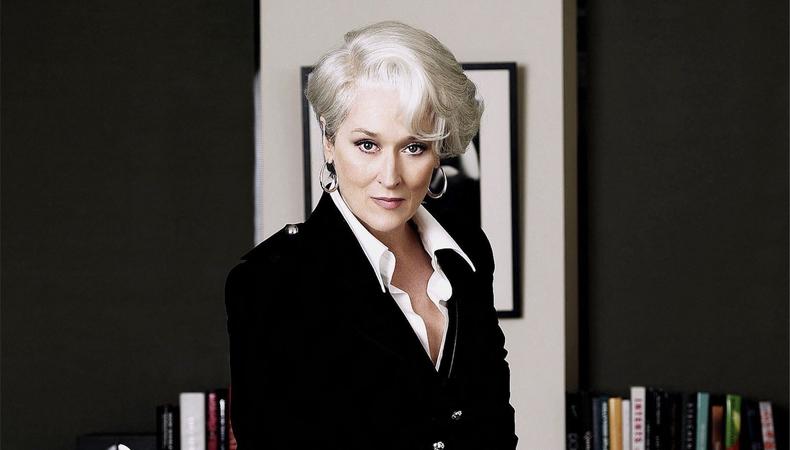
Forget the typical boss tropes. In David Frankel’s 2006 film “The Devil Wears Prada,” Meryl Streep transformed into the ultimate study of controlled power as Runway editor-in-chief Miranda Priestly. While the world saw an icy fashion titan, actors saw a master class in flipping the script. Through deliberate choices like vocal control, calculated physicality, and subtle displays of status, Streep proved that you can build a dominating character in ways that don’t rely on obvious force—because true power never needs to raise its voice.
Before “The Devil Wears Prada 2” hits theaters on May 1, we’re breaking down the techniques Streep used to build her iconic character from the ground up—choices that earned her a Golden Globe and Oscar, BAFTA, and SAG Award nominations.
JUMP TO
- The power of a whisper: The quiet command of “That’s all”
- A Prada-clad purgatory: The isolation of Method acting
- The architecture of authority: Status through stillness
- Cracks in the ice: The art of calculated vulnerability
- Couture as armor: The seven-figure costume
- What actors can learn from Streep’s technical playbook
Miranda’s curt one-liners and cold composure are key to her authority, but that restraint was an intentional choice by Streep, not what was originally imagined on the page. In a 2016 interview with the cast, Anne Hathaway, who starred in the film as Andy Sachs, revealed to Variety that the cast’s early expectation for Miranda was more along the lines of a “strident, bossy, barking voice” that most people would typically associate with a demanding boss.
Instead, Streep chose to deliver many of Miranda’s lines in a near-whisper, surprising the cast and crew at the first table read. The genius decision completely reframed the character, using silence instead of volume to command the room. Streep cited an unexpected source, Clint Eastwood, as her inspiration. “He never, ever, ever raises his voice, and everyone has to lean in to listen, and he is automatically the most powerful person in the room,” she said.
 How to Change Your Voice
Streep paired her hushed, monotone delivery with strategic pauses, blunt answers, and a deliberately drawn-out cadence (“Why is no one reaaady?”) to convey Miranda’s general attitude of unamused irritation. It’s exactly how she turned two simple words into one of the film’s most unsettling quotes: “That’s all.”
While Miranda is a fictional creation, she is widely recognized as a reflection of longtime Vogue editor-in-chief Anna Wintour. Wintour’s legendary career is defined by an exacting standard and a composed, private persona that has become synonymous with high-fashion leadership.
To replicate a similar dynamic that Wintour would’ve had with her real-life employees, Streep chose the Method acting route and deliberately kept herself from the rest of her costars even when they weren’t on camera.
 Method Acting: A Performer’s Guide
 “It was horrible!” Streep told Entertainment Weekly. “I was [miserable] in my trailer. I could hear them all rocking and laughing. I was so depressed! I said, ‘Well, it’s the price you pay for being boss!’ That’s the last time I ever attempted a Method thing!”
Despite the film’s roots in Lauren Weisberger’s 2003 novel, which was famously inspired by the author’s stint as Wintour’s assistant, Streep resisted the urge to create a mere caricature. “I wasn’t interested in doing a biopic on Anna; I was interested in her position in her company,” Streep said. “I wanted to take on the burdens she had to carry, along with having to look nice every day.”
From her very first appearance onscreen, Miranda is positioned to show the effect that she has on others. The scene switches between Runway employees frantically scrambling around the office getting ready for her arrival (when Stanley Tucci delivers Nigel’s famous line, “Gird your loins!”) and glimpses of Miranda calmly getting out of her car and walking into the building. The intentional juxtaposition of chaos on one side and control on the other is something that Streep leans into throughout the rest of the film.
Streep sustains the dynamic through extremely controlled physical gestures and movements. The actions are simple—slow blinks, side glances, pursed lips, and posture readjustments—but everything is highly intentional. She never shows anxiety or outwardly appears hurried, even when she scolds Andy for moving at a “glacial” pace. These choices create unease and suspense because they contradict how you’d expect someone to react, reminding us that Miranda isn’t just another character; she controls the energy in the room and the people along with it.
In the rare instances when Streep shows vulnerability or softness, she adds a hint of humanity to Miranda’s character, which ultimately keeps viewers from writing the character off as a villain. Again, the use of restraint is what makes these scenes so impactful. While characters like Andy and fellow assistant Emily (played by Emily Blunt) cycle through a range of emotions in nearly every scene, viewers see Miranda let her guard down for only a couple of moments throughout the entire film.
One of the best examples is the Paris hotel scene, in which Miranda reviews a luncheon seating chart with Andy. Sitting barefaced in a robe and her glasses, Miranda matter-of-factly reveals that her husband asked for a divorce, getting right up to the edge of actual recognizable human emotion before switching back into work mode. It’s one of the finest examples of the acting adage: It’s not about making yourself cry; it’s about trying not to cry. Viewers can see that there are tears in Miranda’s eyes; you get the sense that Miranda doesn’t.
Streep uses the same method in the film’s final scene. After Andy quits Runway, Miranda catches a glimpse of her from across the street. It’s only after Miranda is alone in her car that she flashes a sly smile before quickly catching herself and snapping back into her icy persona, uttering a simple command to her driver: “Go.”
Wardrobe, hair, and makeup are essential tools for most actors. But the wardrobe for “The Devil Wears Prada” took it to the next level, giving costume designer Patricia Field (“Sex and the City,” “Ugly Betty”) access to more than $1 million worth of designer clothes that cemented the characters, particularly Miranda, as fashion icons. It also earned Field an Oscar nomination.
As the stone-faced editor-in-chief, Miranda’s wardrobe reflects her status as the top woman at Runway. The majority of her looks consist of clean lines, structured tailoring, and a tightly controlled palette of classic tones, like black, white, beige, and brown, with selective accents of red, burgundy, and purple. It’s a noticeable contrast to the younger—and more inferior—Runway employees, whose fashion choices are more experimental and trend-driven, playing into the idea that their lives and careers are all hanging in the balance. Miranda’s restrained, consistent wardrobe throughout the film served as a signal of permanence and control.
As for Miranda’s iconic white hair, it was actually Streep who met with the studio head and convinced them it was essential to the character’s look. “Meryl channeled Miranda in that meeting, and there was no conversation about the hair; they looked into Meryl’s eyes and never said a word,” Frankel told EW.
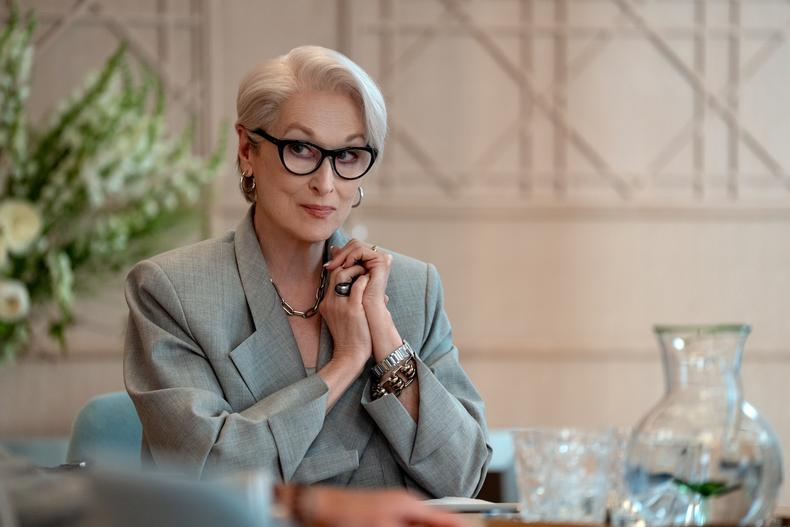
Meryl Streep in “The Devil Wears Prada 2” Credit: Macall Polay
Streep didn’t play a villain; she played a high-status character. For your next audition, remember that power isn’t about being the loudest person in the room—it’s about being the one who makes everyone else work to keep up. So don’t try to act powerful for your next alpha role. Instead, take a page out of Streep’s Miranda Priestly playbook and act as if you already possess all the power in the world.