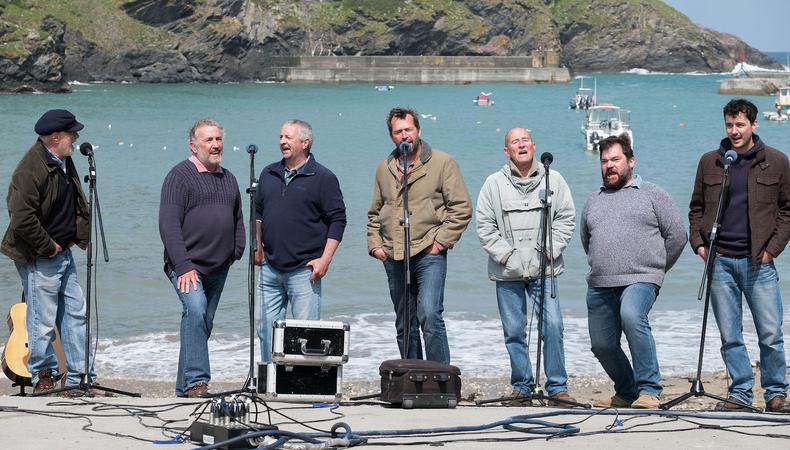
For every director, the path to being put in charge of full-length projects looks a little different. For Chris Foggin, the director of “Fisherman’s Friends,” that meant starting as a PA, directing short films, working as an assistant director, and finally finding his place directing feature films.
Talking to Backstage, Foggin describes why he enjoys organic creative processes and why patience is a necessary trait for aspiring creatives.
What does a director do?
A director works with all departments to help realize the story that’s written on the page. For me, it’s a collaboration from start to finish.
How did you become a director?
I studied film at university, which was so much fun. I was very lucky to get work as a PA and it was on set that I learned everything that I know today. Being on film and TV sets was such an incredible learning experience and the people I met were so generous with their knowledge.
I started off as a floor runner (set PA) as soon as I graduated from university. Having spent many years working on various films, I managed to direct my first short film, which, thankfully, opened up new doors.
I spent many years working as an assistant director before taking a leap of faith and having a go at directing. I made several short films and was very fortunate that I had made some great friends and contacts that supported me on my journey.
 From Spike Lee to Lulu Wang, Here’s Where Today’s Top Filmmakers Went to School
 What does a day in the life of a director look like?
Working on ‘Fisherman’s Friends’ was a wonderful experience. We were so lucky that we got to live and make the film in and around Port Isaac. Everyone was incredibly helpful and so generous that it made everything a little easier.
During pre-production, I would tend to head to the production office first thing in the morning and meet up with various crew members and heads of departments. Prep would change from day to day and I would be either casting or looking for locations in the area. I would be in constant contact with the producers and writers and we took each day as it came.
During the shoot, I would meet up with the writer/producer, the 1st AD, and the DP and we would discuss the day ahead. It was an organic experience, so we had a lot of fun during the shooting day. Things would change all the time but we would normally be filming for around 11 hours each day.
How do you hire your team? What do you look for in a potential hire?
I tend to stick with the same team from project to project because I like the shorthand of the way we work. However, if they are unavailable then I will happily meet the people that have enjoyed the script and see if we share similar ideas.
What advice would you give an aspiring director?
Stick to what you love and try to tell the stories that mean the most to you.
Be patient and don’t take the first opportunity that comes to you, if it doesn’t feel quite right.
What are some of your favorite moments of great directing?
There are so many filmmakers that I look up to. In general, I tend to look at films that make people feel good and are full of heart: anything from Spielberg to Richard Curtis.
For more on how to get work on a film crew, visit Backstage’s crew hub!