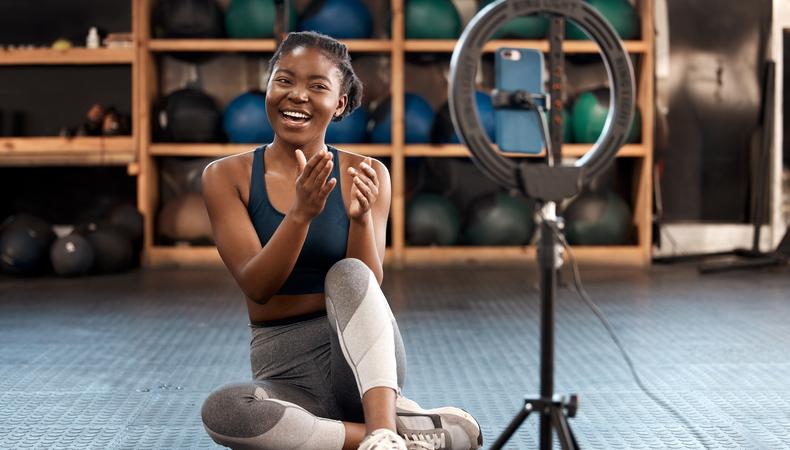
What do dermatologist Muneeb Shah, recipe developer Kathryne Taylor, and yoga instructor Sjana Elise Earp have in common? They’re the setup to a great joke we’re about to tell! Just kidding—despite their wildly different credentials, all three are health and wellness influencers. But what does that job actually involve, and can you do it without a professional background?
A health and wellness influencer makes content around the care or improvement of the mind or body. The category covers a lot of ground, including:
- Alternative wellness influencers: Beyond the natural remedy and holistic health crowd, creators who post about meditation or yoga often land here.
- Fitness influencers: These range from professional athletes to personal trainers to anyone posting about workouts, strength, flexibility, or recovery.
- Medical professional influencers: Many clinicians have turned to sharing product recommendations or giving their takes on public health, from ER doctors to dermatologists.
- Mental health influencers: Some mental health professionals have taken up content creation, along with nonprofessionals who discuss their own experiences or advocate for mental health.
- Nutrition influencers: Usually those who create and share healthy recipes or build content around a specific diet. Some are also registered dietitians or nutritionists.
Can anyone be a wellness influencer?
If an influencer gives bad fashion advice, the worst that could happen is a follower has an embarrassing day at the office. If that same creator gives bad health advice, the consequences could be legitimately harmful.
Consider whether you have the necessary knowledge or credentials to be a voice in the wellness sphere you want to make content for. For better or worse, people can be incredibly trusting of strangers on the internet who speak with conviction, so be sure to uphold your end of the bargain and know what you’re talking about. If you are a medical professional, or licensed in some way, say so—both in pertinent videos and in the bio of your profile. Let your viewers know why they should trust you.
Not everyone in this space needs a degree, but use common sense: You don’t need to be a nutritionist to share a healthy recipe, but you absolutely should have a degree if you tell people how to fix an injury. It should go without saying, but never attempt to pass yourself off as a professional if you aren’t, especially when it comes to giving medical advice.
1. Pick your niche—and then refine it.
Once you’ve found your niche, take it a step further. “Fitness influencer,” for example, is extremely broad. Try to narrow things down: What kind of fitness (full-body workouts, running, weightlifting)? Are you offering advice—sharing workouts for your audience to try, reviewing new fitness products—or chronicling your own journey through marathon-training vlogs?
Keep your focus squarely on your target audience. While it may seem counterintuitive, specificity makes it easier for your videos to find viewers. “Low-Impact Workouts for Women Over 40” tells people exactly what to expect; “Workouts” does not.
2. Become an expert—or at least a student.
Passion is a good starting point, but it isn’t a qualification. Before you build an audience around a topic, build a foundation in it, and keep building after the followers arrive. Bad wellness advice can land a viewer in urgent care, and “I saw it on TikTok” is a terrible reason for anyone to change how they eat, train, or treat an injury.
What that education looks like depends on where you’ve landed. If your niche has a formal credential, go get it! Personal trainers can certify through organizations such as ACE, ISSA, and NASM; yoga teachers complete 200-hour trainings; and nutrition has a clear ladder up to the registered dietitian credential, which requires an accredited degree, supervised practice, and a national exam. If your corner of wellness has no certification to chase, go to primary sources rather than other creators’ recaps. These can include peer-reviewed research and guidance from reputable institutions such as the CDC and the Mayo Clinic.
Knowing where your expertise stops matters just as much. Telling your audience that a question is outside your training and pointing them to a doctor costs you nothing and buys you credibility. And keep up: Exercise and nutrition science both change, and guidance that was standard five years ago may be outdated now.
3. Create engaging content.
Now that you know what you want your focus to be, it’s time to start creating. Consider how often you want to post: Once a day? Once a week? Consistency is appreciated by audiences, and while social media algorithms can be hard to predict, they seem to favor it as well.
There’s no right or wrong answer, but pick a frequency you can maintain while still making professional-looking, engaging videos—you don’t want to post so much that you burn out. Wellness influencing works like any other kind of creator: Posts tend to perform best when they’re well-edited, well-lit, and built around a clear identity. New to the field in general? Our guide to how to become a content creator covers the fundamentals.
4. Build a following.
Easier said than done, right? While growing a substantial audience can sometimes be the luck of the draw, there are a few things you can do to set yourself up for success:
- Pick a platform (or two): There’s no downside to posting across platforms—and, in fact, you probably should—but decide whether your work is best served by being short-form (Instagram, TikTok), long-form (YouTube, Spotify), or written (Substack). Once you know where you’ll hopefully thrive, you can focus your efforts on gaining an audience there.
- Observe other creators: Look at influencers with similar niches and pay attention to what they’re posting. What’s working? What isn’t? While it’s important not to copy someone else’s internet persona, you can still get a good sense of what resonates with your shared audience.
- Engage: If you find creators whose work you like, there’s no shame in commenting on their posts in hopes of attracting attention from potential new followers. Building community is important, and you might also catch the eye of other influencers in your sphere who could be interested in collaborating down the line. Just be sincere—if you drop a “Cool!” on 17 posts in a row, it’s pretty obvious that you’re only there for yourself.
5. Keep it consistent.
In addition to a regular posting schedule and engagement, it’s important to maintain consistency in your style, at least in the beginning. Part of building a brand (and an audience) is creating something recognizable and predictable, so find an approach and stick with it for a while before you decide to mix things up. If you’ve committed to making recipe videos, keep that up before you start releasing day-in-the-life vlogs, too.
6. Have fun.
While it would be naive to think that the potential of making money isn’t a big reason why people try to become influencers, it’s not worth pursuing if you don’t enjoy yourself. Trying to break into health and wellness probably means that you’ve taken something you’re passionate about and turned it into a job. Don’t let the slog of building a following or trying to game the algorithm take the joy out of something you love. Take it seriously, but remember to have a good time, too.
Ready to book your next creator gig? Browse Backstage’s UGC casting calls.