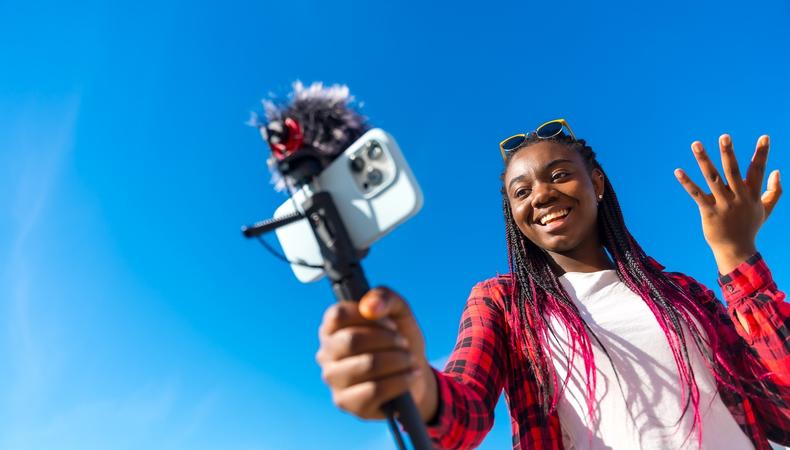
You’ve got three seconds (and maybe even less) before a viewer swipes past your carefully crafted video and moves on to the next thing. In a feed crowded with creators, brands, and communities all vying for eyeballs, standing out as a content creator is often about what happens in that very first moment. Here’s your guide to creating catchy hooks that make viewers want to stick with your content.
A hook is the opening moment of a piece of content designed to grab attention immediately and compel the viewer to keep watching. On social media, this usually happens within the first one to five seconds of a video or the first line of a caption or post. A hook can be a:
- Surprising statement
- Compelling question
- Visual reveal
- Dramatic moment
- Promise of valuable information
The purpose of a hook is to interrupt mindless scrolling and create curiosity. Most social media algorithms reward content that holds attention, so if viewers stay longer, replay a video, or watch until the end, the platform interprets that content as valuable and distributes it to more people.
In other words, a hook does more than capture attention—it can determine whether your content gets amplified. Which means if you want to become a content creator, mastering the hook is essential.
1. The curiosity gap hook
One of the most powerful storytelling tools is the curiosity gap, or the space between what the audience knows and what they want to know. A curiosity-driven hook raises a question that viewers instinctively want answered.
Examples: “Most people use their phone charger wrong. Here’s why.” The viewer now has an unresolved question: Am I using mine wrong?
Creator Gary Vaynerchuk often employs a variation of this technique. Take this video:
Vaynerchuk doesn’t even waste time reiterating the title of his video, instead jumping straight into a contrarian take that piques interest: Social media is going to disappear.
Why it works: Curiosity is psychologically powerful. Once a question is introduced, the brain wants closure. If the answer seems valuable or surprising, viewers stay to resolve that tension.
2. The “wait for it” visual hook
Sometimes the most effective hook isn’t verbal, but visual. This type of hook begins with an unusual or dramatic visual moment that suggests something big is about to happen.
Examples:
- A massive object about to be dropped
- A complex contraption being activated
- Someone preparing for an extreme challenge
In this video by Nick DiGiovanni, the visuals are linked directly to the crux of his content:
Delicious-looking sandwiches appear right at the top, signaling that he’ll deliver on the promise of his title.
Why it works: Humans are highly responsive to visual tension. If something appears incomplete or in progress, we instinctively wait to see the outcome. These hooks often perform well on short-form platforms because they communicate intrigue without requiring explanation.
3. The bold claim hook
Another effective strategy is opening with a strong or controversial claim. A bold claim challenges assumptions. It signals that the viewer may learn something new, that their existing beliefs might be wrong, or that what follows could fundamentally shift their perspective.
Examples: “This common productivity tip is actually making you less productive,” or “This is the biggest mistake new creators make.”
Stay Wild Reacts swings for a bold claim in this video:
Will watching this video stop you from ever trusting again? Perhaps… or maybe you’ll keep watching just to prove them wrong.
Why it works: Bold claims introduce tension. If the viewer disagrees, they may stick around to see if the argument holds up. If they agree, they stay for validation.
Either way, the hook prompts engagement.
4. The story hook
Humans are wired for stories. When content opens with narrative tension, viewers naturally want to see how it unfolds.
Examples: “I almost quit my job last year. Then something unexpected happened,” or “This project failed completely… and it taught me something important.”
Or, you can get more specific. Take this video from creator Ryan Trahan:
Trahan immediately tells us what his story will be. And because the premise is so outlandish, we’re more likely to keep watching to see if he pulls it off.
Why it works: Stories activate empathy and curiosity simultaneously. When a narrative begins, the audience instinctively wants to follow it to its conclusion.
Story-based hooks are particularly effective for creators building strong personal brands or sharing experiences.
5. The rapid-fire value hook
Some creators lead with fast-paced lists or insights right out of the gate. Rather than teasing information slowly, this hook promises immediate payoff.
Examples: “Three things every new filmmaker should know,” or “Five apps that will make your life easier.”
We see this technique in action in this video by creator MoreAliA:
He tells us exactly what we’re in store for and even delivers a quick, showy example within the first few seconds.
Why it works: This style signals efficiency. In a fast-scrolling environment, audiences appreciate content that respects their time. These hooks also encourage completion, because viewers want to see every item on the list.
Ensure they meet essential hallmarks. Despite their differences, most successful content hooks are:
- Clear: The viewer quickly understands what the content is about.
- Specific: Broad statements rarely stop the scroll, but precise ideas often do.
- Engaging: Whether through curiosity, surprise, or disagreement, they leave something unresolved that makes viewers want to resolve the tension by learning more.
- Deliverable: The best hooks deliver on that promise. If the rest of the content doesn’t justify the hook, viewers feel misled. Over time, this erodes credibility and reduces long-term engagement since audiences are, by and large, allergic to anything that’s self-evidently clickbait.
Refine your content. The best creators think of the hook as the opening sentence of a conversation: It invites someone to listen, but the rest of the story keeps them there. So, crafting a standout hook starts with quality content that represents you and appeals to your audience.
Keep honing. It’s tempting to treat hooks like a formula. In reality, they’re a storytelling skill that improves with practice. Creators often refine hooks through experimentation by:
- Testing different openings
- Reviewing retention analytics
- Studying high-performing posts
- Rewriting introductions during editing
Over time, patterns emerge. You start to see which ideas generate curiosity and which ones get ignored. Once you understand those patterns, you can design content intentionally rather than hoping it performs well.