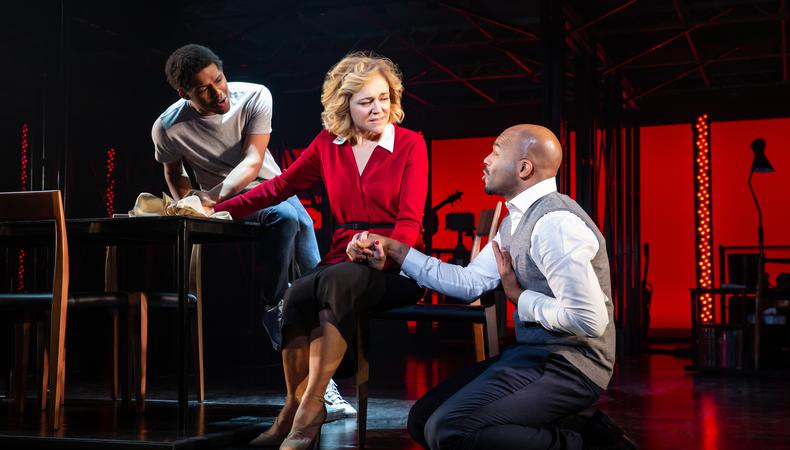
When news broke that Tony winner Rachel Bay Jones would play Diana, the leading role in the Kennedy Center production of “Next to Normal,” many thanked the theater Gods for such perfect casting—but they should have instead been thanking producer Jeffrey Finn. It’s Finn who founded the Washington, D.C. theater series Broadway Center Stage, in which Broadway caliber talent makes its way to the nation’s Capitol for Broadway caliber productions. Which leads us to this run of the Pulitzer-winning “Next to Normal,” in limited performance Jan. 29–Feb. 3 and additionally starring Brandon Victor Dixon and Jones’ “Dear Evan Hansen” co-star Michael Park.
Just before the run kicked off, Finn hopped on the phone to talk about what it means to mount a production in two weeks’ time and what he looks for in the audition room.
For those who don’t know, what is Broadway Center Stage?
The mission of the series is to present beloved musicals that can only be seen here at the Kennedy Center with amazing Broadway creative teams and casts. And I wanted to start a series, somewhat like Encores! in New York, but with a bit of a different mission: to be able to work with the highest level of talent, for shows that wouldn’t necessarily be seen in New York, but that have the excitement of being presented only for Kennedy Center audiences. And we’ve been thrilled to see that audiences actually have not been just from the D.C. area, but actually from New York and all around the country, too.
And what does your role as producer of this series entail?
I pretty much do what every producer does: I curate the series, I choose the titles—my philosophy about choosing titles that I want to produce is that I only produce shows that I want to go buy a ticket to go see. And then, these are all mini-Broadway shows. It’s putting together a Broadway show like any other musical or show is put together. So it’s engaging the entire creative team, the director, the stars, overseeing the projects like any producer would do.
Obviously the pre-production period is super truncated, so what is the actual process for getting a show up and running?
These are often semi-staged, because the nature of the schedule is one where we rehearse just for two weeks, it’s an incredibly fast process. And one of the reasons we’re able to get such great stars is because they’re able to be in New York in their home base while we rehearse, and then we just come to D.C. for a week. We have a very fast track of two and a half days: We have a dress rehearsal, we have a first performance, and then an opening night. Then we do eight performances total of these shows. And I think that kind of rollercoaster schedule makes it really fun and special and an enjoyable opportunity for everybody, because they just have their heads in the creative game of it all.
READ: How to Sing the Heartbreaking ‘Dear Evan Hansen’ Score
What’s your process for finding actors?
It depends on the show. Honestly, when I secured the rights to “Next to Normal,” the authors [Tom Kitt and Brian Yorkey] immediately said, “We want to make sure the lead role of Diana is somebody that obviously can handle that.” And we all immediately leaned right towards Rachel Bay Jones. It was just this kinda magical moment where she said this is a dream role, as well. Once she was on board, other actors get excited about joining her onstage for the show. Again it depends, because the larger shows like “The Music Man” and “How to Succeed in Business Without Really Trying” have a more traditional casting process, where we’ll be doing auditions, we’ll work with a casting director. It’s important we get the very best talent, because what’s most important to me is the quality of what’s onstage at the Kennedy Center. I also tell the casts on the first day of rehearsal the exact same speech: I want the casts involved with these shows to have as wonderful of a time and experience in the rehearsal process and onstage in the Kennedy Center as the audiences do who come to see these shows.
What are the things you look for when casting actors?
I love new talent. I love discovering new talent. I have such respect for actors because it’s such an impossibly hard job, especially in the competitive arena of Broadway in New York City and all that. So I love discovering new talent, we have two younger actors in “Next to Normal” and it is so great to give them this showcase, and they’re so talented. So, every play has a different casting process and you’re looking for different things. I think one of the hardest things about being an actor is the fact that getting the role is about the vision of the director and creative team. Somebody can be talented but be too short, too tall, too this, too that. So at the end of the day, I think it’s a really hard thing, but my point is that it’s great to be able to give known stars leading roles and to also be able to continue to find new talent, which is a mission of what we do.
How do you decide which shows to produce?
I choose the titles about a year out. So for example when we make our season announcement in April, I’ll be announcing next season’s titles. It’s often a chicken or egg situation. Sometimes it’s that I’ll be chatting with a Broadway star who says, “Boy, I’d love to do this show.” And what I can then do is get the rights to that show and put something together with that star’s commitment. That’s what happened with “Music Man” with Norm Lewis. It’s really hard to capture lightning in a bottle, and I’m just so lucky that we have been able to do it more than once with these shows. The very first show we launched was “Chess” with Raul Esparza, Ramin Karimloo, Ruthie Ann Miles, and Karen Olivo, and Michael Mayer directed it. We were figuring it out as we went with that first one. The goal is to keep it manageable, the goal is not to create this impossibly huge show that we can’t achieve within the window that we have. I feel like on some level being under a slight timeline makes everyone want to work harder and deliver more, and it's really been just creatively exciting for the teams when they get involved.
What is your elevator pitch for why audiences should come see this “Next to Normal”?
I have to tell you, [director] Michael Greif revisiting his work from Broadway in a show with this talent—when you have Rachel Bay Jones and Brandon Victor Dixon and the rest of the genius cast on stage—I’m talking with you having just come from tech and watching what's going on, because we have our first performance tomorrow night, and there’s something super special about the energy around this show and what the audience will experience. What Brian and Tom created is so powerful.
Check out Backstage’s theater audition listings!