
The winner of the Society of Voice Arts and Sciences’ 2023 Backstage Vanguard Award is Wes Stevens, founder and CEO of voiceover talent agency Vox, Inc. Every year, the Vanguard Award honors a voiceover professional who’s made a significant impact in the industry. This year’s ceremony will take place on Dec. 8 at the Hilton Los Angeles Airport hotel as part of SOVAS’ That’s Voiceover! Career Expo.
Stevens began advocating for voiceover talent in 1994 and has represented major stars throughout his successful career. He booked Ed Asner as the memorable cantankerous character Carl Fredricksen in Pixar’s “Up” and John DiMaggio in his longtime role as the sarcastic robot Bender in “Futurama.” With so much experience in the voiceover world, we were excited to sit down with Stevens to hear how the industry has evolved over the years.
Here, Stevens shares expert advice for those looking to take their voice acting career to another level—especially in the wake of new technology.
Embracing change is important in the voiceover industry.
“Over the 30 years I’ve [been in voiceover], email became a reality, digitization of the audio became a reality, and then the cloud. I mean, it’s wild how different it is now,” says Stevens. “And we, as an agency, try to push the envelope at every stage.”
“We were one of the first offices to move our clients to an at-home auditioning process,” Stevens told us. “Before the pandemic, I would walk by the lobby, and I would see all these clients sitting there waiting. At that time, we could only record one person every five to 10 minutes. And it didn’t make any sense. It’s a very linear recording model. And then everything had to be processed in linear time.”
At-home recording transformed voiceover for the better.
“Moving the client audition process to at-home had some people say, ‘Well, you know, the clients need to be directed.’ But much of VO is about the interior voice becoming outward. So the point of view is what drives the booking, in my opinion, combined with voice quality,” Stevens says. “The talent knows what they want to do with things, and I don’t want to fine-tune the creative process before it starts—especially since I’m not auditioning people based on a set of primers. I’d rather the performer come up with their choices versus my narrative. The narrative that matters is going to be the buyer who goes, ‘That’s the sound I was looking for.’ ”
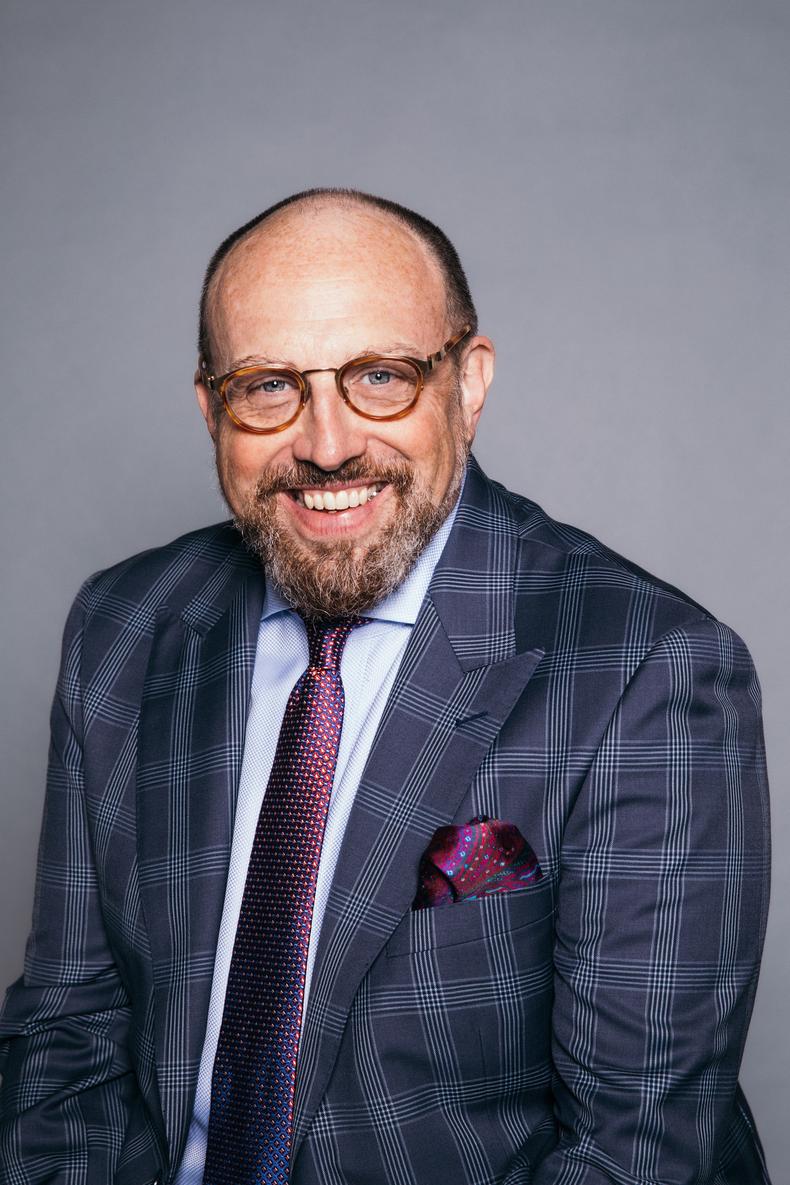
Stevens adds, “There’s a magic that goes on between someone reading a piece of copy in the parameters of the idea or the drawing and saying, ‘This is what it sounds like in my head,’ and delivering it. I’m here to fine-tune some technical stuff or slow it down, or I might hear something that makes a read a little better. And we can do that. But I don’t want to meddle with it at the start of that process.”
Ultimately, Stevens says, at-home recordings allowed for more efficiency in voiceover work. “It dramatically increased the scale of stuff we can handle and the speed at which the process is done—and then, in time, the speed that the buyer expects things,” he told us.
Artificial intelligence is quickly evolving—and Stevens thinks voiceover actors can use it to better their careers.
When discussing the benefits of shifting to at-home recording, Stevens shared his thoughts on AI and what it means for the future of voiceover.
“I think flexibility creates scalability, in terms of the volume of business that can be done in any given day. And I think this is what’s going to happen, to some extent, with AI,” he says. “Anything that frees us up and allows us to be more involved in things is a good thing, as long as the quality of work is not getting dinged by the volume.”
As for how AI will affect voiceover artists’ work, Stevens says, “Generative AI as it exists today, on the voice levels, is really basic.”
“I’ve seen it demo’d. There’s something there. But can it do what voiceover artists do? 100% absolutely not,” he told us. “Try having it read the soliloquy of ‘Hamlet’ and put [in] all the nuance, subtext, depth of character, and suffering. It can’t color things that many different ways.”
However, Stevens thinks we’re not far away from artificial general intelligence, a hypothetical version of AI that’s superior to human intelligence. “AGI [would] create a whole other rush. It’s going to be very different than generative. I’m not scared of it. As a society and as individual industries, we have to be smart about it,” he says.
“On the performer level, we have to ask if there are going to be organic signatures, whether that be your face, your expressions, your voice. Even like the interaction we’re having right now [in this interview] has all sorts of organic elements to it that are very nuanced, very individualistic,” he explains. “I’ve seen some very interesting tech that, with increasing improvements, we will have the capacity to say, ‘Here’s my voiceprint, and here are the terms that exist around it.’ No doubt there’ll be collective bargaining agreement terms, but I’m not scared of it. I think the last thing you want to do is slam on the brakes and don’t do anything because [technology] will move ahead without us. I think there are great things coming from it. We just have to collaborate on it.”

Soloviova Liudmyla/Shutterstock
VO actors still need agents—here’s when they should find representation.
As for the importance of having representation, Stevens told us, “There’s real value in having an agent,” but he says it may not be “necessary at every stage” of a voice actor’s career. “I think when you’re starting out, maybe it’s [more important] to get the volume, by getting out in front of as many things as you can.” He suggests that once actors have experience under their belts, then they should find an agent.
“Our goal [as agents] is to build sustainable careers versus just one-off bookings,” says Stevens. “As an agent, as much as we are deal-makers, we’re also curators…. I’ve curated a client list, and I know what my clients can do. I know their inventory of possibilities. I can receive a breakdown from a buyer—the casting director or producer—and I can look at that and have a concept of who the clients [are] that fit the bill the best.”
Three things every aspiring voiceover actor should know
Networking is a must: “No one ever wants to hear this, but it was said to me, at the very start of my career,” says Stevens. “I was desperate to get into the entertainment business, and I met with the famous manager Jack Rollins. He started the meeting with, ‘Who do you know, kid?’ And I said, ‘Nobody.’ And he was like, ‘Well, that’s bad.’ I can only speak for my agency, but I think almost 100% of all of our inbound clients are based on referrals.”
Think quickly on your feet: “I find the folks that are really good at voiceover are highly intelligent,” he says. “It’s a lightning-fast ability to improvise and to be able to embody the character and bring it fully to life.”
He adds, “[A good voiceover actor] has artistic integrity and has a wellspring to pull from, in terms of ideas.”
Bring your own spark to your work: “In terms of skills, it’s not just a set of pipes [that you need],” Stevens says. “I’ve heard great pipes before that have no ear; they can’t hear what the read sounds like. It’s like singing; they can’t hear the way things are supposed to sound.
“It’s why one person can sing while another person can’t,” he explains. “I think it’s very similar. Some people have a natural talent to manipulate the voice. And then it’s not just about having a million different characters. Sure, that’s one version of it, but sometimes [a good voiceover actor] has a million different colors with a single voice. And that’s what a great announcer—[a] great promo or trailer announcer—does. They color things with their voice.”
Wes Stevens photo Credit: Adrian Armas