Do you need to be young and beautiful to become an actor? Or, as David Mamet said, will old age and treachery always beat youth and exuberance?
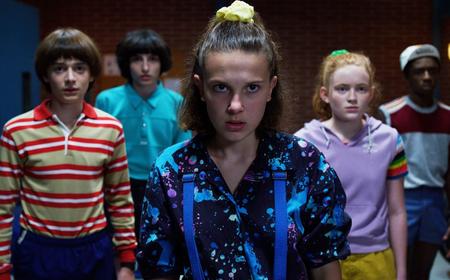
According to new analysis, it’s none of the above. It turns out Millie Bobby Brown’s Stranger Things debut at 12 and Anthony Hopkin’s Oscar at 83 are the real outliers. Even Small Axe’s Letitia Wright, at 27, is not at the optimal age for acting success.
British website OnBuy.com analysed the 200 leading English-language film actors against their entire body of work to identify the decade at which they landed most of their roles.
The best age for acting success
And the data emphatically reveals that the best age for acting success is 30–39. It’s in their 30s that 27% of actors land the majority of their roles. Robert De Niro was 31 when he nailed his virtuoso portrayal of Vito Corleone in The Godfather II. Benedict Cumberbatch was 39 when he took on Doctor Strange, having spent much of his 30s on BBC’s hit TV series Sherlock. It’s also when Daniel Craig, at 38, first played James Bond in Casino Royale.
Looking for your next screen role? Check out our UK castings
The next best age for actors is 40–49, with 25% of actors winning most of their roles in their 40s. Helena Bonham Carter was 42 when she delivered her noted turn in Sweeney Todd: The Demon Barber of Fleet Street, a decade in which she also booked four Harry Potter films, Tim Burton’s Alice in Wonderland, and was named as one of The Times’ Top 10 British Actresses of All Time.
And still looking at male and female actors combined, the third-best age of an actor’s career turns out to be their 50s. Julie Walters played Rosie in Mamma Mia at 58, and Alan Rickman was 56 when he began frightening children in the first Harry Potter film.
 How To Become an Actor Later in Life
 Does an actor’s gender affect their career peak?
Here’s where things become more complicated – and depressingly familiar. For while both male and female actors peak between 30 and 39, and while the 40s remain fertile territory for all actors, there’s a definite gender skewing towards older male actors and younger female actors.
Almost 25% of female actors book most of their roles in their 20s, against 11.6% of male actors. This rises to 31.4% for female actors between 30–39, against 26.2% of male actors.
But whereas male actors in their 40s are hitting a career peak, with 26.4% booking their most roles, this drops off rapidly for female actors – down to 18.4%. And this trend continues into the 50s and beyond, with only 11.6% of female actors hitting their career peak between 50 and 59 against 18.6% for their male counterparts.
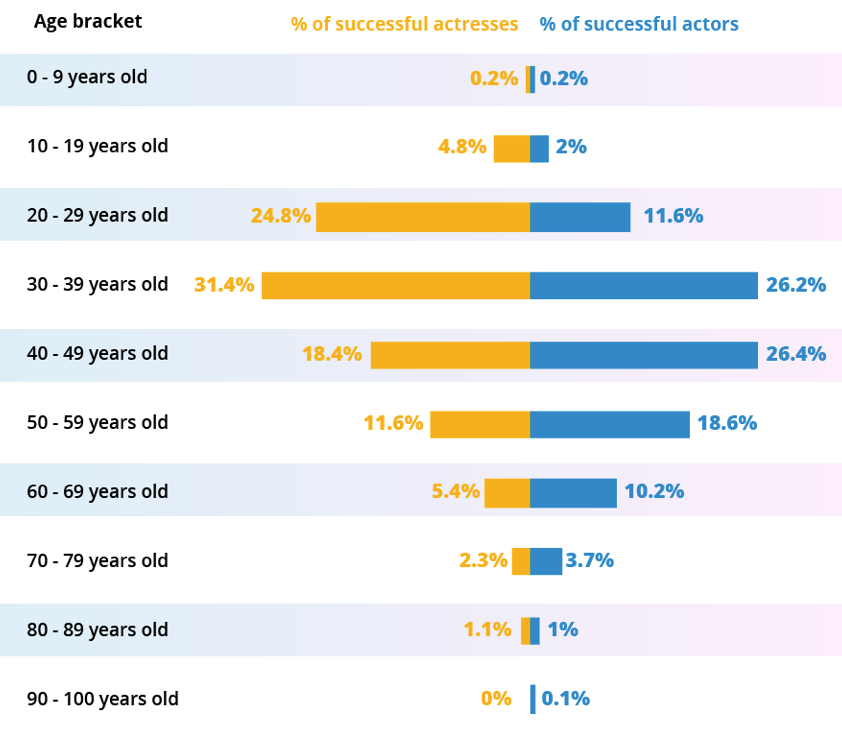
At first glance, this looks like grim reading for female actors hitting their 50s and 60s. However, there are a couple of important caveats. Firstly, the proportion of female actors to male actors in film has increased rapidly over the past decade from around a quarter female in 2011 to around a half in 2020. This increase of female actors entering the industry could potentially even out the age/gender bias as they progress through their careers. The second caveat is that our data is specifically for film actors; cinema audiences tend to skew male, whereas television audiences skew female, which may well be reflected in a different gender/age balance among TV actors.
What is clear, however, is that ongoing efforts to diversify screenwriting from a gender, age, and ethnic-origin perspective are vital in order to get a more reflective range of roles – and therefore actors – up on our screens.
Data and graphic source: OnBuy
More industry advice for UK actors? Click here.